
Reviewed · BEIJING
15-Day Beijing-Xi’an-Guilin-Chengdu-Chongqing-Yangtze-Shanghai
Great sights, handled with less hassle. This 15-day route strings together China’s heavy hitters, from Mutianyu Great Wall to the Forbidden City, without you playing guess-the-bus in five cities.
I like two things a lot: the tour design helps you get into attractions smoothly, and the day-to-day pacing feels built for real sightseeing. You also get genuinely memorable add-ons, like a hands-on clay project during the Xi’an Terracotta Warriors visit.
One thing to think about is pace. You’ll walk, sometimes a lot, and you should be ready for stairs, city-wall surfaces, and long days that leave less time to wander off-script.
In This Review
- Key highlights worth planning for
- Why this Beijing to Shanghai route feels efficient
- Skipping lines: what it does for your trip
- Beijing: Tiananmen, the Forbidden City, Temple of Heaven, and a classic show
- The Great Wall at Mutianyu and Beijing on two wheels
- Getting from Beijing to Xi’an, then into Terracotta mode
- Xi’an City Wall, Tai Chi, and the Muslim Quarter for food you can taste
- Guilin and Yangshuo: Reed Flute Cave and the Li River’s famous “hundred miles”
- Chengdu to Chongqing: pandas, Sichuan lanes, and boarding the Yangtze ship
- Three Gorges by cruise: Ghost City, Shennv Stream, and Dam views
- Shanghai: museum time, Yu Garden, and the Bund at river light
- Price and logistics: is $3,539 value or sticker shock?
- Who should book this tour, and who might not love it
- Should you book this 15-day China route?
- FAQ
- Is pickup included, and do I get mobile tickets?
- Do I need to wait in ticket lines at the attractions?
- What’s included in the main tour price?
- What cruise-related fee might not be included?
- Are the big sights like the Great Wall, Terracotta Warriors, and the Bund included?
- Is the Tang Dynasty Music and Dance Show always included?
- How large is the group?
- What happens on Day 15 for my flight home?
- If I cancel, can I get a refund?
Key highlights worth planning for
- Mutianyu Great Wall with round-trip cable car and a group red wine toast
- Terracotta Warriors Museum plus time with the first discoverer’s home and a mini clay warrior workshop
- Guilin to Yangshuo Li River cruise on the Hundred Miles Gallery section
- Chengdu panda base, then Sichuan street time before boarding the 5-star Yangtze ship
- Three Gorges cruise excursions, including Ghost City, Shennv Stream, and the Three Gorges Dam project
- Shanghai classics packed in one go, including Shanghai Museum, Yu Garden, and the Bund with an Huangpu River cruise
Why this Beijing to Shanghai route feels efficient
The big win here is how much China you cover without losing whole days to logistics. You’re moving across Beijing, Xi’an, Guilin, Chengdu, Chongqing, the Yangtze region, and finally Shanghai, yet the schedule keeps handing you off from one guide to the next.
I also like the practical extras that reduce friction. You get pickup offered, mobile ticket access, and a focus on keeping entrance times and transport lined up.
Still, efficient does not mean effortless. Museums, city streets, and scenic viewpoints stack up, so bring comfortable walking shoes and plan to use them.
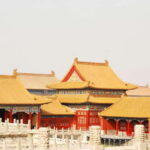
A few more corners of Beijing worth exploring before you go.
Skipping lines: what it does for your trip
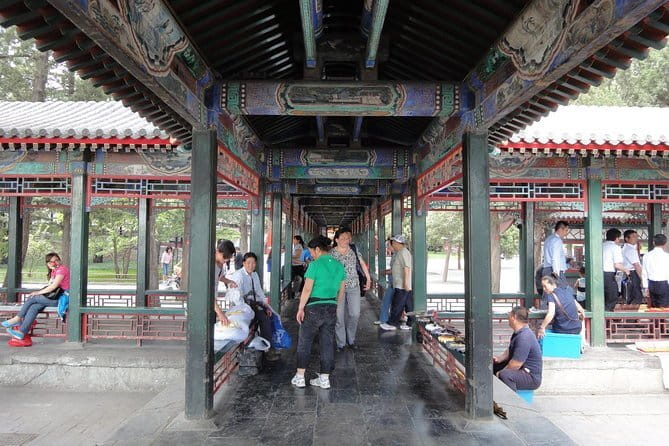
In China, ticket lines can chew up your day faster than you expect. This tour is set up to help you avoid that headache at the entrances of the sights, so you spend more time looking and less time waiting.
That matters most on the top-name attractions, like Tiananmen Square and the Forbidden City in Beijing, and the major sites in Xi’an. It also helps in a country where things can run on tight time windows once you’re inside.
The guides and drivers are part of that system. You’re not just buying time, you’re buying clarity, with English-speaking help that keeps you pointed in the right direction.
Beijing: Tiananmen, the Forbidden City, Temple of Heaven, and a classic show
Beijing opens with an easy start. Day 1 is pickup after you clear customs, a comfortable drive to your hotel, and then free time so you can reset from travel.
Day 2 is the big center stage. You visit Tiananmen Square, then move into the Forbidden City, also known as the Palace Museum. This is where you see how emperors lived and ran the state, and you get access to a staggering number of historic art treasures.
Lunch is included and it’s a real meal, not a rushed sandwich stop. You’ll enjoy an a la carte welcome lunch, and the menu highlight is Peking roast duck.
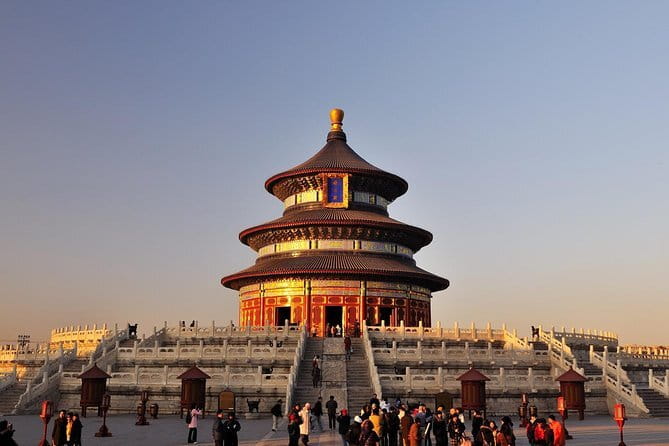
Later you head to the Temple of Heaven, built for Ming and Qing emperors to offer sacrifices for good harvests. The architecture is the whole point here, with round roofs tied to Heaven and square walls tied to Earth.
In the evening, you’re treated to an acrobatic show at the Red Theater. If you’re only going to catch one non-museum performance in Beijing, this is a strong choice because it adds variety after days of palace and temple sightseeing.
The Great Wall at Mutianyu and Beijing on two wheels
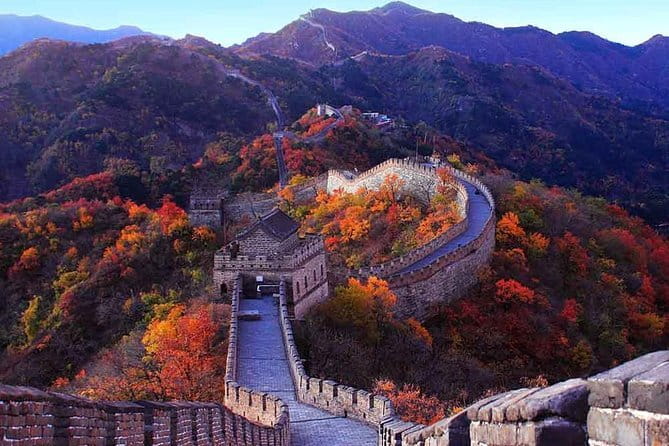
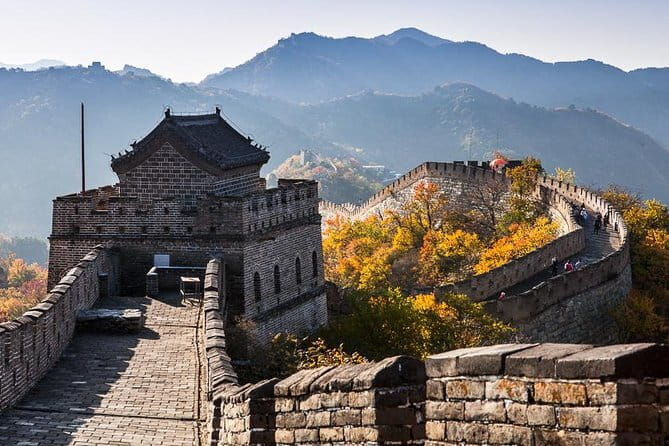
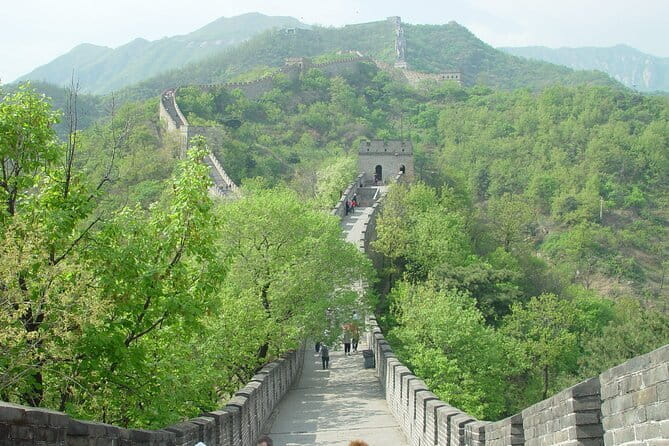
Day 3 is where the Great Wall energy really kicks in. You go to Mutianyu Great Wall and you’re set up with round-trip cable car transport. From the wall, you get that long, stretching view of towers and wall segments fading into distance.
There’s also a small celebratory moment on the wall, a group toast with red wine. It’s not essential, but it does make the memory feel like an event, not just a photo stop.
On the way back, you get a photo stop at the Olympic National Stadium, nicknamed the Bird’s Nest. Don’t expect a long walk around the venue since it’s positioned as a viewpoint stop, but it’s a nice way to tie Beijing’s modern identity to the old sights.
Then you shift into local Beijing with a hutong tour. You’ll do a rickshaw ride through traditional alleyways and you may have a chance to visit a local family. That “street-level” look is where you start to understand how Beijing neighborhoods work beyond landmark photos.
Getting from Beijing to Xi’an, then into Terracotta mode
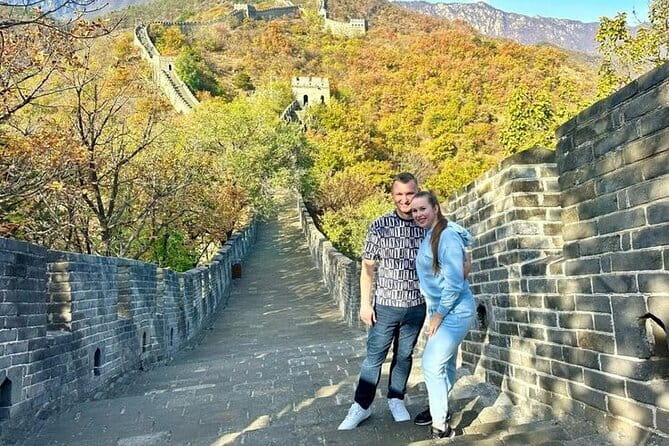
Day 4 starts a little differently than you might expect, with pandas before you head to the Summer Palace. The Summer Palace is the largest existing imperial garden, with grand constructions and a layout that looks designed for strolling.
After that, you fly to Xi’an. It’s a long day, but the handoff is handled, and you land with a local guide who brings you into the city.
Day 5 is the main Xi’an moment: the Museum of Qin Terra-cotta Warriors and Horses. You’ll see three excavated pits, and the detail of the figures and ancient weapons is the whole point. This is one of those places where the scale hits you in a slow, steady way as you walk the museum floor.
You also get extra learning beyond the standard viewing. There’s time for a family visit to the home of the first discoverer of the Terracotta Army. Then you even get to make a mini clay warrior with help from a local artisan, which turns your visit into something you can carry home as an object, not just photos.
In the afternoon, you visit the Big Wild Goose Pagoda. It was built in the Tang Dynasty era to store Buddhist scriptures brought from ancient India, so the stop ties architecture to movement and ideas.
Evening plans are the Tang Dynasty Music and Dance Show with a dumpling dinner. There’s a practical note: the show is not open in January, February, March, and December, so tours starting then won’t include that evening component. If your trip falls outside those months, it’s a fun cultural counterpoint to the more ancient artifacts earlier in the day.
Travelers who read this also booked these.
- All-Inclusive Tour: Tiananmen Square, Forbidden City, Great Wall★ 5.0 · 2,873 reviews
- MuBus: Mutianyu Great Wall ENG/ESP/RUS Guided Bus Tour★ 5.0 · 2,361 reviews
- 4-Hour Small Group Tour to Forbidden City with Entry Tickets★ 5.0 · 1,863 reviews
- Beijing: Tiananmen Square Registration Service(Ticket)★ 4.5 · 1,704 reviews
Xi’an City Wall, Tai Chi, and the Muslim Quarter for food you can taste
Day 6 makes Xi’an feel like a living city. You start at the City Wall Park, which is a glimpse of day-to-day local routine. You can even watch or practice Tai Chi with the master.
Then you go up onto the City Wall itself. It’s described as the most complete existing urban fortification in China, and yes, cycling on the wall is a popular idea, though bike rental fees are not included. Even if you don’t ride, the views and the sense of the city’s old boundary are the real attraction.
After lunch time on your own schedule around the Muslim Quarter area, you visit the Great Mosque of Xi’an. It’s one of the oldest, largest, and best preserved Islamic mosques in China, so it’s not just a quick look.
You’ll also explore the Muslim Quarter itself, and then finish with the Small Wild Goose Pagoda, which houses the Xi’an Museum. This day works well if you like religious history that feels integrated into a neighborhood, not isolated as a distant monument.
Guilin and Yangshuo: Reed Flute Cave and the Li River’s famous “hundred miles”
Day 7 is all about moving into karst scenery. You fly to Guilin and check into your hotel, then start with Reed Flute Cave. It’s a 240-meter karst cave full of stalactites and stalagmites shaped into dramatic forms, and it’s one of those sightseeing stops where you’re mostly watching light and shapes do the storytelling.
Next comes Elephant Trunk Hill, a hill whose shape resembles an elephant drinking from a river. It’s a quick, iconic viewpoint, but it also gives you a sense of how the terrain defines the area.
Day 8 is where you really get the scenery experience: a Li River cruise from Guilin to Yangshuo. This is the section reputed as A Hundred Miles Gallery, and the cruise format gives you long, steady views without constantly changing viewpoints by bus.
After you dock in Yangshuo, you walk through West Street. Then the day turns more countryside-oriented with driving along surrounding country roads and a visit to a villager’s home. That combination helps you see both the tourist-friendly side and the quieter life right next door.
Chengdu to Chongqing: pandas, Sichuan lanes, and boarding the Yangtze ship
Day 9 shifts you to Chengdu by high speed train. If you have time, you can head to Renmin Park for a relaxed local break with tea and an everyday vibe.
Day 10 is Panda Day. You visit the Giant Panda Breeding Research Base and you get enough time to observe the pandas. If you’ve wanted to see pandas in a more educational setting than a quick roadside photo, this is the better approach.
After that, you explore Kuanzhai Alley, the Broad and Narrow Alleys area. It’s a chance to snack or eat lunch, and it also gives context for Sichuan street life.
Then you travel to Chongqing by high speed train and check into the 5-star Yangtze cruise ship. Dinner on board is a buffet, and there’s a welcome party hosted by the captain. This is a nice reset point because it marks the change from city touring to slower, river-focused travel.
Three Gorges by cruise: Ghost City, Shennv Stream, and Dam views
This is the heart of the trip for many people, and the structure is smart. You don’t just sit on a boat and hope for good views. You have planned excursions that keep each day active.
Day 11 includes a visit to Fengdu Ghost City. The name sounds theatrical, but it’s more about a historical-cultural site, and the cruise schedule gives you the option to enjoy time on deck afterward.
Day 12 goes into the gorge experience through Shennv Stream. As the ship sails through the Three Gorges, you also get an onshore excursion for a closer look at the scenery and the river setting.
Day 13 includes the Three Gorges Dam project excursion. There’s a key practical moment here: you need to pack your luggage and complete check-out procedures before you head out for the Dam visit. After that, you’re driven back to the Three Gorges Tourist Center in Yichang and taken to the railway station for the high speed train to Shanghai.
There’s also practical guidance for how flights can affect your day. If you were to take a morning flight you would miss the Dam; if you take a very late flight, you might arrive in Shanghai around 1:30am, which can impact your next day. The tour’s stated preference for train travel makes sense because it keeps the schedule more predictable.
Shanghai: museum time, Yu Garden, and the Bund at river light
Shanghai is timed well at the end, after you’ve already seen centuries of Chinese landmarks. It’s easier to appreciate the mix of old and new when you arrive already “warmed up” by Beijing, Xi’an, and the Yangtze.
Day 14 starts with Shanghai Museum, one of the four largest museums in China, focused on art works from ancient times. This is a great shift from the city-walk energy earlier, because you can slow down, read labels, and actually process what you’ve seen.
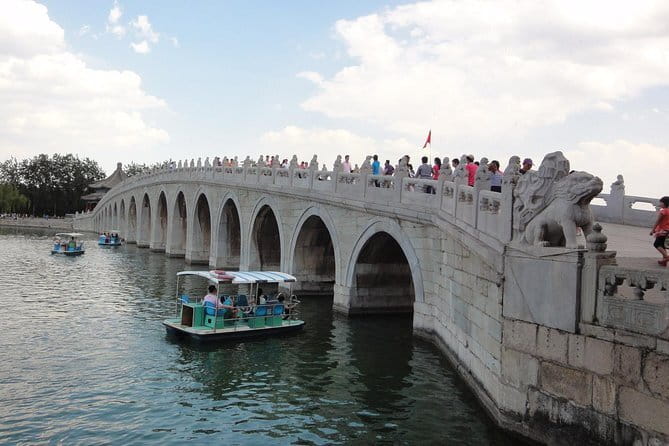
Then you go to Yu Garden and the nearby traditional bazaar. Yu Garden includes the Nine Zigzag Bridge and a mid-lake pavilion, plus the small-street bazaar atmosphere that feels like a living craft corridor.
You get a farewell lunch, a la carte and included. After lunch, you head to the Bund area, stroll along the iconic riverfront, and take a one-hour cruise on the Huangpu River.
That river cruise is a good closer because it blends skyline views with a calm pace. You get to “see” Shanghai more than once, from the street and from the water.
Day 15 is travel day. You handle your own departure by getting to the airport without the hotel-airport transfer service. The tour can assist if needed, but the main idea is you’re not left hanging, you just plan your final logistics for yourself.
Price and logistics: is $3,539 value or sticker shock?
At $3,539 per person for about 15 days, this tour sits in the mid to higher tier, but it isn’t just paying for a guide. You’re also covering domestic airfares and train fares, plus hotel rooms with breakfasts.
Meals are partly covered too. You have a set number of included lunches and dinners, and the welcome and farewell lunches are specifically noted as a la carte meals. Then there’s the big one, the Yangtze River cruise with full board, which typically changes the math because it bundles transportation, lodging, and meals in one package.
Entrance fees for the listed sights are included as well. That matters because major sites can stack up costs quickly, especially when you’re aiming to hit the top attractions across many cities.
One cost item you should budget for is the cruise company service charge of CNY200 per person, which is not included and is paid when you board the cruise. Other non-included items like international airfare and visa fees are also on your personal checklist.
You also avoid the usual time-wasting detours. The tour explicitly has no shopping detours, no factory stores, no tea ceremony, and no shopping site restaurant, which is a big deal if you’re trying to protect sightseeing time.
So is it value? For the right traveler, yes. If you want maximum top sights, guided context, and a smooth rhythm across cities, this is the kind of package that earns its price. If you prefer independent pacing and lots of flexible downtime, you might feel “scheduled” even with the free time slots.
Who should book this tour, and who might not love it
This fits best if you:
- Want a first serious China trip with major landmarks done in one sweep
- Appreciate guided explanations at big sites like the Forbidden City, Temple of Heaven, and the Terracotta Warriors
- Like the idea of a Yangtze cruise that includes shore excursions, not just sitting on deck
You might want a different style if you:
- Have a low tolerance for daily walking and stair-heavy days
- Want total freedom to linger in places beyond the guided plan
A final note from practical experience patterns: the tour is capped at a maximum of 18 travelers. That’s small enough for a more human feel, and large enough to keep the travel transitions efficient.
Should you book this 15-day China route?
I’d book it if you want the fastest way to get the headline sights without turning your trip into a logistics puzzle. The mix is strong: Mutianyu Great Wall, Forbidden City, Xi’an’s Terracotta Warriors, Guilin and Yangshuo by cruise, pandas and Sichuan culture, then the Three Gorges, and finally Shanghai’s museum and riverfront.
Book with eyes open on walking pace, and make sure you plan for the cruise service charge of CNY200 per person. If you do those two things, you’ll likely end the trip feeling like you saw the best of China in a way that was organized, guided, and actually enjoyable.
FAQ
Is pickup included, and do I get mobile tickets?
Yes. Pickup is offered, and the tour includes mobile ticket access.
Do I need to wait in ticket lines at the attractions?
The tour is designed to help you avoid the ticket line at the entrance of all attractions.
What’s included in the main tour price?
The price covers domestic airfares and train fares, hotel accommodation with breakfasts, selected a la carte lunches and dinners, professional English-speaking guides, drivers with air-conditioned vehicles, entrance fees, and the Yangtze River cruise with full board. It also includes tips or gratuities for hotel porters and the cruise company service charge is noted separately below.
What cruise-related fee might not be included?
The tour notes that the quotation excludes the service charge of CNY200.00 per person recruited by the Yangtze River cruise company, and you pay it when you board the cruise.
Are the big sights like the Great Wall, Terracotta Warriors, and the Bund included?
Yes. The route includes Mutianyu Great Wall, the Forbidden City, and the Bund in Shanghai. It also includes a visit to the Terracotta Warriors Museum and the Yangtze River cruise.
Is the Tang Dynasty Music and Dance Show always included?
No. The Tang Dynasty Show is not open in January, February, March, and December, and the tour prices do not include the show and dumpling dinner for tours starting during those months.
How large is the group?
The experience has a maximum of 18 travelers.
What happens on Day 15 for my flight home?
On Day 15, you travel to the airport for your departing flight by yourself. Due to different flight schedules, the hotel-airport transfer service is not included.
If I cancel, can I get a refund?
No. This experience is non-refundable and cannot be changed for any reason. If you cancel or ask for an amendment, the amount you paid will not be refunded.
Newly Listed Tours in Beijing
- Beijing Half Day Walking Tour-Tiananmen Square and Forbidden City★ 5.0 · 1 review
- 1-Day Beijing private English speaking guide with driver service★ 5.0 · 1 review
- Flexible Private Layover Beijing Night Sightseeing with English Speaking Driver★ 5.0 · 1 review
- Private Day Trip to Huaibei International Ski Resort and Mutianyu Great Wall★ 5.0 · 1 review
- 2-Day Customizable Beijing Highlight Tour with Airport Transfer Option★ 5.0 · 1 review
- 1-Day Beijing Private tour: Mutianyu Great Wall and Summer Palace★ 5.0 · 1 review
- Private Virtual Tour in Beijing★ 4.0 · 1 review
- 1-Way Private Transfer Service between Tianjin cruise Port and Beijing hotels★ 5.0 · 1 review