
Reviewed · HUTONG WALKS
Beijing Hutongs Walking Tour
Old lanes, bigger stories, in just two hours.
This hutongs walking tour turns Beijing into a slower, human place, not just a photo stop between major sights. You’ll follow a relaxed pace through traditional lanes and courtyard homes, with an English-speaking guide named Roy Li who shares the kinds of details you usually miss when you rush from monument to monument. I like that it helps you find your way in a maze of downtown lanes, and I also like that Roy uses facts and mini quizzes to keep the walk lively.
The tradeoff is simple: you’re walking for about 1 hour 30 minutes to 2 hours, and the experience is outdoors in city air and noise, so you’ll want comfortable shoes and a bit of patience in traffic-adjacent areas.
In This Review
- Key takeaways before you go
- Why Hutongs Make Beijing Feel Like a Neighborhood
- Meeting at Nanluoguxiang: Fast Start, Clear Directions
- Bell and Drum Towers to Ancient Streets: The Tour’s Big Framing Moment
- Nanluoguxiang Lanes: Courtyard Houses and the Feeling of Age
- Mao’er Hutong and the Empress’s Mansion Photo Stop
- Qianhai and Houhai: Water Lanes and a Change of Tempo
- What Roy Li Teaches You Along the Way (Beyond the Sights)
- Price and Value: Is $30 Worth It?
- Logistics That Can Actually Affect Your Day
- Who Should Book This Hutongs Walk
- Should You Book the Beijing Hutongs Walking Tour?
- FAQ
- Where is the meeting point for the Beijing Hutongs Walking Tour?
- What time does the tour start?
- How long is the walking tour?
- How much does it cost?
- Is an admission ticket included?
- Is the tour led in English?
- How big is the group?
- Do you use a mobile ticket?
- Is cancellation free?
- Is the tour easy to reach by public transportation?
Key takeaways before you go
- Small group, up to 15 people, so questions are actually possible.
- Roy Li (English-speaking) keeps the pace relaxed and the stories understandable.
- Nanluoguxiang to Mao’er Hutong gives you a real sense of how Beijing neighborhoods feel.
- Empress’s Mansion is a great photo moment tied to the last emperor’s court.
- The route links to the lakeside zone (Qianhai and Houhai area) for a nice change of scenery.
- Admission is not included, so expect mostly outside views and street-level courtyard perspective.
Why Hutongs Make Beijing Feel Like a Neighborhood

Beijing’s center is packed with big imperial landmarks, but hutongs are where the city turns intimate. Traditional hutongs are narrow lanes lined with courtyard homes, and the whole place works like a patchwork. From street level, you can see why getting lost here is easy, and why a guide matters.
What I like about this tour is that it gives you the mental map while you’re still walking. Instead of only saying, This is a hutong, Roy ties scenes to ideas, like how people used to measure time, and how the final chapter of China’s last emperor shaped stories people still repeat. Those connections make the lanes feel less like background and more like a living timeline.
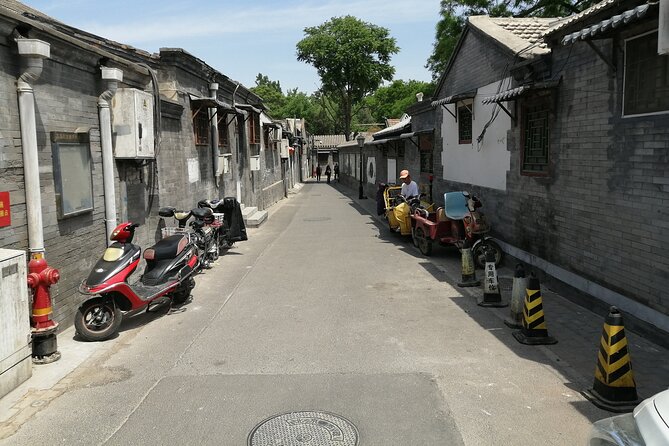
You also get a different kind of “Beijing atmosphere.” You’re not stuck looking at stone gates from far away. You’re moving through everyday urban texture, old trees, grey courtyard walls, and the close-in scale that makes these lanes feel sturdy and personal.
Duck through the old alleyways



Meeting at Nanluoguxiang: Fast Start, Clear Directions
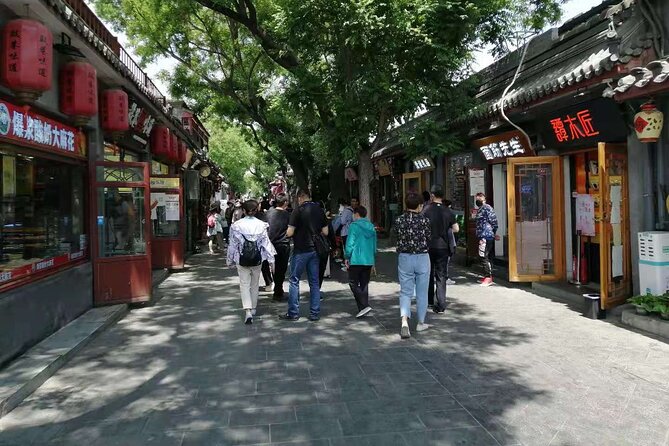
Your tour starts at South Luogu Lane in the Nanluoguxiang area. The most straightforward access point is the subway, with the meeting connected to metro Line 8 or Line 6 Nanluoguxiang station, exit E.
This matters more than it sounds. Nanluoguxiang can be busy, and the hutong network around it is easy to tangle if you show up late or wander without a plan. Give yourself buffer time, then use the exit and lane name to lock in the meeting spot.
Roy’s group size stays small (maximum 15), which helps here. With a smaller group, you’re less likely to get separated in a crowd, and you’re more likely to actually hear what the guide is saying while you’re walking.
Bell and Drum Towers to Ancient Streets: The Tour’s Big Framing Moment
One of the tour’s opening anchors is the Bell and Drum Towers area. Even if you’ve seen them from a distance before, starting with that concept helps you understand why hutongs aren’t just architecture. They connect to how people once organized daily life, including timekeeping.
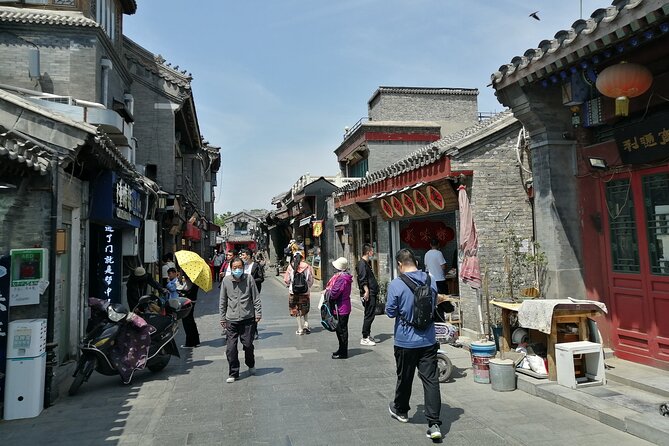
Then you shift into Nanluoguxiang. Roy leads you into the lane world where vernacular courtyard houses and old trees create that classic Beijing look. These buildings are described in grey tones and solid traditional forms, and walking among them helps you notice details you’d miss if you only read about them later.
Possible drawback to consider: the transition is still in the city. You’ll likely be walking near intersections and moving between lane segments. If you’re sensitive to noise or want a perfectly quiet photo walk, you might prefer a slower, more countryside-style day. Still, the payoff is that hutongs are a real urban experience, not a museum hallway.
Nanluoguxiang Lanes: Courtyard Houses and the Feeling of Age

After the initial framing, the tour leans into Nanluoguxiang lane. This is where you start building your “hutong sense,” meaning you can begin to picture how families lived, how space was shared, and how the layout shapes daily movement.
Here’s what you’ll likely focus on as you walk:
- Grey courtyard walls and compact building scale that creates privacy.
- The way old trees sit inside the neighborhood fabric.
- The lane geometry, meaning how narrow channels of street create a sense of separation from the wider avenue life.
This section is valuable because it’s visual learning. You can read about courtyard homes at home, but seeing the closeness and the solid construction in person makes it click. It also makes the next stretch, Mao’er Hutong, easier to understand since you’ll already know what you’re looking for.
Tip: wear shoes you can walk in for a full 2 hours, and keep your phone ready for quick photos. Courtyard entrances and side channels show up faster than you’d expect.
Mao’er Hutong and the Empress’s Mansion Photo Stop
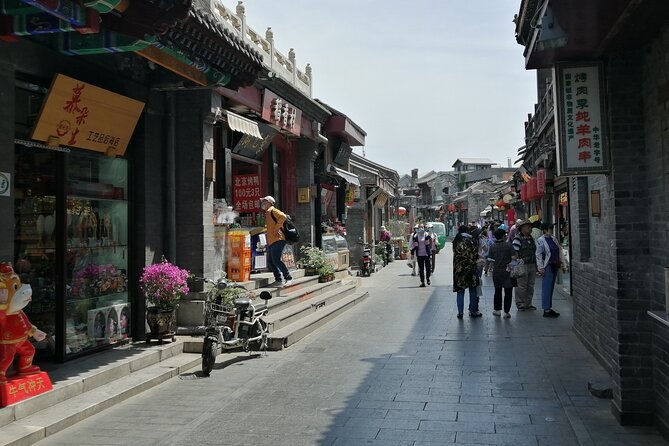
Next comes Mao’er Hutong, described as a place with famous buildings and character stories. This is where the tour turns from architecture into biography.
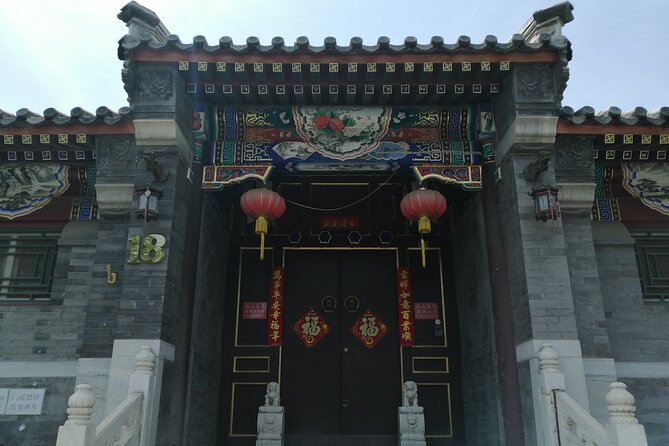
Roy leads you toward a highlight stop for pictures: Empress’s Mansion, described as the former residence of Puyi’s empress, Wanrong. Even if you only know the last emperor’s name in passing, this stop gives you a concrete setting. You’re not just thinking about a distant dynasty. You’re standing in the kind of streets where these stories were lived out.
What makes this section work well is that it’s not only about taking photos. The guide’s explanations connect the mansion’s story to the broader fate of the last emperor. In practical terms, it helps you avoid the common problem of history tours that turn into a random set of names. Here, those names land in a place you can remember.
A consideration: you’ll likely be snapping photos in an active neighborhood. If you want the cleanest picture, be patient and step aside when needed to let people pass.
See Beijing at walking pace
- Private Beijing Walking Tour of the Forbidden City with 7 Options★ 5.0 · 675 reviews
- Forbidden City Private Walking Tour with Optional Sights★ 5.0 · 400 reviews
- Beijing Private Hutong Food Walking Tour★ 5.0 · 299 reviews
- Beijing: Hutong Culinary Walking Tour with 15+ Tastings★ 5.0 · 162 reviews
Qianhai and Houhai: Water Lanes and a Change of Tempo
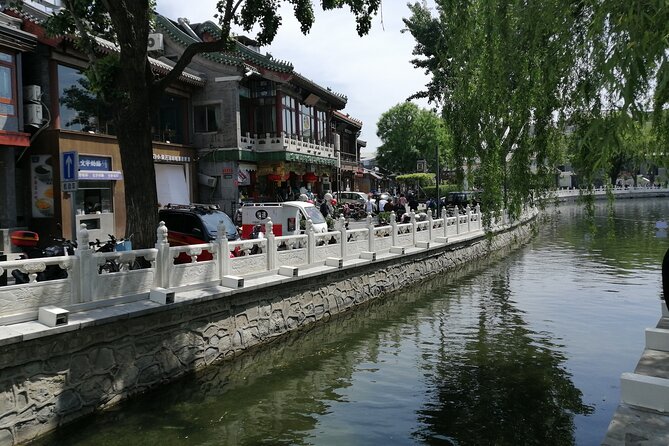
As the tour continues, you move toward a narrow channel joining Qianhai Lake and Houhai Lake. This is a nice change from the tighter lane feel. Water edges soften the space, and the atmosphere shifts from pure courtyard closeness to a more open, reflective urban rhythm.
Why this matters: hutongs can make your brain feel like it’s mapping a maze. When you reach a lane that links to the lake area, you get a natural landmark. It helps you remember the route later, which is great if you plan to explore independently afterward.
The tour’s pacing stays laid-back, which is exactly what you want here. You’re not being rushed to the next stop every five minutes. Instead, you’re getting time to look, listen, and connect the dots between lane life and the surrounding city geography.
What Roy Li Teaches You Along the Way (Beyond the Sights)
A big part of the value is what Roy includes in his explanations. The tour doesn’t just point at old buildings. It also focuses on cultural ideas and stories, including:
- Chinese time-keeping, tied to how the city organized daily life.
- The fate of China’s last emperor, connected to the Empress’s Mansion stop.
- A mix of facts and engagement, including quizzes that keep you listening rather than zoning out.
This is why the small group size matters. With up to 15 people, Roy can keep the energy up and still answer questions. You’re not hearing a monologue meant for a large bus group where nobody asks anything.
It also helps that Roy speaks English well, and the tone is active and prepared. That shows up in the structure of the walk itself, not just in vocabulary.
Price and Value: Is $30 Worth It?
At $30 per person, this tour sits in the “good deal” zone for Beijing. You’re paying for an English-speaking guide, a structured route through hutongs, and a time-efficient length of about 1 hour 30 minutes to 2 hours.
Here’s how I’d judge the value, practically:
- If you were to explore hutongs on your own, you’d spend extra time figuring out where to go and what to notice.
- With Roy, you get context, story connections, and orientation, which makes the same streets more rewarding.
- Admission is not included, which suggests a lot of the experience is built around street-level sights and explanations rather than paid entry fees.
So the question isn’t only, Is $30 cheap. It’s, Will you get enough “meaning per minute”? This tour is designed to do that by keeping the pace relaxed and the talking relevant.
One more plus: the tour uses a mobile ticket, so you’re not dealing with printouts or last-minute paper hassles.
Logistics That Can Actually Affect Your Day
This is a public-transport-friendly route. The meeting point is near subway access, and the format is a walking experience rather than complicated transfers.
Two small practical points to plan for:
- Arrive a bit early at the Nanluoguxiang area meeting point. In places like this, showing up late can mean you miss your group and the start of the walk.
- Expect that you’ll be outdoors in a real city setting. Bring water, and keep an eye on comfortable pacing.
If you want to do more sightseeing the same day, the timing makes sense. Starting at 10:00 am helps you avoid the worst rush and gives you energy for the afternoon.
Who Should Book This Hutongs Walk
This tour fits best if you want:
- A first-day orientation to hutongs, without getting lost.
- A guided history thread that connects buildings to people and stories.
- A small-group experience where you can ask questions and get clear answers.
It’s also a good fit if you like history but don’t want a lecture. Roy’s style (including quizzes and engagement) keeps it moving, and the pace is relaxed rather than frantic.
If your idea of a perfect day is a single grand museum with lots of indoor time, then this might feel too street-level for you. But if you want to understand how Beijing neighborhoods work, this is a strong way to do it.
Should You Book the Beijing Hutongs Walking Tour?
If you’re trying to experience Beijing beyond the imperial highlights, I’d book it. This is one of those tours where the price buys you real navigation help, plus story context that makes the architecture easier to remember. The small group size and Roy’s English-speaking, prepared approach are the big reasons it works.
Book it especially if:
- You want a smart start to your trip.
- You care about how people lived, not just what buildings look like.
- You’d rather walk a meaningful route than chase random sights.
Skip or consider another option if:
- You hate walking near traffic and crowded areas.
- You expect ticketed interior access at every stop. Admission isn’t included, so you should be ready for outside views and street-level storytelling.
FAQ
Where is the meeting point for the Beijing Hutongs Walking Tour?
The tour meets near South Luogu Lane in the Nanluoguxiang area. The subway connection is Nanluoguxiang station on Line 8 or Line 6, exit E, in the area listed as 南锣鼓巷南口 or 南锣鼓巷地铁站E出口.
What time does the tour start?
The start time is 10:00 am.
How long is the walking tour?
It runs about 1 hour 30 minutes to 2 hours.
How much does it cost?
The price is $30.00 per person.
Is an admission ticket included?
No. Admission Ticket Not Included is listed.
Is the tour led in English?
Yes. An English-speaking guide is included.
How big is the group?
The tour has a maximum of 15 travelers.
Do you use a mobile ticket?
Yes. The tour features a mobile ticket.
Is cancellation free?
Free cancellation is offered, with a full refund available if you cancel at least 24 hours before the experience’s start time.
Is the tour easy to reach by public transportation?
Yes. The meeting area is near public transportation, with subway access at Nanluoguxiang station (Lines 8 and 6, exit E).
Newly Listed Tours in Beijing
- Beijing Half Day Walking Tour-Tiananmen Square and Forbidden City★ 5.0 · 1 review
- 1-Day Beijing private English speaking guide with driver service★ 5.0 · 1 review
- Flexible Private Layover Beijing Night Sightseeing with English Speaking Driver★ 5.0 · 1 review
- Private Day Trip to Huaibei International Ski Resort and Mutianyu Great Wall★ 5.0 · 1 review
- 2-Day Customizable Beijing Highlight Tour with Airport Transfer Option★ 5.0 · 1 review
- 1-Day Beijing Private tour: Mutianyu Great Wall and Summer Palace★ 5.0 · 1 review
- Private Virtual Tour in Beijing★ 4.0 · 1 review
- 1-Way Private Transfer Service between Tianjin cruise Port and Beijing hotels★ 5.0 · 1 review
Hutong Walks, compared.

Beijing Hutong Walking Food and Beer Tour at Hidden Restaurants
Read our review →
Temple Heaven, Summer Palace, Lama Temple, Hutong Bus Tour
Read our review →
Temple of Heaven, Summer Palace, Lama Temple, Hutong Tours
Read our review →



Browse the lists this tour appears in