
Reviewed · BEIJING
Beijing: Imperial Cuisine Experience & Cultural Performance
Imperial dining in Beijing is a strange mix of theater and food history. At the Yuxiandu Imperial Cuisine Museum, you get the story of Chinese royal cuisine alongside a palace-like banquet set to a performance schedule. I love how the museum frames what you eat, and I also love the sheer menu variety, from roast duck to longevity noodles.
There is one catch to plan around: the experience runs on timed entry and a set show start, so if you arrive late, you can feel rushed instead of relaxed. If you hate clock-watching during meals, make peace with the schedule first.
In This Review
- Key points you should know first
- Yuxiandu Imperial Cuisine Museum, a palace-like setting in Haidian
- From five millennia of court kitchens to a museum you can actually feel
- Your 3 to 4 hour schedule: how the meal courses and show timing fit together
- The royal-style menu: what’s on the table and what to expect from it
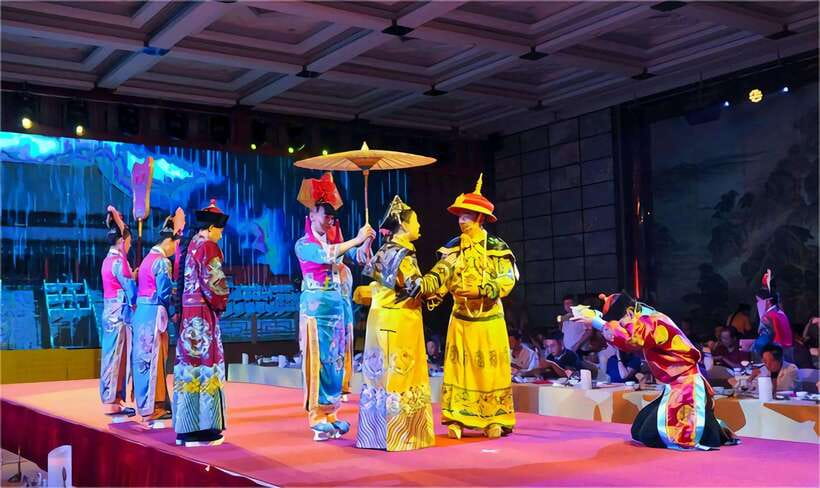
- The cultural performance: what the show typically adds to dinner
- Price and value: is $137 per person worth it?
- Who should book this experience, and who might not love it
- Practical tips: ticket email, timing, and how to avoid stress
- Should you book this Beijing imperial cuisine experience?
- FAQ
- How long is the Beijing Imperial Cuisine Experience & Cultural Performance?
- What is the price per person?
- What is included in the ticket?
- Is traditional costume or makeup transformation included?
- Where is the venue located?
- Is wheelchair access available?
- What are the lunch session times?
- What are the dinner session times?
- What should I do about the QR code from GetYourGuide?
- Are kids under 2 allowed?
Key points you should know first
- Five millennia explained: the museum traces imperial dishes from ancient times through the Qing Dynasty.
- Museum-grade artifacts: you’ll see a collection of over a thousand historical items tied to court dining.
- A full royal-style menu: multiple courses, including sea cucumber with fish maw and longevity noodles.
- Performance paired with dinner: the show starts shortly after the meal timing.
- Not costume included: traditional clothing and makeup transformation are listed as not included.
- Ticket timing matters: lunch and dinner have specific check-in and show start times.
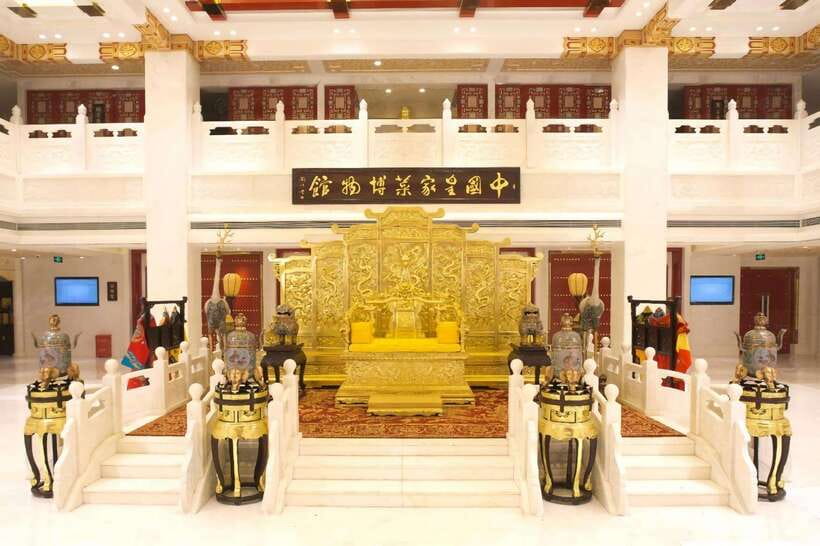
Yuxiandu Imperial Cuisine Museum, a palace-like setting in Haidian
This experience centers on the Yuxiandu Imperial Cuisine Museum in Beijing’s Haidian District, near Sijiqing Bridge. The point is simple. You are not just eating. You are stepping into a setting that tries to recreate what royal court dining felt like, then pairing that atmosphere with a cultural performance.
What I like about the location choice, especially if you are already exploring Haidian, is the practical flow. You don’t have to bounce across the city for museum time, then separately hunt down a show later. Instead, the venue packages both.
The museum is also an official national AAA-level tourist attraction, which usually means basic things like service, facilities, and visitor handling are taken seriously. That matters because the experience is timed, and you want the staff to be good at keeping things moving without chaos.
A few more corners of Beijing worth exploring before you go.

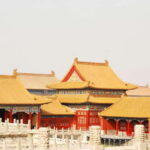
From five millennia of court kitchens to a museum you can actually feel
The museum describes itself as covering the evolution of Chinese imperial cuisine over five millennia, and the exhibits are built around that idea. You are shown how royal dishes and court dining culture changed over time, from ancient periods through the Qing Dynasty.
A big reason this works for visitors is the mix of objects and storytelling. You are not only looking at a few photos and reading short labels. The museum has over a thousand historical artifacts, including dining utensils and valuable documents tied to how emperors and their courts ate. Even if you do not read every detail, seeing the actual tools and records helps you understand that imperial cuisine was a system, not just a list of fancy ingredients.
This historical framing is also what makes the dining feel different from a standard banquet. When the menu includes items like roast duck and longevity noodles, it is not only about taste. It is about context, the role of food in court tradition, and the idea that meals were designed for ceremony as much as for comfort.
If you want a slow, flexible museum visit with lots of browsing at your own pace, you might find this format a bit more structured than you expect, because the meal and performance scheduling pulls everything toward a fixed timeline.
Your 3 to 4 hour schedule: how the meal courses and show timing fit together
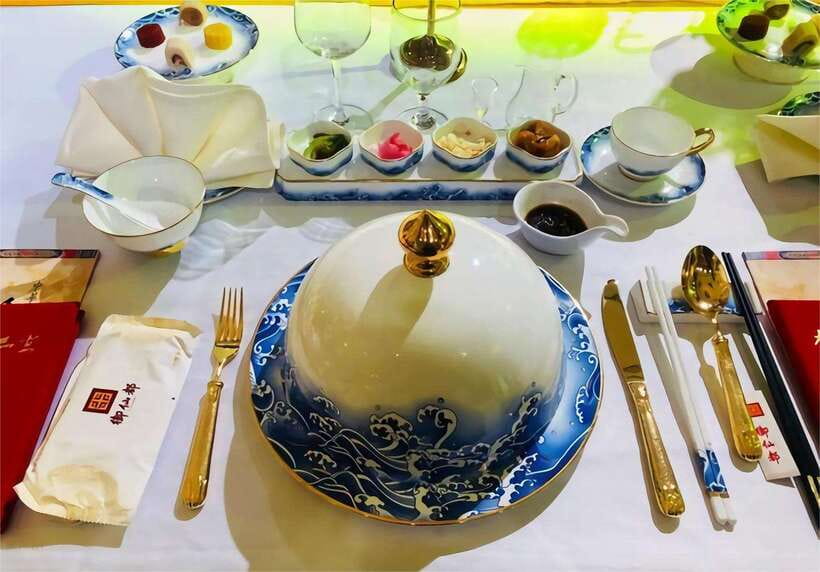
The experience is listed at 3 to 4 hours, and it runs at specific starting times. The key is that lunch and dinner follow separate check-in and show start moments, so you need to align your arrival with your session.
For lunch, the ticket checking time is 11:38 AM, and the performance begins at 12:10 PM. For dinner, ticket checking is 6:28 PM, with the show beginning at 6:50 PM. The simplest advice is to arrive a few minutes before ticket checking, then plan to be seated and ready for the meal to start as scheduled.
Why this matters: when a venue is timed this tightly, late arrivals can scramble your pacing. Even if you still eat, you may lose the calm feeling that makes the museum and banquet work as a whole. If you are the type who likes to stroll and linger, treat this like a theater show, not a pick-up museum ticket.
Also, there is an important ticket detail: the QR code generated on the GetYourGuide platform is not your real ticket. Your actual ticket is sent via email, so check your inbox and plan to show what the email provides.
The royal-style menu: what’s on the table and what to expect from it
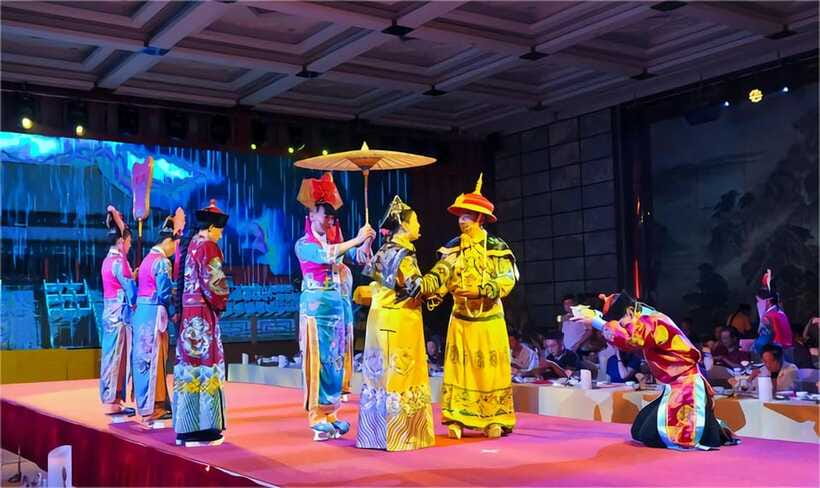
The menu is part of the experience, not a minor add-on. You are served a multi-course banquet designed to replicate sumptuous court meals. It starts with snacks and moves through appetizers and main dishes, then finishes with sweets and dairy-style items.
Here’s what is listed:
Snacks and starters
- Appetizer platter
- Braised sea cucumber with fish maw in casserole
- Marinated tofu and bamboo shoots
Main dishes
- Roast duck with jujube wood
- Chinese cabbage in soup
- Roasted lamb
- Longevity noodles with poached eggs
Sides and breads
- Deep-fried dough sticks (youtiao) with milk
- Yogurt filled with honey
Even if you do not know the traditional meanings behind each item, you can still read the menu as a story. You get a mix of textures: soft casseroles, chewy noodles, crisp fried dough, and tender braises. You also get a mix of flavors: savory mains, gentle soups, and a sweet finish with honey and yogurt.
A few practical notes from the food list itself:
- Sea cucumber and fish maw are classic imperial ingredients, but they are not mild in reputation. If you dislike anything with that kind of rich, gelatinous texture, you might want to go in prepared or consider eating slowly and sticking to the dishes you already know you like.
- Roast duck with jujube wood signals a specific roasting and flavor approach. If you like duck, this is the headline dish on the list.
- Longevity noodles with poached eggs is a dish name that points to tradition, and the poached eggs help the dish feel comforting rather than just ceremonial.
- Youtiao with milk is a very familiar breakfast-style pairing in China, which can make the feast feel more approachable midway through the evening.
One more thing: traditional costume and makeup transformation are listed as not included. So the food and performance do the heavy lifting on atmosphere. If you were hoping for a full dress-up moment as part of the package, plan differently.
The cultural performance: what the show typically adds to dinner
The performance is included, and it is a major part of why people book this evening format. The show starts shortly after the meal window, so your dinner is paired to the timing.
For dinner sessions, the flow is structured around the fact that ticket checking is at 6:28 PM, and the show begins at 6:50 PM. That means you should be ready for a shift from eating mode into watching mode without a long break.
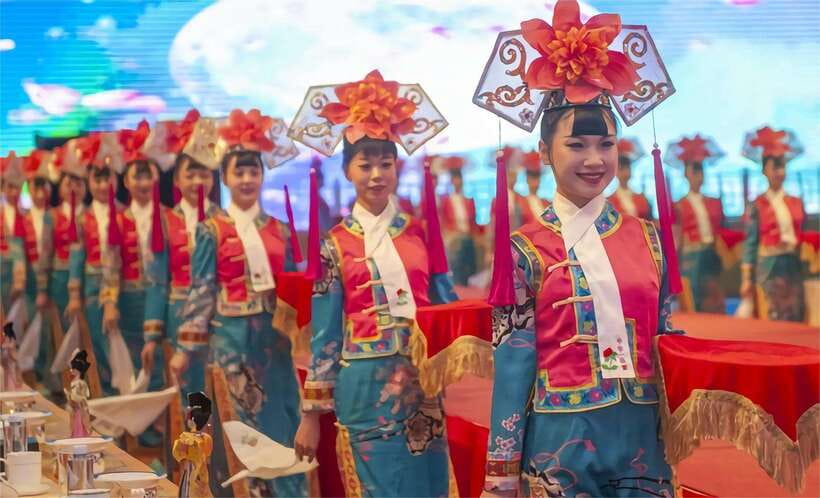
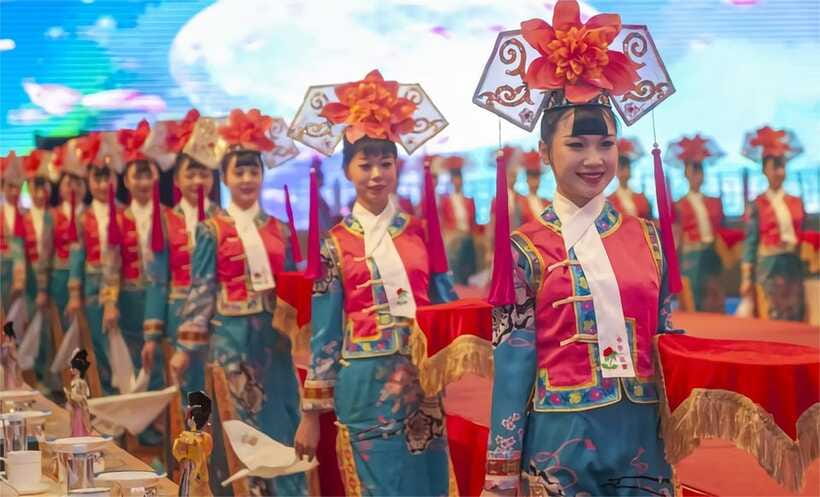
What you can expect from the performance based on the provided details: a cultural show that uses traditional costumes, plus music and dance. The focus is on presenting imperial-era court culture in a way you can watch while you’re in the right headspace from the banquet.
This pairing is a big part of the value for many visitors. You leave with two kinds of memory: what you ate, and what the culture looked like when it was staged. It also helps you understand the point of the museum. Imperial cuisine was not isolated. It was part of the larger court world, including ceremony and performance.
If you are mainly interested in food and you care less about staged entertainment, you should still know the show is a core piece of the ticket price, not an optional extra.
Travelers who read this also booked these.
- All-Inclusive Tour: Tiananmen Square, Forbidden City, Great Wall★ 5.0 · 2,873 reviews
- MuBus: Mutianyu Great Wall ENG/ESP/RUS Guided Bus Tour★ 5.0 · 2,361 reviews
- 4-Hour Small Group Tour to Forbidden City with Entry Tickets★ 5.0 · 1,863 reviews
- Beijing: Tiananmen Square Registration Service(Ticket)★ 4.5 · 1,704 reviews
Price and value: is $137 per person worth it?
At $137 per person, this is not a budget meal. But it is also not just a restaurant dinner. You are paying for a combination of: a museum experience that presents imperial cuisine through historical artifacts, the banquet-style meal, and an included performance.
So how do you judge value fairly?
- If you want both food history and a show, the price starts to make sense because you are getting meal plus performance included in one package.
- If you only want the food, you might feel you could find cheaper banquet-style options. The platform pricing can feel steep compared to other ways to buy tickets, so it can be worth checking whether there is a lower-cost route than a third-party listing.
- If you like variety, the menu itself supports the cost. You are not getting a single entrée. You’re getting many courses, including signature dishes that visitors associate with imperial tradition.
One practical tip: if you are cost-sensitive, compare pricing sources before you lock in. You can do this without overthinking it. Just make sure you’re getting the same package elements, especially the meal and the performance.
Who should book this experience, and who might not love it
This fits best if you want a packaged, cultural evening with a clear theme: imperial cuisine. You’ll likely enjoy it if you like:
- historical museums that connect directly to what you eat
- structured dining with multiple courses
- Chinese performing arts style shows, especially those featuring costumes, music, and dance
It is not suitable for children under 2.
It may be less satisfying if:
- you dislike timed events and fixed show start times
- you only want a light meal rather than a multi-course banquet
- you were hoping for costume and makeup transformation included as part of the ticket, since those are listed as not included
Also consider your comfort level with the menu items. The presence of sea cucumber and fish maw means this is a traditional imperial-style lineup, not a gentle Western-style buffet.
Practical tips: ticket email, timing, and how to avoid stress
This is where you can make or break the experience. A few details from the provided info are worth treating like your travel checklist.
1) Don’t trust the QR code screenshot
The QR code generated after you place your order on GetYourGuide is not your actual ticket. Your real ticket comes via email. Check your email inbox and save the ticket information you receive.
2) Arrive a few minutes before ticket checking
For lunch, be ready by 11:38 AM. For dinner, be ready by 6:28 PM. The performance starts at 12:10 PM for lunch and 6:50 PM for dinner. Arriving a little early gives you time for queues and seating before the meal and performance begin.
3) Plan your energy for 3 to 4 hours
The experience is timed end-to-end. If you have a long day and you think you’ll just fit this in after something else, build in buffer time so you do not rush your dinner and miss the show start.
4) Think about what you want from the night
If you’re there mainly for the food, focus on enjoying the course flow. If you’re there mainly for the performance, watch the show start times and be ready to transition from meal to theater.
Should you book this Beijing imperial cuisine experience?
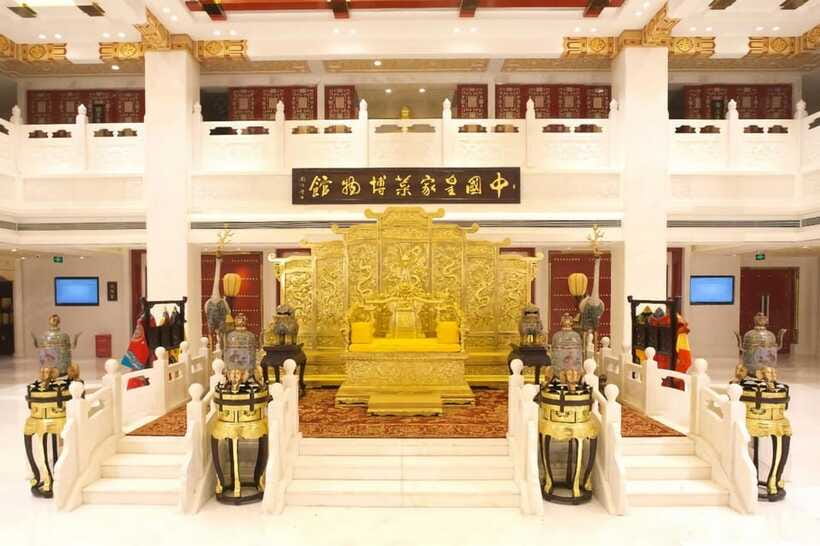
Book it if you want a themed evening that combines a museum tour on imperial food history, a multi-course royal-style meal, and a costume-and-music dance performance, all in one location in Haidian. The value improves when you care about both food and culture, not just one.
Skip it, or consider alternatives, if you feel $137 is too high for a meal, or if you strongly prefer flexible museum pacing instead of timed check-in tied to a show. Also, if you know you dislike sea cucumber or fish maw textures, you may want to think carefully before committing.
If you do book, the smartest move is simple: check your ticket email, arrive early for the ticket checking time, and treat the meal and show as one package with a rhythm. That’s how you get the most out of the palace-like setting and the story behind the dishes.
FAQ
How long is the Beijing Imperial Cuisine Experience & Cultural Performance?
It lasts about 3 to 4 hours.
What is the price per person?
The price is listed as $137 per person.
What is included in the ticket?
The ticket includes a meal and a performance.
Is traditional costume or makeup transformation included?
No. Traditional costume and makeup transformation are listed as not included.
Where is the venue located?
It is in Beijing’s Haidian District, near Sijiqing Bridge.
Is wheelchair access available?
Yes, it is listed as wheelchair accessible.
What are the lunch session times?
Lunch ticket checking is at 11:38 AM, and the performance starts at 12:10 PM.
What are the dinner session times?
Dinner ticket checking is at 6:28 PM, and the show begins at 6:50 PM.
What should I do about the QR code from GetYourGuide?
The QR code generated on GetYourGuide is not the actual ticket. Your real ticket is sent to you via email.
Are kids under 2 allowed?
No. It is not suitable for children under 2 years old.
Newly Listed Tours in Beijing
- Beijing Half Day Walking Tour-Tiananmen Square and Forbidden City★ 5.0 · 1 review
- 1-Day Beijing private English speaking guide with driver service★ 5.0 · 1 review
- Flexible Private Layover Beijing Night Sightseeing with English Speaking Driver★ 5.0 · 1 review
- Private Day Trip to Huaibei International Ski Resort and Mutianyu Great Wall★ 5.0 · 1 review
- 2-Day Customizable Beijing Highlight Tour with Airport Transfer Option★ 5.0 · 1 review
- 1-Day Beijing Private tour: Mutianyu Great Wall and Summer Palace★ 5.0 · 1 review
- Private Virtual Tour in Beijing★ 4.0 · 1 review
- Private Day Tour Of Jinshanling Great Wall From Beijing★ 4.0 · 1 review