
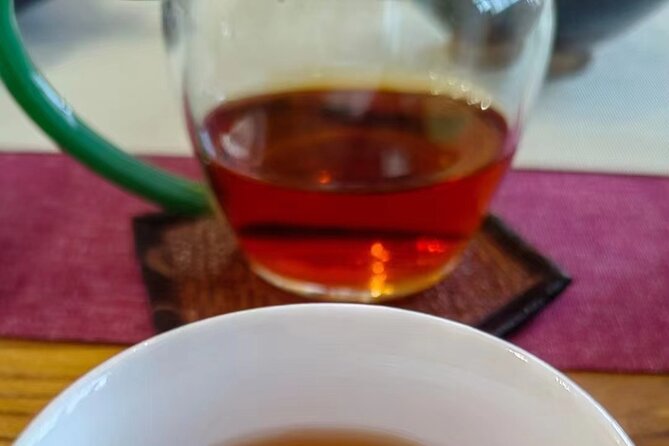
Reviewed · BEIJING
Beijing Tai Chi and Tea Ceremony Experience
Tai chi and tea, in one calm morning. This Beijing experience pairs an easy, beginner-friendly Taoist tai chi class with a hands-on tea tasting led by Eric and Alice at a local tea house. It is a simple plan if you want culture you can feel in your body, not just watch from the sidelines.
I especially loved how Eric adjusted the lesson to your level and kept things clear, patient, and grounded. You practice presence with mind, eyes, and body, which helps the class feel practical, not just mystical talk.
The second thing I liked was the Kungfu tea ceremony focus, with tastings of 4 to 5 teas plus small snacks. One possible drawback: there is no private transportation and no full meal included, so you may want to eat beforehand and plan your route on public transit.
In This Review
- Key things you should know before you go
- Morning Taoist tai chi near Jixiaolan Former Residence
- What you do in the first hour: tai chi for beginners
- How Eric teaches: calm cues you can copy
- Tea house time: tasting 4 to 5 teas with Alice
- The cultural why: Shen, temperament, and self-reflection
- Pace and group setup: what 3 hours feels like
- Price and value: is $95 fair for what you get?
- Best for: who will enjoy this most
- Practical tips: shoes, mindset, and what to bring
- Should you book Beijing Tai Chi and Tea?
- FAQ
- How long is the Beijing Tai Chi and Tea Ceremony experience?
- What time does the experience start?
- Where do we meet, and where does it end?
- Is this experience private or group-based?
- What is included in the price?
- Is food included?
- What happens during the tai chi portion?
- How many teas are tasted in the tea ceremony?
- Does the tour include transportation?
- What is the cancellation policy?
Key things you should know before you go
- English-speaking instruction during the tai chi portion, with Eric teaching in a calm, step-by-step way
- 1 hour of tai chi covers Taoism context, relaxation work, typical movements, and self-massage methods
- Tea house session includes tasting 4 to 5 types of Chinese tea and 3 to 5 snacks
- Kungfu tea ceremony practice, so you learn how to slow down and pay attention while sipping
- Small group, private setup, meaning you learn at your own pace instead of watching passively
- Starts at 9:00 am near public transportation, with the experience ending back at the meeting point
Morning Taoist tai chi near Jixiaolan Former Residence
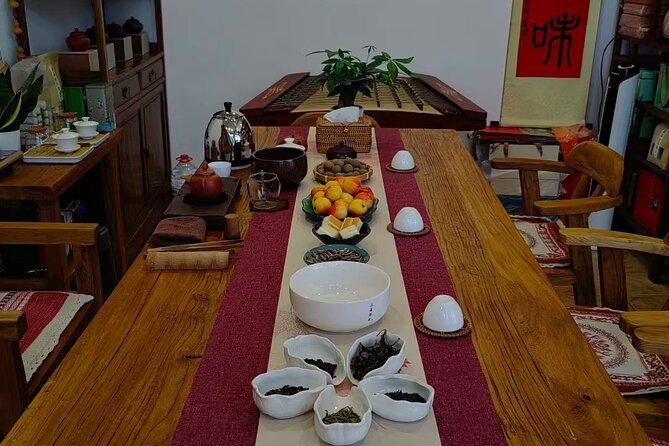
You start in central Beijing at Jixiaolan Former Residence, Ji Xiao Lan Gu Ju, near the Front Gate area (前门) in Xicheng. The start time is 9:00 am, and the activity ends back at the same meeting point, which makes this easier to stitch into a Temple of Heaven or nearby morning plan.
Beijing Tai Chi and Tea is run by Beijing San Feng Tai Chi Club. It is built around the idea that tai chi is not only exercise, it also carries Taoist cultural roots, especially the emphasis on relaxation, balance, and improving the flow of your body’s energy.
If you are the type who likes structured travel, this one works. You get a guided tai chi session, then you shift gears to a tea ceremony setting where attention and pacing matter. And since you are not commuting across town, you save time for real exploring.
A few more corners of Beijing worth exploring before you go.



What you do in the first hour: tai chi for beginners
The tai chi portion runs about 1 hour and covers four main elements, so you are not left guessing what to practice afterward.
First, you get a short introduction to Taoism knowledge and why tai chi is practiced the way it is. In plain terms, they frame tai chi as a relaxation practice that helps your body move more freely by working with calm, coordinated motion rather than forcing big effort. You do not have to agree with every belief to appreciate the approach.
Second, you learn basic relaxation forms. This matters because tai chi can look slow and simple, but without the right body cues, it can turn into stiff stretching. The instruction style aims to prevent that.
Third, you go through typical tai chi movements. You are shown what to do, how to stand, and how the motion flows from one part of your body to the next. If you are a first-timer, this section is where you actually feel like you learned something you can repeat later.
Fourth, you practice self-massage methods. That adds value because it gives you a tool you can use outside the class, especially if you travel a lot and your body feels tight from walking.
From the reviews, I like that Eric checks your experience level and organizes the lesson based on you. That is a big deal. A lot of tai chi classes assume everyone already knows how to follow slow movement. Here, you get guided pacing, step-by-step clarity, and patience.
How Eric teaches: calm cues you can copy
The best part of this class is the teaching tone. Eric is described as humble, kind, and very patient, and he also takes time to explain the basics clearly. You also get the kind of cues that help you focus during slow movement, like what to do with your eyes and how to keep your mind settled.
One practical takeaway you will likely notice: once you start syncing mind, eyes, and body, the movements stop feeling like a performance and start feeling like a routine. That shift helps even if you do not plan to become a tai chi devotee. It is a great reset after a day of sightseeing or a long morning train ride.
I also appreciate the class does not pretend you need years of practice to benefit from tai chi. Even if you only catch a few key movements, you leave with something you can try the next morning back in your hotel room.
Tea house time: tasting 4 to 5 teas with Alice
After tai chi, you head to the tea house for the ceremony and tasting portion. This part is where the experience turns from movement to attention, and it is led by Alice, the tea master during the tea ceremony segment.
You taste 4 to 5 different Chinese teas, and the tea setup also includes 3 to 5 snacks to go along with the tasting. This is important because tea flavors can be hard to compare on an empty stomach or without something small to balance bitterness and aroma.
Alice helps you distinguish tea quality yourself. That is a key skill, not just a fun tasting. Instead of you simply following a script, you learn what to pay attention to while you sip, and you get guidance for how to notice differences.
You also learn the Kungfu tea ceremony approach. Kungfu tea is about technique, patience, and attention to small details, not speed. In a travel context, that means you slow down at exactly the time most people are trying to squeeze in one more museum.
The cultural why: Shen, temperament, and self-reflection
The experience frames tea and tai chi through a cultural lens tied to Taoist practice. For tea, it is described as being important to Taoist practitioners, including how tea supports Shen and helps cultivate moral conduct and stable temperament.
You do not need to treat that as a medical promise. But you can take the spirit of it as a travel tool. When the instruction nudges you toward peace and self-reflection while sipping, it changes the whole vibe of the morning. Instead of collecting facts, you practice being present.
This is also why the tea ceremony part feels so valuable. It gives you a way to understand Chinese tea beyond taste. You learn the story and the method, then you connect both while you drink.
Travelers who read this also booked these.
- All-Inclusive Tour: Tiananmen Square, Forbidden City, Great Wall★ 5.0 · 2,873 reviews
- MuBus: Mutianyu Great Wall ENG/ESP/RUS Guided Bus Tour★ 5.0 · 2,361 reviews
- 4-Hour Small Group Tour to Forbidden City with Entry Tickets★ 5.0 · 1,863 reviews
- Beijing: Tiananmen Square Registration Service(Ticket)★ 4.5 · 1,704 reviews
Pace and group setup: what 3 hours feels like
The total duration is listed as 3 hours (approx.). That pacing works well because you get a full tai chi block, then you shift into a tea ceremony session that is still active but calmer.
It is a private tour/activity, so you only do the class with your group. In practical terms, that usually means less waiting around. It is also easier to ask questions if something feels confusing, especially if you are a beginner.
Also note: the experience includes coffee and/or tea. During the tea tasting, you will be drinking tea as part of the ceremony, and you get those snacks. What is not included is a full meal.
Price and value: is $95 fair for what you get?
The price is $95.00 per person. For central Beijing, that can feel like a lot until you look at what is actually built into the session.
You are not just attending a group lecture. You get:
- A guided tai chi class taught by an English-speaking master (about 1 hour)
- Instruction on movements plus relaxation forms and self-massage methods
- A tea ceremony session with tastings of 4 to 5 teas plus 3 to 5 snacks
- Guidance from Alice focused on tasting, tea quality, and Kungfu ceremony technique
You also do not have to pay extra for “fees and taxes,” since the listing says all fees and taxes are included.
Where you should be honest with yourself is transportation and meals. Private transportation is not included, and food is not included as a full meal. So you may want to eat before you go, or bring a plan for afterward.
Still, for a short, structured cultural class that includes both tai chi and tea, $95 can be good value, especially if you enjoy hands-on learning and you like leaving with practical routines.
Best for: who will enjoy this most
This experience is a strong fit if you:
- Want a morning activity that is calming, not exhausting
- Are curious about Taoist roots, especially how tai chi and tea connect culturally
- Prefer small-group or private teaching where you can ask questions
- Like structured tastings and guided learning (not just wandering in a tea shop)
If you are already very advanced in tai chi, you might still enjoy the tea ceremony and the cultural framing. But the tai chi portion is described as beginner-leaning in practice, based on how Eric checks experience level and explains basics.
This can also pair nicely with a Temple of Heaven morning. If your itinerary is already built around that area, this class gives you something meaningful close by without burning daylight.
Practical tips: shoes, mindset, and what to bring
The experience asks you to wear comfortable walking shoes. That makes sense because you are learning standing and moving forms, and you want stable footing.
You do not need to bring special equipment based on the provided info. But bring a mindset that matches the schedule. This is not a “workout to burn calories” class. It is about relaxation, presence, and controlled motion.
Also consider timing. Since it starts at 9:00 am, you will want to be at the meeting point early enough to settle in. The meeting point is near public transportation, so you can plan around that and avoid stress.
Finally, remember that food is not included as a full meal. Tea snacks are part of the experience, but if you get hungry quickly, eat a simple breakfast and then enjoy the tasting.
Should you book Beijing Tai Chi and Tea?
Book it if you want a short, high-quality cultural morning that mixes body and mind. You will likely enjoy how Eric teaches tai chi with patience and level-based adjustments, plus the tea ceremony portion led by Alice with guided tastings of 4 to 5 teas and 3 to 5 snacks. It is also a great choice when you want something more personal than a typical museum visit.
Skip it if you are only looking for a quick photos-and-wandering activity, or if you need a full meal included and your schedule depends on private transportation. Also, if you hate slow, quiet sessions, the tea ceremony will feel more like meditation than entertainment.
If your ideal Beijing day includes calm learning and you like leaving with skills you can repeat later, this is an easy yes.
FAQ
How long is the Beijing Tai Chi and Tea Ceremony experience?
It is approximately 3 hours.
What time does the experience start?
The start time is 9:00 am.
Where do we meet, and where does it end?
You meet at Jixiaolan Former Residence (Ji Xiao Lan Gu Ju, 前门 Xi Cheng Qu, Bei Jing Shi, China, 100052) and it ends back at the same meeting point.
Is this experience private or group-based?
It is a private tour/activity. Only your group participates.
What is included in the price?
Coffee and/or tea, plus all fees and taxes.
Is food included?
Food is listed as not included, but the tea session includes tasting snacks (3 to 5 snacks).
What happens during the tai chi portion?
You learn tai chi Taoism knowledge, basic relaxation forms, typical tai chi movements, and self-massage methods.
How many teas are tasted in the tea ceremony?
You taste 4 to 5 types of Chinese tea.
Does the tour include transportation?
Private transportation is not included. The meeting point is near public transportation.
What is the cancellation policy?
Free cancellation is available. You can cancel up to 24 hours in advance for a full refund. Changes within 24 hours of the start time are not accepted.
Newly Listed Tours in Beijing
- Beijing Half Day Walking Tour-Tiananmen Square and Forbidden City★ 5.0 · 1 review
- 1-Day Beijing private English speaking guide with driver service★ 5.0 · 1 review
- Flexible Private Layover Beijing Night Sightseeing with English Speaking Driver★ 5.0 · 1 review
- Private Day Trip to Huaibei International Ski Resort and Mutianyu Great Wall★ 5.0 · 1 review
- 2-Day Customizable Beijing Highlight Tour with Airport Transfer Option★ 5.0 · 1 review
- 1-Day Beijing Private tour: Mutianyu Great Wall and Summer Palace★ 5.0 · 1 review
- Private Virtual Tour in Beijing★ 4.0 · 1 review
- 1-Way Private Transfer Service between Tianjin cruise Port and Beijing hotels★ 5.0 · 1 review