Reviewed · TICKETS
Beijing:Drum and Bell Towers Entry Ticket- Cultural Treasure
A bell that weighs 63 tons sounds like a story. This entry ticket bundle takes you to two iconic buildings that once ran the daily clock for imperial Beijing, right on the city’s north end axis. I like the mix of historic architecture and practical English textual and visual guidance that helps you read the place fast. The only real watch-out is value and effort, since some visitors note steep, long stair sections and one review felt the online price was higher than buying locally.
What I like most is that you get both the Drum Tower and Bell Tower with a self-guided guide, so you are not stuck waiting for a live tour. I also like the systems-first approach: e-tickets arrive well ahead with QR codes, so your entry is straightforward and you can focus on the towers instead of ticket lines.
The drawback to weigh is cost versus flexibility. One verified booking called the ticket price excessive compared with what they would have paid on the spot, and if your mobility is limited, the stairs are a genuine factor.
In This Review
- Key highlights to know before you go
- Why these towers sit at the core of old Beijing
- Price and value: what $13 buys you, and what to watch
- How the e-ticket process works without drama
- Your 2-hour game plan: two towers, one timekeeping story
- Inside the Drum Tower: the city’s dusk rhythm
- Inside the Bell Tower: the 63-ton Yongle bell
- The bigger setting: architecture plus the axis experience
- Using the English guide to go beyond the gates
- Who this is best for, and who should rethink
- Should you book the Drum and Bell Towers ticket bundle?
- FAQ
- Where are the Bell and Drum Towers located in Beijing?
- How long does the experience last?
- What’s included in the ticket?
- Is a live tour guide included?
- Is an audio guide included?
- Do I need a passport to enter?
- How do the e-tickets work?
- When are the tickets reserved?
- What languages are available?
- Is the price fixed, and can I cancel?
Key highlights to know before you go

- Two towers, one entry bundle for a focused 2 hour visit
- Pre-reserved e-tickets that let you enter directly with QR codes
- English textual and visual guide to make the architecture click
- Timekeeping details that matter (drums, bell, and the old daily rhythm)
- Beijing axis location at the northern end of the central line
- Steep stairs possible inside, so plan accordingly
Why these towers sit at the core of old Beijing

The Drum and Bell Towers are not random landmarks. They’re placed at the northern end of Beijing’s central axis, where the city’s big formal design makes it easy to understand how power and planning worked. If you’re trying to connect Beijing’s layout to its daily life, these towers are a strong stop.
Both towers were initially built during the Yuan dynasty, with the timekeeping role continuing through the Ming and Qing eras. That long stretch matters, because these buildings were not just ceremonial. They were the city’s practical schedule, tied to the idea of a dusk drum and a morning bell.
Also, pay attention to the layout. The Bell Tower sits slightly north of the Drum Tower, so you’re not just walking from one building to another. You’re walking along an architectural rhythm built into the city plan. The complex is also a protected historic site, covering 12,597 square meters, which helps explain why it feels like more than a quick photo stop.
Beijing tours travelers are booking next



Price and value: what $13 buys you, and what to watch
You’ll pay $13 per person for tickets to both towers, plus an English textual and visual guide. For a lot of Beijing sights, that kind of bundle can be good value because you’re covering two major structures in one go, with a guide component that is designed to help you understand what you’re seeing.
That said, one verified booking labeled the price excessive versus buying on site. I can’t tell you what the local ticket price is on the day you arrive, but I can tell you how to think about value. If you like saving time and getting in smoothly, prebooking tends to feel worth it. If you’re price sensitive and enjoy spontaneity, you might compare options at arrival.
The good news is the ticket bundle is designed for speed. The offer specifically includes skipping the ticket line, so you are paying for time saved as much as entry itself. Two hours is also a clue: this is a compact experience, so you’re not “overpaying for an all day tour.”
How the e-ticket process works without drama

This is a ticket-first experience, not a guided walking tour. After you place your order, you provide your passport name, passport number, and date of birth. The reservation is made 3 days prior to your visit, and if it goes through, you receive e-tickets by email or WhatsApp.
Then you enter directly using those e-tickets. There’s no mention of needing a separate confirmation voucher at the gates, which usually means less hassle when you arrive. This matters in Beijing, where lines can feel like a second attraction.
Bring your passport or ID card. That’s explicitly called out, so don’t treat it like a minor suggestion. For self-entry experiences, that tiny detail can be the difference between walking in and having a frustrating moment at the entrance.
Your 2-hour game plan: two towers, one timekeeping story

You should plan this visit as a compact loop through the Drum Tower and the Bell Tower, with the English textual and visual guide acting as your “explain it to me” tool. Since the experience is set for 2 hours, you’ll want to keep moving at a steady pace and use the guide to focus your questions.
A practical way to structure it is to let the theme lead you. Start with the Drum Tower side of the story, because it’s tied to the dusk rhythm and the concept of sounding time marks to the city. Then shift to the Bell Tower, where the most famous detail is the legendary bell weight and its role in the morning signal.
Because the experience includes a guide rather than a live presenter, you’ll get the most from it if you slow down at key points, read the labels or the guide prompts, and then move on. Think of it as museum-style self learning, but in a working historic complex.
Inside the Drum Tower: the city’s dusk rhythm

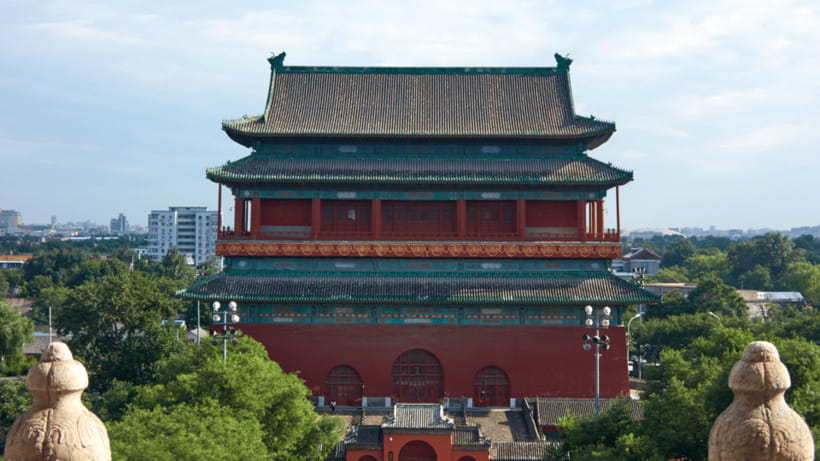
The Drum Tower is where the “dusk drum” idea becomes concrete. In the historic setup, there used to be 25 drums in the Drum Tower, which gives you a sense of how serious the daily timing was. This wasn’t just one instrument. It was an organized system meant to carry across the city.
The guide you receive is meant to help you connect those facts to what you’re seeing in front of you. Since you’re on your own, the guide’s visual cues are especially useful for spotting layout details that your eyes might otherwise miss.
One thing to plan for is physical effort. A verified booking specifically warned that the stairs are very steep and quite long, and that it is not suitable for reduced mobility. Even if you’re fine on stairs, it’s smart to wear shoes with grip and pace yourself. This is one of those “worth it, but don’t rush” situations.
Travelers who read this also booked these.
- From Beijing: Mutianyu Great Wall Tours with Options★ 4.9 · 9,216 reviews
- Beijing: T-Square & Forbidden City Group or Private Tour★ 4.8 · 4,446 reviews
- All-Inclusive Tour: Tiananmen Square, Forbidden City, Great Wall★ 5.0 · 2,873 reviews
- MuBus: Mutianyu Great Wall ENG/ESP/RUS Guided Bus Tour★ 5.0 · 2,361 reviews
Inside the Bell Tower: the 63-ton Yongle bell
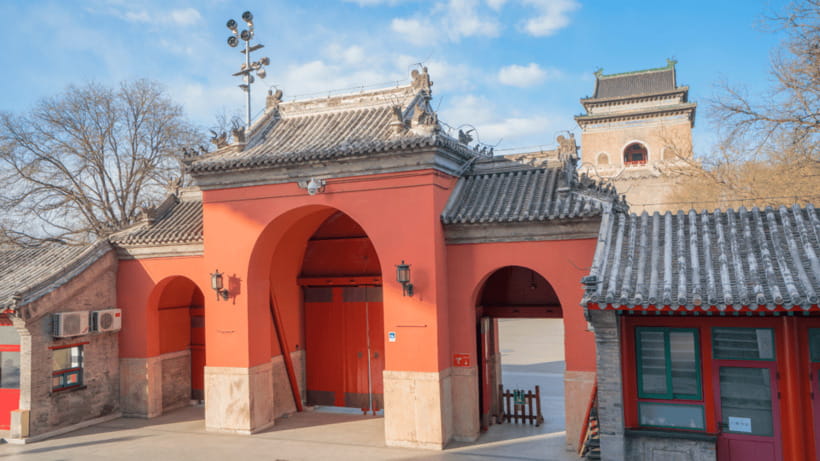
If the Drum Tower is about the dusk signal, the Bell Tower is where the story hits hard. The bell cast during the Yongle era is famous, and the numbers are part of the magic. This bell weighs 63 tons and is known as the King of Ancient Bells in China.
That detail is not trivia. It’s a clue to how important the bell signal was to the city’s daily rhythm and how advanced the casting and engineering must have been for its era. When you’re standing near the bell area, let your mind translate that weight into the kind of infrastructure it would take to support sound across a large urban space.
The Bell Tower and the Drum Tower also function as architectural exemplars. The fact that the complex is recognized as a state-level protected historic site tells you that the design itself is part of the value, not just the objects inside. Use your English textual and visual guide to read the “why this shape” story, because these towers are not only about views, they’re about form tied to function.
The bigger setting: architecture plus the axis experience

It’s easy to think of these towers as standalone. In reality, they’re a pair anchored to Beijing’s northern end of the central axis, which is one of the city’s biggest mental maps. Understanding that axis helps you see why the towers exist where they do and why they were so central to order.
The complex covers 12,597 square meters, which is large enough that the surrounding feel matters. Even if your ticket time is only 2 hours, you’ll get a better visit if you treat the area as part of the experience, not just a corridor between two entrances.
And layout tells a story too. The Bell Tower is slightly north of the Drum Tower, so your movement becomes part of the narrative from dusk to morning. It’s a small detail, but it makes the visit feel more intentional.
Using the English guide to go beyond the gates
This package includes an English textual and visual guide. That’s useful because there’s no live guide and no audio included. You’ll rely on your own reading and the guide’s visuals to understand what you’re looking at.
One verified booking highlighted a PDF brochure in English that included not only tower background, but also information about the surrounding hutongs and even suggestions for local restaurants nearby. That extra context can transform your “two towers” stop into a more rounded slice of Beijing everyday life.
If you like adding small local texture after a major sight, consider using the guide before you leave the complex. You’ll be starting from a stronger base, because you’ll know what kind of neighborhood fabric you’re stepping into, and you’ll have some food leads ready without needing to research from scratch.
Who this is best for, and who should rethink
This is best for people who want a focused cultural visit with minimal time lost in lines. If you like self-guided experiences, or you’re comfortable reading labels and using a guide, you’ll probably enjoy it.
It’s also a good choice for anyone who wants both towers in one go. Many visitors only hit one structure, but the bundle is made to give you the full “dusk drum, morning bell” contrast.
Consider rethinking if you have mobility limitations. The steep and long stairs note is real, and the experience is not described as having an accessibility workaround. If stairs are a major issue, plan carefully.
Also consider rethinking if you are extremely price sensitive and don’t care about saving time. One verified booking felt the online price was too high compared with buying on site, so do your own mental math about cost versus convenience.
Should you book the Drum and Bell Towers ticket bundle?
If you value smooth entry and a compact 2-hour plan, I think this is a solid booking. The biggest reason is the combination of skip-the-line e-tickets and an English guide that helps you understand what you’re seeing without paying for a live guide or audio tour.
Book it if you want two iconic timekeeping landmarks in one package, and you like the idea of using the guide to connect the towers to the surrounding hutong area. If you also enjoy practical preparation, the fact that e-tickets are sent by email or WhatsApp well before your visit helps you feel organized.
Skip it or compare first if you’re mainly trying to find the lowest possible price and you don’t mind dealing with entry processes on the ground. And if stairs are a serious limitation for you, treat that as a deal-breaker or at least a strong warning.
FAQ
Where are the Bell and Drum Towers located in Beijing?
They sit at the northern end of Beijing’s central axis.
How long does the experience last?
The duration is 2 hours.
What’s included in the ticket?
You get a ticket for the Bell Tower and a ticket for the Drum Tower, plus an English textual and visual guide for both.
Is a live tour guide included?
No. A live tour guide is not included.
Is an audio guide included?
No. An audio guide is not included.
Do I need a passport to enter?
Yes. You should bring a passport or ID card.
How do the e-tickets work?
After your reservation is successful, you receive e-tickets via email or WhatsApp. You can enter the Bell Tower and Drum Tower directly using the e-tickets provided.
When are the tickets reserved?
Tickets are reserved 3 days prior to your visit.
What languages are available?
The included guide is in English.
Is the price fixed, and can I cancel?
The price is listed at $13 per person, and free cancellation is available up to 24 hours in advance for a full refund.
Newly Listed Tours in Beijing
- Beijing Half Day Walking Tour-Tiananmen Square and Forbidden City★ 5.0 · 1 review
- 1-Day Beijing private English speaking guide with driver service★ 5.0 · 1 review
- Flexible Private Layover Beijing Night Sightseeing with English Speaking Driver★ 5.0 · 1 review
- Private Day Trip to Huaibei International Ski Resort and Mutianyu Great Wall★ 5.0 · 1 review
- 2-Day Customizable Beijing Highlight Tour with Airport Transfer Option★ 5.0 · 1 review
- 1-Day Beijing Private tour: Mutianyu Great Wall and Summer Palace★ 5.0 · 1 review
- Private Virtual Tour in Beijing★ 4.0 · 1 review
- 1-Way Private Transfer Service between Tianjin cruise Port and Beijing hotels★ 5.0 · 1 review
Tickets, compared.

Forbidden City Tour(Group/Private)-Tickets Included
Read our review →
4-Hour Small Group Tour to Forbidden City with Entry Tickets
Read our review →
Tiananmen Square Registration Service(Ticket)
Read our review →
The Temple of Heaven or Summer Palace Entry Ticket
Read our review →
Beijing Forbidden City Ticket Booking (Optional: guide service)
Read our review →
Mutianyu Great Wall Daily Tour with Ticket & Lunch
Read our review →
Forbidden City&T-Square Small GroupTours w/ ticket(Eng/Esp Guide)
Read our review →