
Reviewed · CRUISES & BOAT TOURS
China Trip to Beijing, Xi’an, Chengdu, Shanghai & Yangtze Cruise
Pandas and history in one tight loop. This tour strings together China’s biggest “you can’t skip it” sights, from the Great Wall and Terracotta Warriors to Chengdu pandas and a Yangtze cruise, with private English-speaking guides like Kitty in Beijing, Carol Chen in Xi’an, Kevin in Chengdu, and Sophie Lee in Shanghai. I also really liked the pacing that keeps the day structured, yet still leaves room to breathe, plus the convenience of private drivers and air-conditioned transport.
One thing to consider: this is a packed 13-day circuit with early starts and a lot of transit by high-speed train and cruise schedules, so it’s less suited if you want lots of unplanned free time or slow travel.
In This Review
- Key highlights at a glance
- Beijing: Tiananmen, Forbidden City, and Temple stops without the chaos
- Mutianyu Great Wall and Hutong rickshaws, then Summer Palace reset
- Xi’an: Terracotta Warriors, Shaanxi history, and the Muslim Quarter feel
- Chengdu: panda mornings, Kuanzhai Alley snacks, and People’s Park tea time
- Chongqing to the Yangtze: Jiefangbei, Ciqikou, and cruise life starting late
- Fengdu forest walks, the Captain’s Welcome Party, and Three Gorges in full day mode
- Shanghai classics: Shanghai Museum, Yu Garden lunch, Huangpu River cruise, and the Bund at night
- Price and included logistics: what you are really paying for
- Who this tour suits best, and who should think twice
- Should you book this Beijing to Shanghai tour?
- FAQ
- What cities are included in this 13-day China tour?
- Are high-speed trains included between cities?
- Is the Yangtze River cruise full board?
- Do I get private English-speaking guides and private transport?
- Are meals included every day?
- What do I need to provide when booking?
- Is the tour refundable or changeable after booking?
Key highlights at a glance
- Great Wall at Mutianyu with a round-trip cable car plus big views all the way along the ridge.
- Terracotta Warriors paired with a major history museum day in Xi’an.
- Chengdu Panda Base in the morning when pandas are most active.
- Yangtze River cruise with full board, including a Captain’s Welcome Party and a Three Gorges day trip.
- Shanghai hits in one sweep, from the Shanghai Museum to Yu Garden and the Bund.
Beijing: Tiananmen, Forbidden City, and Temple stops without the chaos

Beijing can feel like a lot, and that’s exactly why this tour format helps. You start with a straightforward airport arrival pickup, then you’re escorted to your hotel and can ease into the trip on your own schedule. No scrambling, no guessing which line to take. If you want the day to be light, you can make it light.
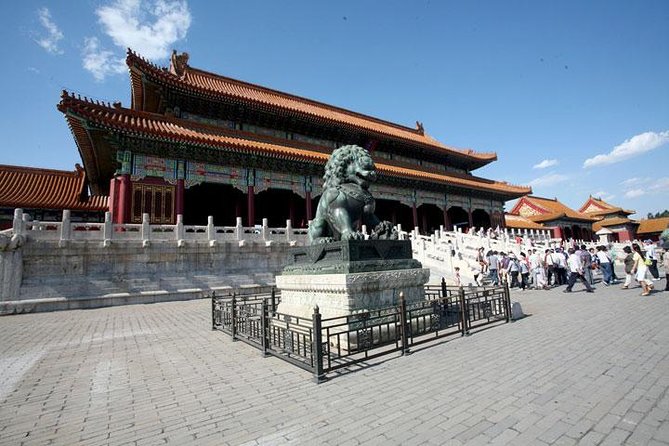
Then you jump into the classic Beijing core in a sensible order. The morning begins at Tiananmen Square, quick and direct, with time to take in the scale before the crowd pressure builds. After that, you head into the Forbidden City, the Palace Museum, where the day becomes about more than pretty buildings. You’ll see how the imperial system worked, how rulers lived, and you’ll be surrounded by major art treasures tied to the court. This isn’t the kind of place you “skim.” With a guide steering the story, you spend less time wondering what you’re looking at and more time understanding why it mattered.
After lunch, you shift into something very Beijing but less “postcard obvious.” The Lama Temple (Yonghegong) is an imperial lamasery that has stayed intact for over 300 years, and you get a real architectural mix here, Han, Mongolian, and Tibetan influences. Next comes the Temple of Heaven, with its unique circular-cosmos design logic, built for emperors to worship the heavens in hopes of good harvests. By the end, Beijing feels less like one giant museum and more like a connected system of belief, power, and design.
A small practical win: several of these major sites include admission in the tour schedule, which matters because it removes one more moving part from your planning.
Slow down on the water

Mutianyu Great Wall and Hutong rickshaws, then Summer Palace reset
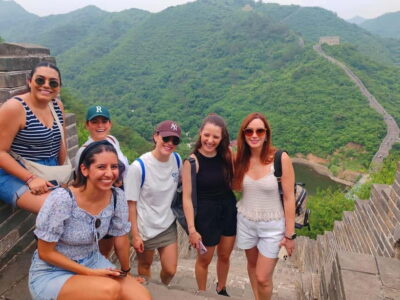
If your bucket list includes the Great Wall, you’re in good hands here. The Mutianyu Great Wall stop comes with a round-trip cable car arranged, which is a huge practical advantage. You’re not negotiating steep steps before you even reach the views. From the wall, you look up and down the line of fortifications and get that spine-stretching feeling that makes most people stop talking for a minute.
You also spend enough time up there that it’s not just a quick photo run. You get to walk, choose your own pace, and feel how the wall threads through terrain rather than sitting in the middle of a flat landscape.
On the way back, there’s a short drive-by look at the Bird’s Nest (Olympic National Stadium). It’s not a full visit, so treat it like a background context stop rather than a must-do.
Then the tour pivots from grandeur to neighborhood life. The Hutong rickshaw tour is one of the best ways to understand Beijing beyond the big monuments. You explore older alley lanes, and you even have a chance to visit a local family. That family visit part is important because it changes the tone from watching to listening. Even if your Mandarin is limited, you still pick up on everyday rhythm: where people sit, how errands flow, and how the neighborhood holds memory.
To balance all that walking, the next day ends Beijing on a calm note with the Summer Palace. It’s the largest existing imperial garden, and this is where Beijing softens. You trade hard stone and battlements for water, bridges, and grand garden layouts meant for leisure and seasonal perspective. It’s a nice mental reset before you switch cities.
Xi’an: Terracotta Warriors, Shaanxi history, and the Muslim Quarter feel
Xi’an is where the tour shifts from “imperial center” to “ancient power in the real world.” After wrapping up Beijing, you take a high-speed train to Xi’an in about 4.5 hours. You’re met on arrival, helped with hotel check-in, and then you’re set up to start the next day without the usual stress.
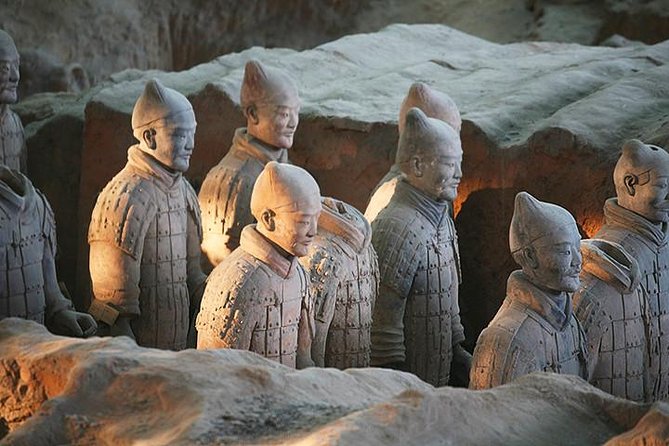
The centerpiece day is the Museum of Qin Terra-cotta Warriors and Horses. The tour focuses on the main excavated pits, where the scale hits you fast. You’re looking at thousands of figures, each with details tied to ancient weapons and military thinking. It’s one of those sites where time feels slow in the best way, because your brain keeps trying to count and interpret. This is one of the most highly praised stops on the trip for a reason.
In the afternoon, you move to the Shaanxi History Museum, which is a strong pairing with Terracotta because it broadens the story beyond one archaeological moment. You can connect artifacts to bigger timelines. Then you round out with the Small Goose Pagoda, a Tang Dynasty-era Buddhist site. It’s a shorter stop, but it adds spiritual and cultural depth to the day’s heavy military theme.
On the next Xi’an day, you get the city’s living edge. The Xi’an City Wall visit is timed for classic urban views, and the best option here is cycling along the top of the fortification. Bike rental isn’t included, so factor that small extra cost if you want the full experience. Either way, standing on the wall gives you a different sense of Xi’an’s size and street geometry.
Then you head into the Great Mosque area in the Muslim Quarters and spend time exploring the bazaar. This is where you can snack or pick up something simple for lunch on your own. If you like people-watching and small stalls, this part tends to be fun without being too structured. You’re not stuck in one lane for hours.
After Xi’an, the next high-speed train takes you to Chengdu in about 4 hours. You’re met right at the station exit and transferred to a hotel.
Chengdu: panda mornings, Kuanzhai Alley snacks, and People’s Park tea time
Chengdu is the emotional payoff city, especially because the schedule puts the Giant Panda Breeding Research Base first. The tour explicitly recommends arriving early because pandas are most active in the morning. That matters. You’re not just trying to spot pandas, you’re trying to catch them doing panda things, bamboo breakfast, tree climbing, and that relaxed energy when they’re not mid-nap.
The base experience also includes extra layers beyond viewing. You can visit a panda hospital, delivery rooms, a museum, and even a 4D cinema for context. Even if you’re mostly there for cuteness, those pieces help you understand what the facility is working on.
Next you shift to everyday Chengdu with Kuanzhai Alley. It’s designed for walkers, so you can move at your own speed, grab local snacks, and browse craft style goods. Then you visit the Jinsha Site Museum, which grounds Chengdu in its older cultural story.
The last stop of the day is People’s Park, one of the most popular city parks. This is where Chengdu feels like Chengdu, not just a stop on a route. People drink tea leisurely, and there’s even a dating corner where you can see the local social rhythm play out. You’re not required to participate, but you get a rare chance to watch how people actually spend time.
Chongqing to the Yangtze: Jiefangbei, Ciqikou, and cruise life starting late
Chongqing is your gateway to the river. You take a bullet train there in about 2 hours, then you’re picked up from the station. The plan starts with Jiefangbei CBD and Ciqikou Ancient Town before you board the cruise ship.
Then comes the river transition, the kind you feel in your bones once you settle in. The ship departs from Chongqing around 21:30, and you start the Yangtze cruise with full-board service. That means meals are handled, and you can focus on the scenery and the schedule rather than planning dinner like a production.
One thing I like about this cruise setup is the built-in recovery time. You can sit on the sundeck, take in river light changes, or join onboard cultural programs when offered. After a busy day of city hopping, it’s a relief to let the boat do the moving.
Travelers who read this also booked these.
- From Beijing: Mutianyu Great Wall Tours with Options★ 4.9 · 9,216 reviews
- Beijing: Forbidden City Tour(Group/Private)-Tickets Included★ 4.8 · 7,974 reviews
- Beijing: T-Square & Forbidden City Group or Private Tour★ 4.8 · 4,446 reviews
- All-Inclusive Tour: Tiananmen Square, Forbidden City, Great Wall★ 5.0 · 2,873 reviews
Fengdu forest walks, the Captain’s Welcome Party, and Three Gorges in full day mode
The first cruise day onshore focuses on Fengdu County and the Shuangguishan National Forest Park. The walking here is framed as a leisurely way to melt into nature. This is a smart counterbalance to the big, heavy engineering moments you’ll hit soon.
You’re also free to enjoy cruise downtime. In the evening, there’s a Captain’s Welcome Party, which is a fun social touch if you like meeting people from other places and getting a feel for how the ship works.
Then you hit one of the most important experiences on the entire trip: the Three Gorges excursion, listed as an 8-hour day with options such as Shennong Stream or Shennv Stream. This is a long day, so it’s worth thinking ahead about comfort. Expect a full schedule, and plan to pace yourself, because you’ll be moving more than you do during the cruising-only hours.
On the next day, you check out of the ship and visit the Three Gorges Dam, described as the world’s largest hydropower project. It’s the kind of site you can appreciate even if you’re not a technical person, because the scale changes your sense of what rivers and human planning can do.
After that, you head to Yichang, where you’re transferred to the railway station and take a high-speed train to Shanghai (about 7.5 hours). You’re met on arrival and taken to your hotel.
Shanghai classics: Shanghai Museum, Yu Garden lunch, Huangpu River cruise, and the Bund at night
Shanghai has a way of switching you back to “modern China” fast. The tour makes that transition easy by including major landmarks while keeping your afternoons usable.
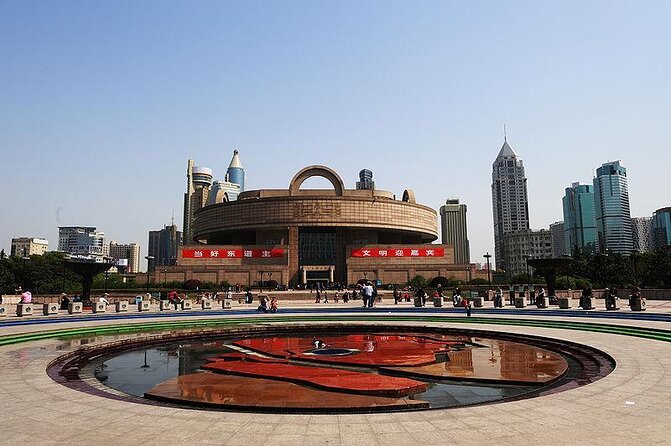
Day 12 starts at the Shanghai Museum, with a focus on bronze wares, ceramics, and Chinese calligraphy and painting. If you care about art and objects, this stop gives you more texture than just walking streets.
Then you visit Yu Garden (Yuyuan), a traditional private garden with ponds, rockwork, and classic architecture. Gardens are one of the best ways to understand Chinese design thinking, because every path and sightline is built to control how you feel.
Lunch is included here, an a la carte meal with a stated value of CNY150 per person, and you’ll get Shanghai and Cantonese style dishes. That matters for value, because food is one of those costs that adds up quickly in big cities.
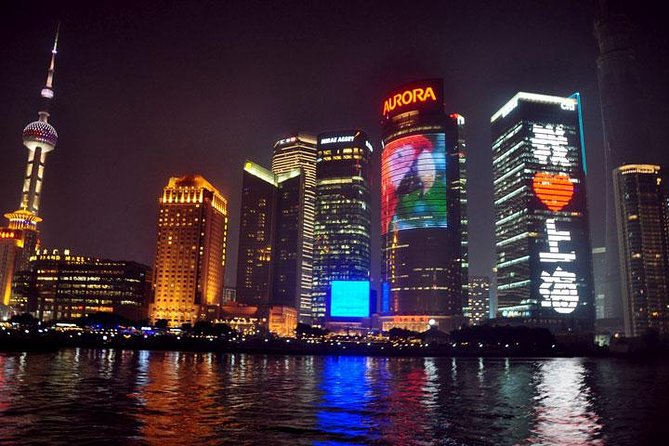
In the afternoon, you head to the Huangpu River for about an hour cruise, then you reach the Bund area where you get free time strolling. If you like skyline views, this is the part that tends to hit hard. Finally, you end with Tianzifang, a cultural block with studios and shops, plus restaurants and bars. It’s a nice last-day mix of artsy and casual.
Price and included logistics: what you are really paying for
The price is $3,199 per person for roughly 13 days, and the value comes from how much is bundled into a single plan.
Here’s what stands out as the real cost-savers and stress-savers:
- Private English-speaking guides with private drivers and air-conditioned vehicles. This is huge when you’re hopping between Beijing, Xi’an, Chengdu, Chongqing, and Shanghai.
- Major transportation included by high-speed train between cities, not just one or two legs. You’re covering Beijing to Xi’an, Xi’an to Chengdu, Chengdu to Chongqing (by bullet train), and Yichang to Shanghai.
- Yangtze River cruise with full board, which removes the daily meal and schedule planning headaches that can otherwise wreck a budget.
- A lot of admissions are covered on the core sights, including places like the Forbidden City, Lama Temple, Temple of Heaven, Terracotta Warriors, key temples, the panda base, Shanghai Museum, and more.
- Several lunches and dinners are included, including welcome and garden-area meals.
A possible tradeoff is that you are paying for organization, not solitude. The itinerary is efficient, so you don’t have much time to wander off-route for hours. If you want maximum flexibility, you’d likely need to build your own plan.
Still, for most people, this feels like a smart way to see the highlights without turning your vacation into an Excel project.
Who this tour suits best, and who should think twice
I think this tour is a strong fit if you:
- Want the big “greatest hits” of Beijing, Xi’an, pandas, the Yangtze, and Shanghai.
- Prefer a guide to handle route logic and context for major sites like the Forbidden City and Terracotta Warriors.
- Like structured days with just enough free time to breathe, especially in Shanghai’s Bund and Tianzifang areas.
- Enjoy meeting different parts of China through different city moods, imperial power, frontier archaeology, panda culture, river engineering, and skyline modernity.
It might be less ideal if you:
- Hate long travel days or tight schedules. High-speed trains plus cruise timing mean you live by the clock more than you might like.
- Want lots of unscheduled meals and drifting time. Some meals are on your own, and several days are built around set activities.
Should you book this Beijing to Shanghai tour?
Yes, if your priority is maximum major-sights coverage with minimal planning friction. The combination of Mutianyu Great Wall, Terracotta Warriors, and a full-board Yangtze cruise is exactly the kind of trio that’s hard to replicate with the same ease. Also, having guides by name across key cities, like Kitty in Beijing and Carol Chen in Xi’an, is the difference between seeing things and actually understanding what you’re seeing.
Book this if you can handle an active pace. If you want slow travel, choose fewer cities. But if you’re ready for a smart, guided sprint through China’s top chapters, this one is easy to recommend.
FAQ
What cities are included in this 13-day China tour?
The tour covers Beijing, Xi’an, Chengdu, Chongqing (for the start of the cruise), Yichang (for ending the cruise), and Shanghai.
Are high-speed trains included between cities?
Yes. The tour includes one-way high-speed trains for the routes Beijing to Xi’an, Xi’an to Chengdu, and Yichang to Shanghai. It also includes bullet train travel from Chengdu to Chongqing.
Is the Yangtze River cruise full board?
Yes. The Yangtze River cruise is included with full board.
Do I get private English-speaking guides and private transport?
Yes. You have private English-speaking guides, plus private drivers and an air-conditioned vehicle.
Are meals included every day?
Breakfast is included 12 times, and the tour includes several lunches and dinners (lunch 4 times, dinner 3 times). Some lunches are listed as on your own on certain days.
What do I need to provide when booking?
The tour requires passport details at booking, including passport name, number, expiry, and country.
Is the tour refundable or changeable after booking?
No. The experience is non-refundable and cannot be changed for any reason.
Newly Listed Tours in Beijing
- Beijing Half Day Walking Tour-Tiananmen Square and Forbidden City★ 5.0 · 1 review
- 1-Day Beijing private English speaking guide with driver service★ 5.0 · 1 review
- Flexible Private Layover Beijing Night Sightseeing with English Speaking Driver★ 5.0 · 1 review
- Private Day Trip to Huaibei International Ski Resort and Mutianyu Great Wall★ 5.0 · 1 review
- 2-Day Customizable Beijing Highlight Tour with Airport Transfer Option★ 5.0 · 1 review
- 1-Day Beijing Private tour: Mutianyu Great Wall and Summer Palace★ 5.0 · 1 review
- Private Virtual Tour in Beijing★ 4.0 · 1 review
- 1-Way Private Transfer Service between Tianjin cruise Port and Beijing hotels★ 5.0 · 1 review
Cruises & Boat Tours, compared.
Water-Great Wall Odyssey: Hike & Cruise One Day Tour
Read our review →
Water-Great Wall Odyssey: Scenic Bus & Cruise Day Tour
Read our review →
Longqingxia Gorge Cruise and Guyaju Cave Dwellings Private Day Tour
Read our review →
Beijing Private Tour to Badaling Great Wall and Longqing Gorge with Boat Ride
Read our review →
Private Day Tour to Longqing Gorge and Dingling at the Ming Tombs with Lunch and Boat Ride
Read our review →
14-Day Small-Group China Tour: Beijing, Xi’an, Guilin, Yangtze Cruise, Shanghai
Read our review →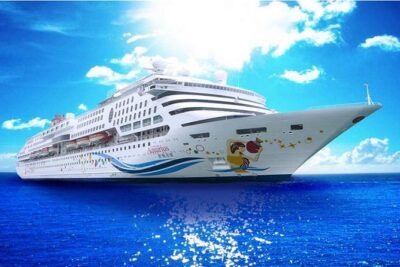
Private Transfer to Tianjin Xingang Cruise Port-Every Group Size
Read our review →
Private Day Tour to Longqing Gorge with Boat Ride and Cable Car from Beijing
Read our review →Browse the lists this tour appears in