
Reviewed · CHINESE CALLIGRAPHY WORKSHOPS
Chinese Calligraphy Class for Small Group
Your hand learns to slow down. This small-group Chinese calligraphy class in Beijing is interesting because you do the work, not just watch, with close coaching on brush grip and posture plus a short philosophy angle.
I also love that you can pick a class length, roughly 30 minutes to 2 hours, so you can match it to your sightseeing day. One possible drawback: the shortest sessions can feel a little rushed if you want a really neat, satisfying finished piece.
In This Review
- Key things I’d bet on
- Chinese Calligraphy in Beijing’s Hutong World, Not a One-Time Demo
- Meeting at Hilton Wangfujing and Finding the Right Entrance Fast
- Your Class Flow: Standing Calm, Posture Control, Brush Stroke Basics
- Step 1: A standing exercise for focus
- Step 2: Posture, brush use, and stroke start points
- Step 3: Practice, guided writing, and tea
- Picking the Right Time Slot: 30 Minutes vs 2 Hours
- Yin-Yang and Inner Peace: What It Adds to Your Writing
- Tools, Tea, and Your Take-Home Calligraphy Piece
- Small Group Size: Why It Matters More Than You Think
- Price and Value: Is $20 a Fair Deal in Beijing?
- Who Should Book This Class, and Who Might Want Something Else
- Should You Book Hutong Calligraphy Class in Beijing?
- FAQ
- How long is the Chinese calligraphy class?
- What is included in the class?
- Do I get to take home what I make?
- Where do we meet in Beijing?
- Is this class for beginners or kids?
- What is the cancellation policy?
Key things I’d bet on
- Max 15 travelers for real attention and on-the-spot corrections
- Flexible start times so you can fit calligraphy between other Beijing sights
- A clear 3-step practice flow focused on stance, posture, and stroke basics
- Tea and simple Yin-yang ideas that connect calm focus to steadier writing
- Supplies included, so you can concentrate on learning instead of hunting tools
Chinese Calligraphy in Beijing’s Hutong World, Not a One-Time Demo
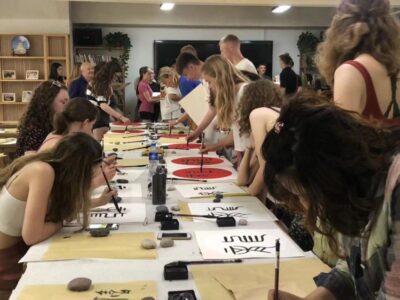
If you want a Beijing activity that feels cultural and hands-on, this class hits the mark. You’ll learn Chinese calligraphy in a small group, with an emphasis on getting your body into the right position and learning the stroke foundation that makes the rest easier.
The location is also a big part of the appeal. The meet-up is at Hilton Beijing Wangfujing, which puts you close to one of the city’s most famous shopping and street-life areas. Then you move into a more local feel around the hutong-style environment.
And yes, you walk away with something you can show at home. The experience is designed so you leave with a special memento from the session, not only a memory of watching someone else write.
Try brush strokes with an ink master

Meeting at Hilton Wangfujing and Finding the Right Entrance Fast
Your start point is clearly stated: you meet at the entrance of the Hilton Beijing Wangfujing Hotel Lobby (Wangfujing Dong Street, postal code 100006). This is helpful because it gives you a real landmark in the middle of Beijing traffic and walking patterns.
A practical note, based on real-world experience: sometimes the exact venue can be a little confusing if your map drops you at the wrong street or wrong building number. One helpful approach is to pay attention to the building number and look for the arts center entrance. In at least one case, the class entrance shared space with another business, and being alert to that detail saved time.
If you’re arriving from another part of Beijing, give yourself a few extra minutes to sort the correct entrance. It makes the whole class feel smoother from the first minute.
Your Class Flow: Standing Calm, Posture Control, Brush Stroke Basics
The instruction is structured. You’re not thrown into writing right away without a base.
Step 1: A standing exercise for focus
You begin with what’s described as an immersion-style standing practice. The goal is to help you find inner peace and reduce impatience, which sounds abstract until you realize it’s basically a way to slow your body down before you ask your hand to create controlled strokes.
Step 2: Posture, brush use, and stroke start points
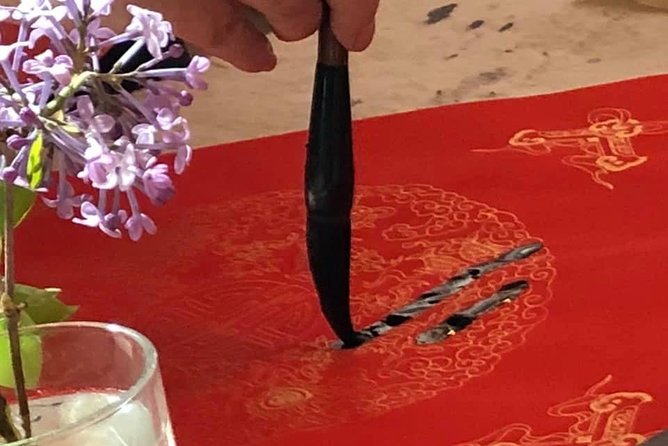
Next comes the practical part: correct posture for calligraphy practice. Your teacher shows you how to use the writing brush, how to hold and position yourself, and the basis stroke of calligraphy.
This is where beginners usually feel the biggest difference. Once your body is aligned and your brush technique is guided, your strokes stop wobbling as much. Even if your calligraphy isn’t going to look like a mastered work in one hour, you can still see improvement.
Learn a craft from a local
- Beijing: Dumpling Making Workshop with Meal and Tea★ 4.7 · 69 reviews
- Online Cooking Class Beijing Dumplings and Cuisine by Sunflowerli Renowned Chef★ 5.0 · 65 reviews
- Beijing Wangfujing Calligraphy Class Nearby Forbidden City★ 5.0 · 56 reviews
- Chinese Kungfu class in old temple beside Forbidden Ci★ 4.8 · 53 reviews
Step 3: Practice, guided writing, and tea
Then you practice, with teaching and adjustments. The class also includes a tea element as part of the routine, matching the idea of learning calligraphy as a mindful cultural practice rather than a rushed craft.
Picking the Right Time Slot: 30 Minutes vs 2 Hours
One of the smartest parts of this class is that you can choose the time length. Options listed include 30 minutes, 45 minutes, about 1 hour, 1.5 hours, and 2 hours. That flexibility matters because calligraphy has a learning curve, and short sessions can only do so much.
Here’s how I’d think about it when you’re planning your day:
- If you choose 30 minutes, you’re likely getting a fast introduction plus enough instruction to make a simple starting piece. This is a good choice only if you have very tight time and you mainly want the experience.
- If you choose about 1 hour, you usually get more time to repeat the basics and produce a more satisfying final result.
- If you choose 1.5 to 2 hours, you give yourself time to correct mistakes and refine your strokes, which is where beginners often feel proud of the outcome.
A lot of first-timers prefer not to over-optimize the schedule. If you’re going to spend money and time, don’t also cut the practice too short. Choose the length that lets you finish with something you’ll actually want to keep.
Yin-Yang and Inner Peace: What It Adds to Your Writing
The class isn’t only about brush technique. It also includes a cultural layer connected to Chinese ancients’ ideas, specifically Yin-yang theory and the goal of inner peace.
For you, the practical takeaway is simple. When your mind is calmer and your posture is steadier, your hand movement improves. You’re basically pairing mental focus with physical control, and that pairing makes beginner calligraphy easier.
I also like that the teaching approach tends to explain culture alongside the skill. Some instructors named Richard and David are noted for being patient and for sharing cultural context and philosophy during the lesson. That makes the session feel less like a transaction and more like you’re learning why the art works the way it does.
Tools, Tea, and Your Take-Home Calligraphy Piece
This is a supplies-included class. You’re provided with calligraphy materials to use during the session, which means you can start immediately.
Tea is part of the flow as well. Since the routine includes the tea segment, you can expect a small pause that keeps the mood calm and lets you reset before more practice.
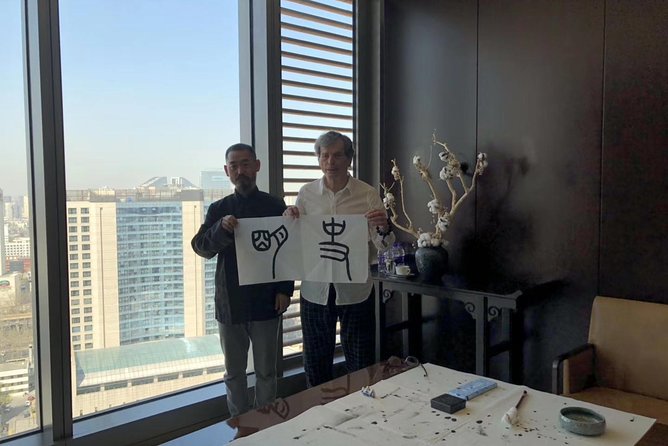
Now, what do you leave with? The experience is designed so you walk away with a special memento, and multiple people in instructor-led sessions mention leaving with a finished calligraphy piece. In some cases, the final piece was described as being created on something like a canvas, and in others as being painted on a large red hanging ornament.
Important practical point: the exact souvenir format may vary depending on the class setup and what your instructor prepares that day. But the consistent theme is that you should leave with a physical artwork that reflects the practice you did in class.
Also, there are hints that some instructors help with memories, including taking photos during the session. If that matters to you, ask your teacher to capture a couple of shots once you start practicing, so you can remember your brush strokes and your finished work.
Small Group Size: Why It Matters More Than You Think
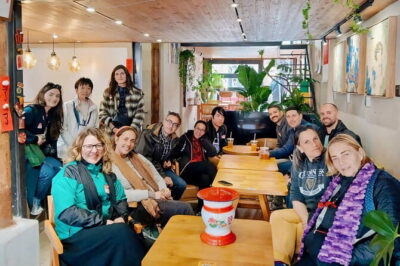
This class caps at 15 travelers. That number is meaningful because calligraphy is mostly feedback.
When the group is small, your teacher can correct things like:
- how you hold the brush
- your posture and body angle
- how your stroke begins and ends
- how much pressure you’re using
That kind of correction is hard in a large group setting. Even if you’ve never written calligraphy before, you’ll likely get at least a few personal adjustments that push your strokes in the right direction.
There’s also something reassuring about the vibe. People described instructors as friendly and patient, and the pacing seems designed for beginners. You’re not being judged, you’re being guided.
Price and Value: Is $20 a Fair Deal in Beijing?
At $20 per person, this class is priced like a cultural activity, not like a private art lesson. And that’s exactly how it should feel.
Here’s why it can be good value:
- You get a live teacher for the full class time, not just a short introduction.
- Supplies are included, so you’re not paying extra for paper, brushes, or materials.
- The experience includes cultural context (Yin-yang ideas) and a tea segment, so it’s not only technical training.
- You’re in a small group, which adds value compared to a larger, more generic workshop.
Will you become a master calligrapher in one session? No. But you can leave with a real new skill you can keep practicing on your own, plus a tangible piece of art that works as a souvenir.
One more value angle: because the class is structured into different time lengths, you can choose the option that fits your budget and still feel like you used your time well.
Who Should Book This Class, and Who Might Want Something Else
This experience fits best if you want:
- a beginner-friendly creative activity
- a small-group cultural class near a major Beijing landmark
- hands-on instruction that focuses on technique and body posture
- a take-home memento
It also works for families, with a clear rule: children must be accompanied by an adult. And the experience notes that most travelers can participate, which usually means you don’t need special training to start.
Who might consider another type of class? If you are already doing serious calligraphy regularly and you want advanced composition or a long-term curriculum, this may feel like it moves too quickly. But if you want a guided foundation and a calming cultural practice, it’s a strong choice.
Should You Book Hutong Calligraphy Class in Beijing?
I’d recommend booking this class if you want a meaningful Beijing souvenir and a real skill boost without complicated planning. It’s one of those activities that stays useful after the trip, because the basics you learn, especially brush stroke control and posture, are repeatable.
My practical checklist before you go:
- Pick the hour option or longer if you care about a cleaner finished piece.
- Wear comfortable clothes, because good posture is part of the lesson.
- Bring a phone or camera if you want photos, since some instructors help with memory-making during the practice.
- If you’re using maps, double-check building numbers and the entrance area, especially since the arts center setup can be easy to mix up.
If you’re scheduling your Beijing days, this is a great “reset” activity. After hours of walking, writing calligraphy can feel like a deliberate change of pace, and the tea and standing focus help you slow down instead of rushing.
FAQ
How long is the Chinese calligraphy class?
The activity is listed as about 1 hour for the overall experience, but the class length is flexible. You can choose options for 30 minutes, 45 minutes, 1 hour, 1.5 hours, or 2 hours when booking.
What is included in the class?
You get an excellent art teacher, instruction during your chosen class length, and calligraphy supplies to use during the lesson. Admission ticket for the activity is included.
Do I get to take home what I make?
The experience is designed so you walk away with a special memento from the class. In practice, that usually means leaving with a finished calligraphy piece created during your session.
Where do we meet in Beijing?
The meeting point is at the entrance of the Hilton Beijing Wangfujing Hotel Lobby (Wangfujing Dong Street 8, Dongcheng District, Beijing, 100006). The activity ends back at the meeting point.
Is this class for beginners or kids?
Most travelers can participate, including beginners. Children are allowed, but must be accompanied by an adult.
What is the cancellation policy?
You can cancel for a full refund if you do it up to 24 hours in advance of the experience’s start time. If you cancel less than 24 hours before start time, the amount paid will not be refunded.
Newly Listed Tours in Beijing
- Beijing Half Day Walking Tour-Tiananmen Square and Forbidden City★ 5.0 · 1 review
- 1-Day Beijing private English speaking guide with driver service★ 5.0 · 1 review
- Flexible Private Layover Beijing Night Sightseeing with English Speaking Driver★ 5.0 · 1 review
- Private Day Trip to Huaibei International Ski Resort and Mutianyu Great Wall★ 5.0 · 1 review
- 2-Day Customizable Beijing Highlight Tour with Airport Transfer Option★ 5.0 · 1 review
- 1-Day Beijing Private tour: Mutianyu Great Wall and Summer Palace★ 5.0 · 1 review
- Private Virtual Tour in Beijing★ 4.0 · 1 review
- 1-Way Private Transfer Service between Tianjin cruise Port and Beijing hotels★ 5.0 · 1 review
Chinese Calligraphy Workshops, compared.
Beijing Historic City Guided Walking Tour + Calligraphy Creation
Read our review →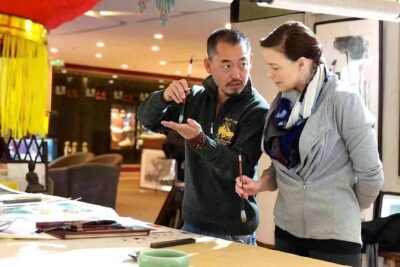
Beijing Wangfujing Calligraphy Class by Forbidden City
Read our review →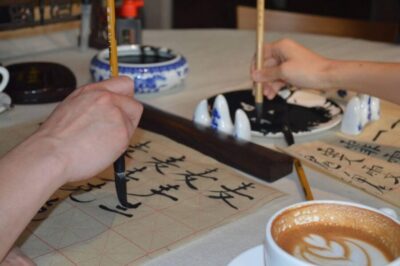
Beijing Wangfujing Calligraphy Class Nearby Forbidden City
Read our review →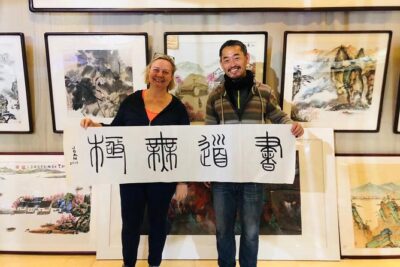
Discover Old Beijing: Hutong Walking Tour & Calligraphy
Read our review →
Beijing Culture Event: Tradition Music, Tea Ceremony, Calligraphy
Read our review →
Beijing Hands-On Culture Tour: Tea, Instrument, Calligraphy
Read our review →Browse the lists this tour appears in