
Reviewed · HUTONG WALKS
Chinese Tea ceremony in Beijing Hutong courtyard
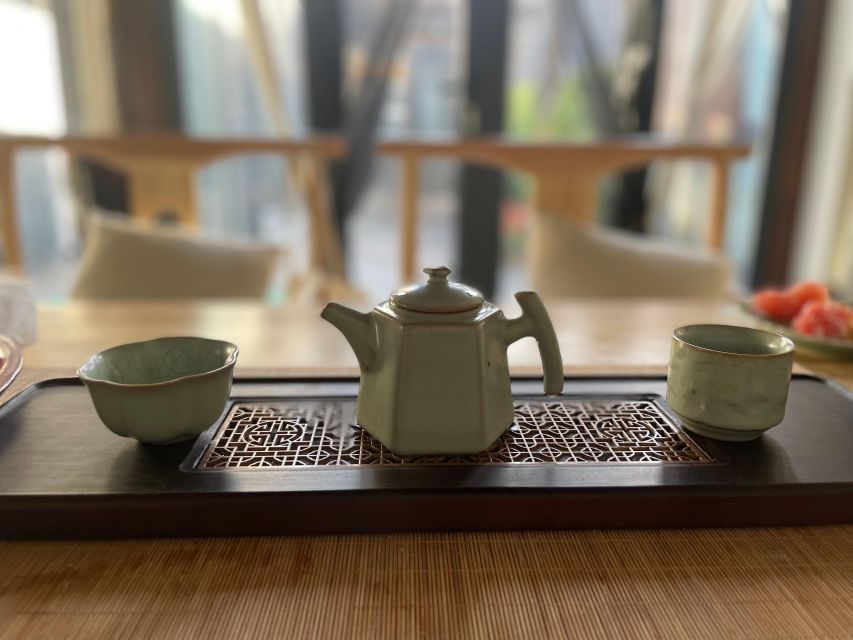
Tea time meets Beijing street life. In a Hutong courtyard about 150 meters from the Forbidden City, you pick one pot of black, green, wulong, or Pu’er tea, and you learn how to brew and drink it the traditional way. I like that this is not just tasting, it is also conversation with a local host, including friendly chats with Limeng. One consideration, though, is that the experience can feel pricey if you are not that into tea or you are booking for several people for a one-hour activity.
The small group of 4 keeps things relaxed and personal, and you get an English explanation of tea culture plus complimentary snacks. It sits right in the center of Beijing, with old landmarks nearby like the Pudusi inheritance and the Imperial Ancestral Temple, so it works well as a focused break between historic sights.
In This Review
- Key things that make this tea ceremony worth your time
- Entering a Hutong Courtyard Near the Forbidden City
- Your Tea Choices, One Pot, and Complimentary Snacks
- How the Ceremony Teaches Brewing, Tea by Season, and Tea Meaning
- Conversation Time with the Host Family, Including Limeng
- Pair This One Hour with Beijing Walks You Can Actually Finish
- Price and Value: $31, 100 RMB, and What You Get for the Hour
- Who Should Book This Hutong Tea Ceremony (and Who Might Skip It)
- Should You Book the Bayi Teahouse Hutong Tea Ceremony?
- FAQ
- Where is this Chinese tea ceremony located relative to the Forbidden City?
- How long does the experience last?
- What kinds of tea can I choose from?
- Is the instructor available in English?
- What’s included, and is there an extra charge?
- Do you offer pickup, and can I cancel?
Key things that make this tea ceremony worth your time
- Pick your tea type: black, green, wulong, or Pu’er, served as one pot
- Learn how to brew properly instead of the quick-and-forget method
- Courtyard time with a family host that has lived there for generations, including Limeng
- Complimentary snacks that complement the tasting
- Central location by major landmarks like the Forbidden City and Imperial Ancestral Temple
- Small group format limited to 4 participants, so questions actually get answered
Entering a Hutong Courtyard Near the Forbidden City
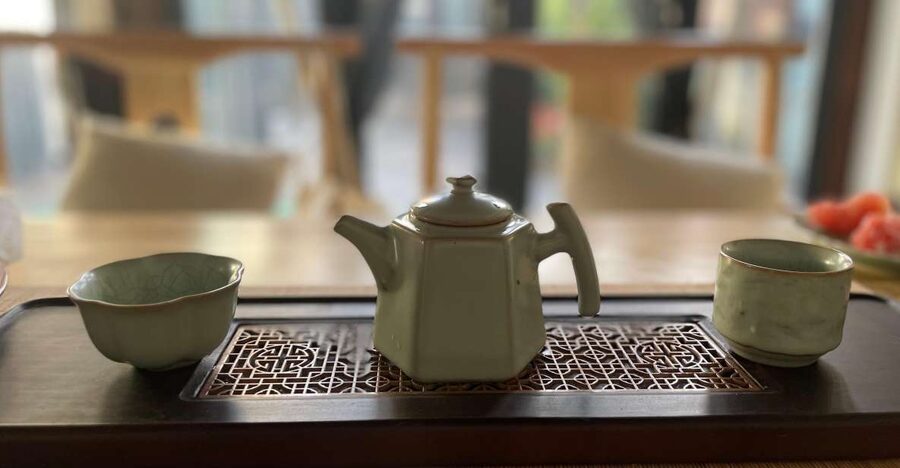
This is the kind of experience that makes Beijing feel human again. You are not stuck in a loud tourist lane. You step into a traditional Hutong courtyard setting run through Bayi Teahouse, where tea culture is the main event.
The location is extremely convenient. The tea workshop is listed as about 150 meters from the east gate of the Forbidden City, and the included directions also place you roughly 800 meters west of the Forbidden City exit gate. Either way, you are in the tight core of the city. That means you can schedule it without losing half a day to transport, and you can pair it easily with nearby walking sights.
What you are really buying is atmosphere plus guidance. The courtyard setting helps slow your pace. And because you are surrounded by landmarks like the Pudusi inheritance and the Imperial Ancestral Temple, you get a neat contrast: big, famous history nearby, but calm tea ritual right in front of you.
Duck through the old alleyways

Your Tea Choices, One Pot, and Complimentary Snacks
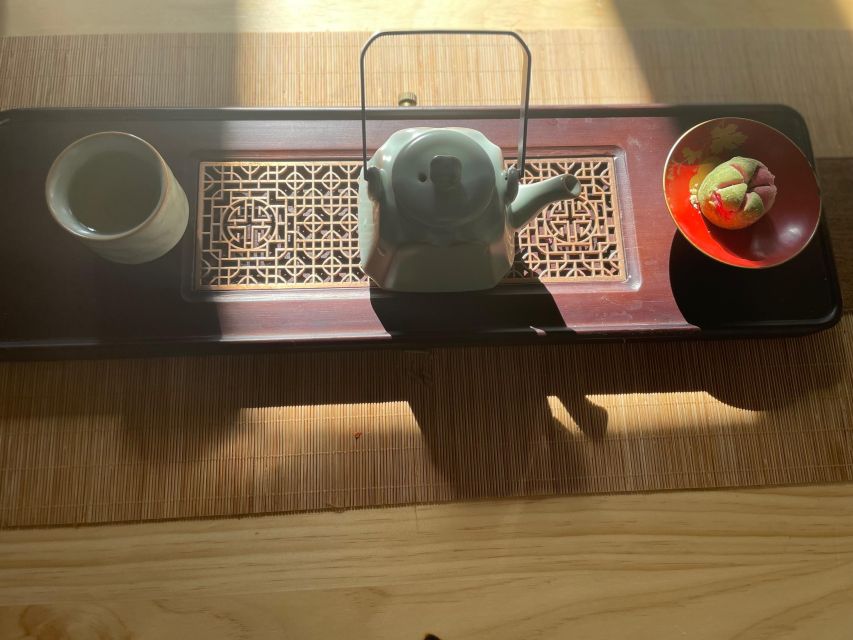
You get one pot of Chinese tea, and you get to choose from several styles: black tea, green tea, wulong tea, and Pu’er tea. That matters because Chinese tea culture is not one-size-fits-all. Different teas come with different aromas and different ways they like to be brewed.
You will also receive complimentary snacks. In practice, this helps keep the whole hour comfortable. It also makes the tasting feel like a complete ritual instead of a quick sip-and-run.
If you think you are only a casual tea drinker, this choice format is still smart. You can pick what sounds most familiar, then let the host explain what makes each tea different. If you are a tea nerd, you get to compare styles and ask why each one is prepared the way it is.
How the Ceremony Teaches Brewing, Tea by Season, and Tea Meaning
This is not only a tasting. The ceremony includes an explanation of tea culture and knowledge, delivered in English. The point is to give you a framework for understanding what you are drinking, not just a list of facts.
One of the biggest takeaways is how much brewing technique affects taste. The whole experience emphasizes that proper tea preparation is more than pouring hot water and waiting a couple minutes. You learn the steps and timing in a way you can actually use later, so the next cup you brew at home tastes closer to what you experienced here.
You also get context that connects tea to everyday life. Expect discussion about things like:
- which teas are often linked with seasonal drinking
- how tea choices are described in terms of body effects
- the deeper meaning behind the ceremony itself, not just the motions
Even if you do not care about health claims, the cultural logic is useful. It explains why Chinese tea ceremonies feel deliberate, calm, and thoughtful. It is basically a guided lesson in how to pay attention.
There is often also a focus on proper handling and etiquette, including small points that make you feel less like you are watching, and more like you are participating.
Conversation Time with the Host Family, Including Limeng
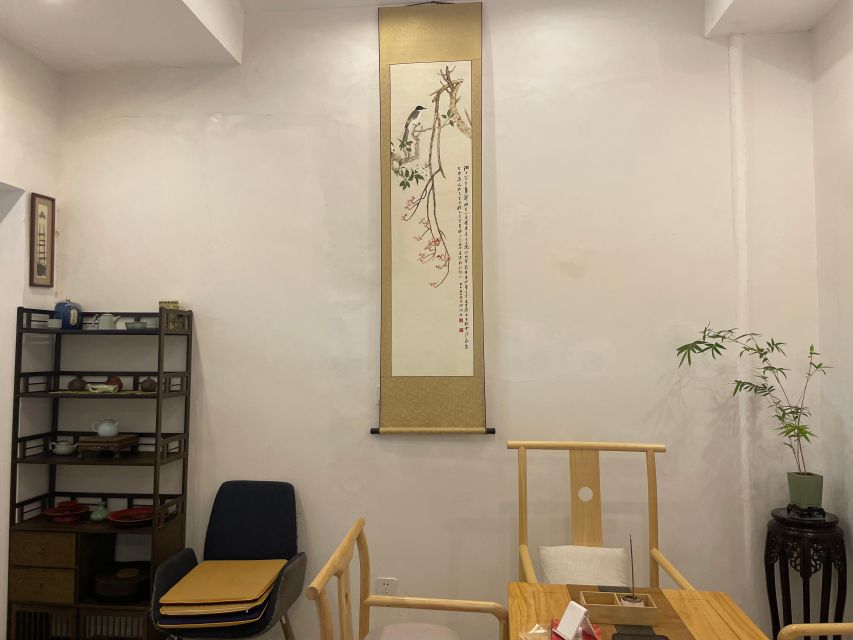
The heart of this experience is the human side. The ceremony happens with a local host whose family has lived in the courtyard for generations, and the English instruction is paired with real conversation.
In particular, Limeng shows up again and again as a standout host. People respond well to her friendly vibe and the way she explains not just tea, but daily life in the Hutong world. That is what turns this from a lesson into a genuine cultural exchange.
In a small group of up to 4, you can ask questions without shouting. You can also tailor the conversation. Want to know what people eat nearby? Curious about where to walk after? This kind of chat tends to make your day in Beijing feel less like a checklist and more like a shared moment.
And if you are not a tea lover, you are not automatically stuck. The conversation and the courtyard setting are part of the payoff, so the hour can still feel worthwhile even if tea itself is not your number one hobby.
Pair This One Hour with Beijing Walks You Can Actually Finish
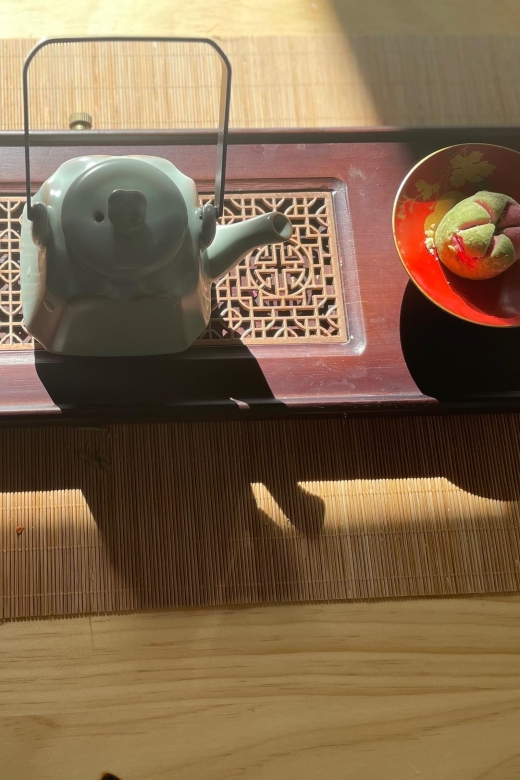
Because the ceremony sits so close to central landmarks, you can make your itinerary smoother.
Right around you you have major historic anchors, including the Forbidden City area plus nearby sites such as the Imperial Ancestral Temple. The practical win is that you can plan tea before or after another attraction without crossing the whole city.
There is also a good chance the experience ends with time to step back into the Hutong lanes. Some sessions are described as finishing with a short walk into a quieter nearby alley close to the Forbidden City. Even if you do not count on that every time, the overall setup is still ideal for a short, satisfying walk afterward.
Quick planning tip: set aside about an hour for the ceremony, then buffer time to stroll. You will get more out of it if you are not rushing to your next timed ticket five minutes later.
Travelers who read this also booked these.
- From Beijing: Mutianyu Great Wall Tours with Options★ 4.9 · 9,216 reviews
- Beijing: Forbidden City Tour(Group/Private)-Tickets Included★ 4.8 · 7,974 reviews
- Beijing: T-Square & Forbidden City Group or Private Tour★ 4.8 · 4,446 reviews
- All-Inclusive Tour: Tiananmen Square, Forbidden City, Great Wall★ 5.0 · 2,873 reviews
Price and Value: $31, 100 RMB, and What You Get for the Hour
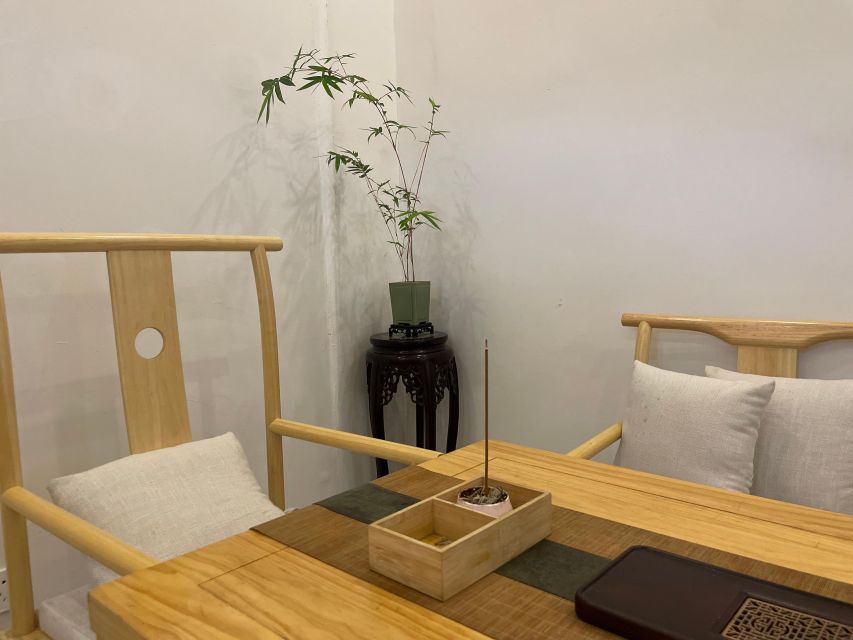
The price is listed as $31 per person for a 1-hour tea ceremony, and there is also an additional note that it will charge 100 RMB per person. So it is worth checking the exact total in your booking view so you do not get surprised by the RMB amount.
Now, is it worth it?
For tea, you are not just paying for liquid. You get:
- a full tea ceremony setting in a Hutong courtyard
- one pot of tea with complimentary snacks
- an English explanation of tea culture
- hands-on guidance on brewing and drinking
- a chance to talk with a local host in a small group of 4
That combination is the value. The price makes sense if you want an experience with instruction and conversation, not a quick tasting in a loud hall.
The main drawback is simple math. If you are traveling in a family or small group and everyone books at once, the total for a one-hour activity can feel like a lot. If you are someone who prefers wandering and sightseeing only, this may not be the best use of your time. But if you enjoy learning how things work, tea etiquette, and cultural conversation, it is a strong buy for the location and format.
Who Should Book This Hutong Tea Ceremony (and Who Might Skip It)
This experience is best for you if you want one of these outcomes:
- learn how Chinese tea is brewed and why it tastes the way it does
- enjoy a peaceful break in a courtyard setting
- ask questions in English in a small group
- get conversation with a local host, not just museum-style facts
It also works well for people who are not hardcore tea drinkers. The snacks and the host interaction help keep the hour friendly and accessible.
If you are traveling with someone who needs smoother comfort access, it is listed as wheelchair accessible.
If you are short on time and already planning to be near the Forbidden City, this is a smart way to add something cultural without spending your whole day in transit.
Should You Book the Bayi Teahouse Hutong Tea Ceremony?
If you are in central Beijing and you want a calm, guided cultural experience right near the Forbidden City, I think it is an easy yes. The small group of 4, the choice of tea types, the snacks, and the instruction on brewing make it feel complete for a one-hour slot.
I would only hesitate if you are a tea-skeptic or you are trying to keep costs super low for a larger group. In that case, consider whether the learning and conversation component is actually your thing.
Bottom line: if you like hands-on culture with real people in a traditional courtyard, this one-hour tea stop is the kind of Beijing moment that stays with you.
FAQ
Where is this Chinese tea ceremony located relative to the Forbidden City?
The tea workshop is listed as about 150 meters from the east gate of the Forbidden City, and it also notes an included meet point roughly 800 meters west of the exit gate.
How long does the experience last?
The duration is 1 hour.
What kinds of tea can I choose from?
You can choose between black tea, green tea, wulong tea, and Pu’er tea. You receive one pot of tea.
Is the instructor available in English?
Yes, the instructor is listed as English.
What’s included, and is there an extra charge?
Included are the Hutong courtyard experience and the Chinese tea ceremony. Complimentary snacks are provided with the tea. An additional charge of 100 RMB per person is noted as not included.
Do you offer pickup, and can I cancel?
Pickup is included, and you are instructed to wait in your hotel lobby 10 minutes before the scheduled pickup time. Free cancellation is available up to 24 hours in advance for a full refund.
Newly Listed Tours in Beijing
- Beijing Half Day Walking Tour-Tiananmen Square and Forbidden City★ 5.0 · 1 review
- 1-Day Beijing private English speaking guide with driver service★ 5.0 · 1 review
- Flexible Private Layover Beijing Night Sightseeing with English Speaking Driver★ 5.0 · 1 review
- Private Day Trip to Huaibei International Ski Resort and Mutianyu Great Wall★ 5.0 · 1 review
- 2-Day Customizable Beijing Highlight Tour with Airport Transfer Option★ 5.0 · 1 review
- 1-Day Beijing Private tour: Mutianyu Great Wall and Summer Palace★ 5.0 · 1 review
- Private Virtual Tour in Beijing★ 4.0 · 1 review
- 1-Way Private Transfer Service between Tianjin cruise Port and Beijing hotels★ 5.0 · 1 review
Hutong Walks, compared.
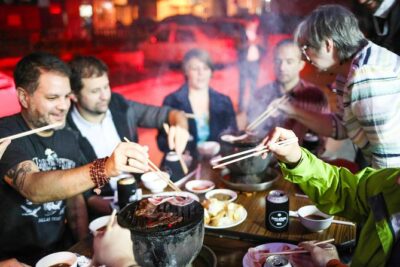
Beijing Hutong Walking Food and Beer Tour at Hidden Restaurants
Read our review →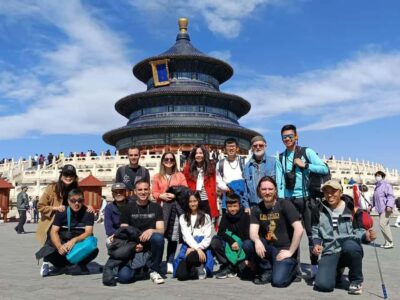
Temple Heaven, Summer Palace, Lama Temple, Hutong Bus Tour
Read our review →
Temple of Heaven, Summer Palace, Lama Temple, Hutong Tours
Read our review →


Browse the lists this tour appears in