Reviewed · TICKETS
Confucius Temple and Imperial College Entrance Ticket
Beijing is full of monuments, but this one is about ideas. The Temple of Confucius and the Guozijian Museum sit side by side, and together they show how imperial China trained scholars and tested their minds. It is a straightforward ticketed stop that also lets you slow down and read instead of just look.
What I like most is how much you can do with English signage. The museum halls and exhibits are set up so you can make sense of the system even if you skip the upgrade.
My one caution is logistics at the gate. One QR code can fail, so I strongly suggest you keep both QR codes handy and stay calm if staff need a quick check.
In This Review
- Key highlights you should know before you go
- Temple of Confucius: Beijing’s big Confucius complex, close to Lama Temple
- The stone steles: where the imperial exams become personal
- Guozijian Museum: the imperial college you can walk through
- Self-guided or upgraded guide: what the English help really changes
- Value and logistics: the $8 ticket that actually works
- Time planning: how long you should budget
- Who this experience suits best
- Should you book the Confucius Temple and Guozijian Museum ticket?
- FAQ
- What is included with the ticket?
- How much time should I plan for?
- Where is this experience located in Beijing?
- Is this a private tour or a shared group?
- When will I receive the ticket information?
- How far in advance should I book?
- Can I cancel and get a refund?
Key highlights you should know before you go
- Two sites, one ticket focus: Confucius Temple plus the imperial college complex next door
- Imperial examination stone steles: names of candidates who passed the exams
- English instructions on site: you can self-tour effectively
- Built in the early 1300s: Temple (1302) and Guozijian (1306) date back to Yuan era foundations
- Great value at about $8: entrance fee included, with an optional English guide upgrade
- Private group format: only your group participates
Temple of Confucius: Beijing’s big Confucius complex, close to Lama Temple
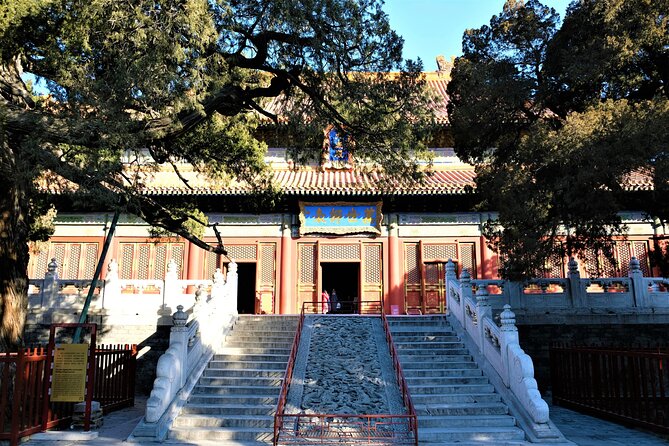
If you are already in the Lama Temple area, this is a very efficient next step. The Temple of Confucius and its surrounding complex sit just a short walk away, which means you can pair both without fighting Beijing transit time or long cross-city rides.
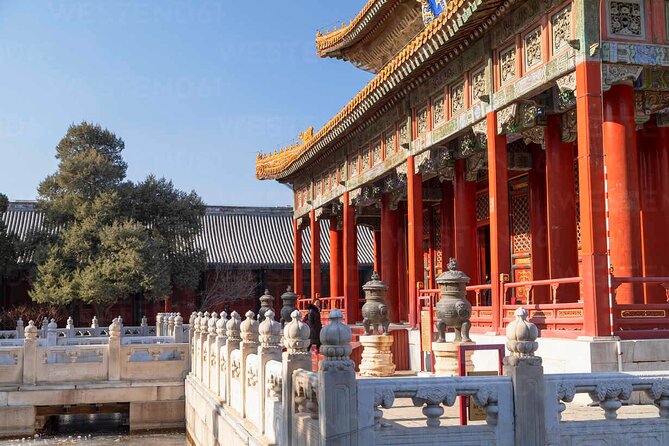
The Temple of Confucius in Beijing is the second largest Confucian temple in China, after the one in Qufu. That scale matters. You feel it as you move through courtyards and ceremonial spaces meant to honor Confucius, and it gives you a more complete sense of how Confucian worship and scholarship were organized in the capital.
You also get the real date stamp. The temple was originally built in 1302, for officials to honor Confucius and offer sacrifices. Today, you will still see statues and carvings created for that devotional purpose, but you are not just looking at decoration. The details help you understand how “respect for learning” was built into the physical layout of important sites.
Practical tip: give yourself time to pause. This is not one of those “walk-through in 15 minutes” stops. Even with a focused plan, you will want to linger in the places designed to record and celebrate achievement.
Beijing tours travelers are booking next

The stone steles: where the imperial exams become personal
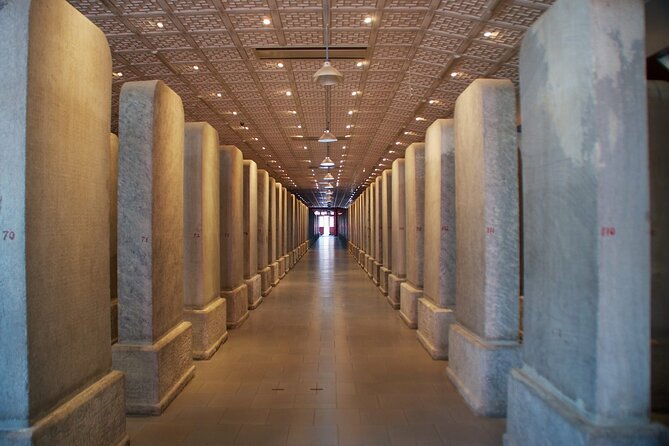
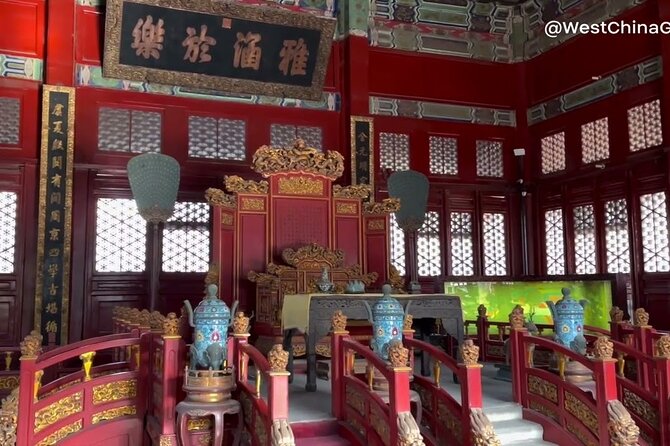
This is the part that makes the visit feel specific instead of generic. In the Temple of Confucius, you will find hundreds of stone steles tied to the Imperial Examination system. These are records, and the big idea is simple: the steles document the names of scholars who passed those exams.
Why should you care? Because a museum of educational history can turn abstract fast. But a wall of names makes it concrete. You can look at the steles and realize this was a long-running career ladder that shaped who got to teach, govern, and influence public life.
You do not need to be a specialist to enjoy them. The exhibits and museum information on site help explain what you are looking at, and the overall complex makes the purpose clear: this was about sorting talent and recognizing merit, at least as the imperial system defined it.
How to get more from the steles: move slowly through the areas where the records are concentrated. If you rush, the steles feel repetitive. If you slow down, you start noticing differences in how information is presented and what each record is trying to preserve.
Guozijian Museum: the imperial college you can walk through
Right beside the temple is the Guozijian Museum, which used to be the imperial college. It was constructed in 1306, and during the Yuan, Ming, and Qing dynasties it functioned as a major educational site. Today, it works as a museum with multiple scholarly halls and educational displays.
This is where your visit turns from worship to schooling. Instead of only celebrating Confucius, you see how the imperial education system operated. The museum includes displays and interpretive material that show the structure and purpose of education in imperial China.
The layout of multiple scholarly halls helps you pace yourself. One hall is not the whole story. You are nudged to keep moving, and each space adds another layer: why students studied, how the system connected to examinations, and how institutions were built to support that whole process.
One of the best parts is how workable it is without a guide. The on-site information includes English instructions and exhibits, so you can self-tour with confidence. In fact, it is an easy place to spend a full chunk of time reading and comparing what you see from hall to hall.
If you only want “the highlights,” you can still do that. But I recommend aiming for at least 2 to 3 hours total across temple and museum, so the experience turns into understanding instead of just sightseeing.
Self-guided or upgraded guide: what the English help really changes
This ticket is designed so you can do it in two ways: either self-tour with the included entrance, or choose an English speaking guided option as an add-on.
If you go without the guide, you are not left in the dark. The museum and exhibits provide enough English support that you can follow along and understand the main themes. I like this approach because it lets you spend your attention where it matters most, especially on the steles and the halls that explain the exam and education system.
If you do choose the guided upgrade, you are paying for interpretation and storytelling. The tour option is specifically positioned to teach you the histories and stories behind what you are seeing. That can be a big deal if you want a clearer narrative thread, or if you simply want someone to point out what to notice instead of figuring it out yourself.
My balanced take:
- If you enjoy reading and want control over pacing, you can absolutely handle it on your own.
- If you want context fast, the guided option can pay off.
Either way, remember you are in a complex with religious and educational functions. A guide can help you connect those two sides without getting lost in details.
Value and logistics: the $8 ticket that actually works
At about $8.00 per person, this is a budget-friendly way to see two major sights tied to one theme. The price includes the entrance fee, and that is key. You are not paying extra just to get through the gate and then hoping other costs stay under control.
It is also a ticket you can plan around. The average booking lead time is around 15 days, so if you are traveling in peak periods, booking sooner is smart. You also get advance delivery timing: tickets are sent about 5 days before your travel date, so keep an eye on your email and download or store the QR code information.
The booking confirmation happens at the time of reservation, and that removes some uncertainty. You also get a private group setup, meaning only your group participates, not a public crowd shuffle.
Getting in is usually straightforward. Still, be careful with QR codes. There is at least one real-world example where one QR code worked and the other did not at the entrance, and the issue was resolved with staff help. My advice is simple:
- Keep both QR codes accessible on your phone
- Bring the contact phone number from your confirmation message
- If one code fails, ask staff to check the other and remain polite while it gets sorted
Also, this experience is listed as near public transportation. That matters because it means you can slot it in without turning your day into a transit marathon.
Travelers who read this also booked these.
- From Beijing: Mutianyu Great Wall Tours with Options★ 4.9 · 9,216 reviews
- Beijing: T-Square & Forbidden City Group or Private Tour★ 4.8 · 4,446 reviews
- All-Inclusive Tour: Tiananmen Square, Forbidden City, Great Wall★ 5.0 · 2,873 reviews
- MuBus: Mutianyu Great Wall ENG/ESP/RUS Guided Bus Tour★ 5.0 · 2,361 reviews
Time planning: how long you should budget
This is listed as approximately 1 day, but that does not mean you need a whole day block. Think of it as a short, focused cultural stop that fits well between larger attractions.
Your real time depends on your reading style:
- If you mainly look and move, you can do a quicker visit.
- If you actually read the exhibits and spend time on the steles, plan for 2 to 3 hours at a comfortable pace.
If you are doing both the temple and the museum, I recommend keeping your next appointment flexible. The steles and hall exhibits reward slow movement, and you do not want to feel rushed.
Quick pacing idea: start with the Temple of Confucius, then transition into Guozijian. Doing it in that order matches the emotional arc, from reverence for Confucius to how education and examinations worked in practice.
Who this experience suits best
This is a great fit if you like museum structure and written context. You are walking through spaces that were designed for scholarship, and you get a clear theme: how education, examinations, and social status were linked.
It also works well if you want an easier day. You are not dealing with long travel times once you are in the area, and the included entrance ticket keeps things simple.
I would also suggest it if you are traveling with mixed interests:
- One person can focus on architecture and statues.
- Another can focus on the stone records and educational system exhibits.
And because the experience can be done with English support, it is a decent option for visitors who do not want to rely on constant translation.
If you only want the biggest “photo landmarks” and hate reading, you might find it slower than you expect. But if you can tolerate a good amount of looking and reading, you will get your money’s worth.
Should you book the Confucius Temple and Guozijian Museum ticket?
Yes, you should book it if you want value, clear themes, and the chance to understand imperial education beyond a quick surface visit. For the money, the payoff is strong: you get two major sites in one stop, you can self-tour with English instructions, and you have an option to upgrade for added context.
I would book it sooner rather than later if your dates are tight, since the average booking window is about 15 days. And pack for smooth entry by keeping both QR codes available and your confirmation info at hand.
Skip it only if you want a very fast “checklist” stop or you dislike reading exhibits. This experience is built for attention, not speed.
FAQ
What is included with the ticket?
The ticket includes the entrance fee. If you select the related option, you can also include an English speaking tour guide.
How much time should I plan for?
You should plan for about 1 day (approx.). Many people spend around 2 to 3 hours reading and exploring.
Where is this experience located in Beijing?
It is in Beijing and it is described as being near public transportation.
Is this a private tour or a shared group?
It is listed as a private tour/activity, so only your group participates.
When will I receive the ticket information?
Tickets are sent about 5 days before your travel date.
How far in advance should I book?
On average, this is booked about 15 days in advance.
Can I cancel and get a refund?
Yes. You can cancel for a full refund if you cancel at least 24 hours before the experience starts. Free cancellation is available up to that cutoff time.
Newly Listed Tours in Beijing
- Beijing Half Day Walking Tour-Tiananmen Square and Forbidden City★ 5.0 · 1 review
- 1-Day Beijing private English speaking guide with driver service★ 5.0 · 1 review
- Flexible Private Layover Beijing Night Sightseeing with English Speaking Driver★ 5.0 · 1 review
- Private Day Trip to Huaibei International Ski Resort and Mutianyu Great Wall★ 5.0 · 1 review
- 2-Day Customizable Beijing Highlight Tour with Airport Transfer Option★ 5.0 · 1 review
- 1-Day Beijing Private tour: Mutianyu Great Wall and Summer Palace★ 5.0 · 1 review
- Private Virtual Tour in Beijing★ 4.0 · 1 review
- 1-Way Private Transfer Service between Tianjin cruise Port and Beijing hotels★ 5.0 · 1 review
Tickets, compared.

Forbidden City Tour(Group/Private)-Tickets Included
Read our review →
4-Hour Small Group Tour to Forbidden City with Entry Tickets
Read our review →
Tiananmen Square Registration Service(Ticket)
Read our review →
The Temple of Heaven or Summer Palace Entry Ticket
Read our review →
Beijing Forbidden City Ticket Booking (Optional: guide service)
Read our review →
Mutianyu Great Wall Daily Tour with Ticket & Lunch
Read our review →
Forbidden City&T-Square Small GroupTours w/ ticket(Eng/Esp Guide)
Read our review →