
Reviewed · FORBIDDEN CITY GUIDED TOURS
Private Tour Forbidden City Temple of Heaven The Summer Palace
Beijing can feel like a lot of city. This day turns it into a clear route through the big hitters and the royal gardens. I like how the pacing keeps you moving, while a professional English guide ties the sites together.
Two things I really liked: reduced waiting time at major sights, and the guide storytelling that makes details stick, not just photos. Also, you get hotel pickup and drop-off plus an air-conditioned vehicle, so the “moving around” part stays painless.
One possible drawback to plan for: the day is packed, with about 2 hours at the Forbidden City and around 2 hours at the Summer Palace. If you like slow, deep museum-style browsing, you may wish for more time at fewer places.
In This Review
- Key highlights you’ll care about
- Price and what $240 per person really buys
- Getting around Beijing without burning your morning
- Tiananmen Square and the monumental approach
- Forbidden City (Palace Museum) with a smart 2-hour focus
- Beijing Dong Wu silk museum: a fast cultural stop that still teaches
- Temple of Heaven Park: where ritual meets design
- Summer Palace (Yiheyuan): royal gardens with real scale
- Derun Jewelry at the National Olympic Sports Center: pearls as a learning stop
- The guide experience: why Katy’s storytelling matters
- Who this tour is best for, and who might want something else
- Should you book this Beijing imperial sites tour?
- FAQ
- What is the tour duration?
- Is hotel pickup and drop-off included?
- Which attractions have admission included?
- Is lunch included?
- Does the tour use mobile tickets?
- Is free cancellation available?
Key highlights you’ll care about
- Private group experience so your pace and questions can stay yours
- Mobile tickets used for included attractions, plus help to find tickets when timing gets tight
- A focused imperial route: Tiananmen area, Forbidden City, Temple of Heaven, then the Summer Palace
- Time-saving rhythm that helps cut down waits at the busiest checkpoints
- Story-driven guiding, including Temple of Heaven and Lady Dragon stories
- Lunch included with a bottled-water refresh so you do not spend the day hunting snacks
Price and what $240 per person really buys
At $240 per person for an 8 to 9 hour private day, you are paying for three practical things: convenience, interpretation, and coverage. You are not just paying for entrance tickets. You are paying for a driver, a guide, and a schedule designed to keep you from losing half your day in lines.
Most of the key sights on this route include admission, and you also get lunch and bottled water. Tiananmen Square is free. The silk museum and the jewelry stop are also listed as free entries. That means your cash goes toward the structure of the day, not constant add-on purchases.
So, if you are trying to avoid the stress of planning four separate visits, plus transit, plus ticket timing, this price can feel fair. If you are the type who already knows exactly what you want to see and you prefer total freedom, you might spend less by going on your own. But you would also be accepting more friction.
Where emperors once prayed for harvest
Getting around Beijing without burning your morning
This tour is built around hotel pickup and drop-off, which matters in Beijing. Traffic and distances can turn a “short ride” into a slow grind. Here, you get an air-conditioned vehicle and bottled water, so you stay comfortable during the transfers between areas.
It is also a private tour, so you are not squeezed into someone else’s pace. And group discounts are mentioned, which can make this even more attractive if your party is eligible.
The practical bonus is that you are guided through big, high-demand checkpoints with a plan. Even when places are crowded, the difference between “hoping for the best” and “having a method” is huge. One of the most praised parts of the experience was help finding tickets last minute, which tells me the team pays attention to real-world timing issues, not just the printed schedule.
Tiananmen Square and the monumental approach
The day starts at Tiananmen Square, one of the largest squares in the world. You get about an hour here, and the approach is a tour of symbols as much as sightseeing. Your route passes by the Arrow Tower, Zhengyang Gate, the Mausoleum of Mao Zedong, the National Museum, the Great Hall of the People, the National Flag, the Monument to the People’s Heroes, and the Tiananmen Tower.
Even if you have seen pictures, standing in the square gives you scale. The square is described as 880 meters north to south and 500 meters east to west, covering about 440,000 square meters. That size is why the area can hold up to 1 million people for major gatherings.
What I like about doing this early is that you can get your bearings fast. You understand the layout of the central Beijing axis before you move to the royal seat nearby. The one caution is timing: because it is a huge public space, there can still be crowds and security. Plan for a bit of “stand and watch” time even with smart routing.
Forbidden City (Palace Museum) with a smart 2-hour focus
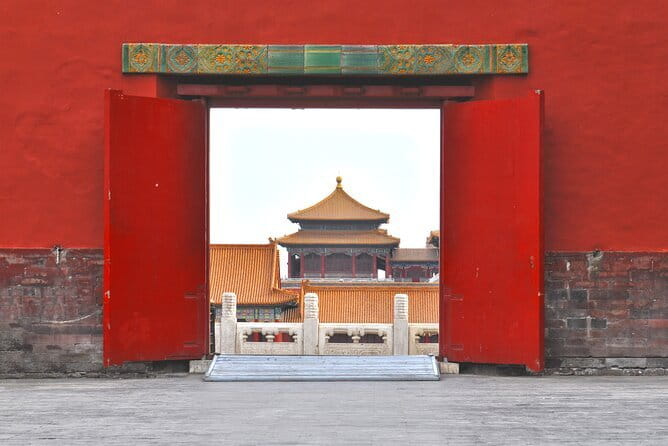
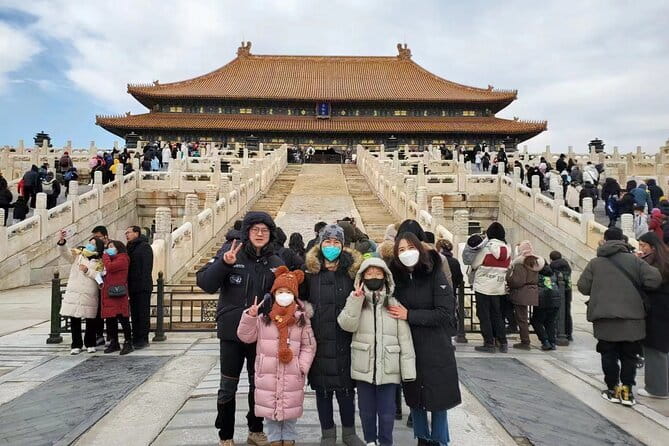
After Tiananmen, you go to the Forbidden City, now the Palace Museum. This is the big one: Ming and Qing emperors built it and 24 emperors lived here. Construction dates to 1420, and it became a museum in 1925.
You get about 2 hours inside. That is not enough to read every plaque and see every room. So the value is how you choose. In a good guided visit, you learn where to look first, and which halls and courtyards matter most to the story of power and daily court life.
This is also a classic example of why guided time helps. Without guidance, the Forbidden City can feel like a lot of walls and hallways. With interpretation, you get the why. You also understand how it connects to what you saw at Tiananmen. It is the same center of gravity in Beijing, just different roles across eras.
Admission is included, which saves you the hassle of ticket juggling. And in one highly praised moment, the guide helped secure Forbidden City tickets last minute. That detail matters if you are traveling during busy periods when timing can get awkward.
Beijing Dong Wu silk museum: a fast cultural stop that still teaches
Between the heavy hitters, there is a quick visit to the Beijing Dong Wu silk museum. This is only about 40 minutes, and it works as a reset. You will see the silk making process and learn why silk became such a powerful trade product.
The explanation covers how Chinese workers invented and mass-produced silk, and how it opened large-scale East-West trade links over centuries, often associated with the Silk Road. You also get context on when silk began shipping abroad in large quantities, and how Europeans later used the phrase Silk Road while China was referred to as the Silk State.
I like this stop because it does not just sell souvenirs. It gives you a cultural lens. Even if you do not buy silk, you leave knowing why it mattered.
The only thing to consider is that it is not a “walk through an old building for hours” kind of stop. If you want pure architecture only, you might prefer more time at Temple of Heaven or the Summer Palace. But as a short teaching moment, it has good value.
A lake built for royalty
- Mubus: Mutianyu Great Wall Bus Tour with Summer Palace Options★ 5.0 · 1,272 reviews
- Beijing: Mutianyu Great Wall & Summer Palace Day Tour★ 4.8 · 1,004 reviews
- Mutianyu Great Wall&Summer Palace Excursion:Group/Private Options★ 5.0 · 816 reviews
- Beijing: Summer Palace Entry Ticket and Optional Guided Tour★ 4.7 · 810 reviews
Temple of Heaven Park: where ritual meets design
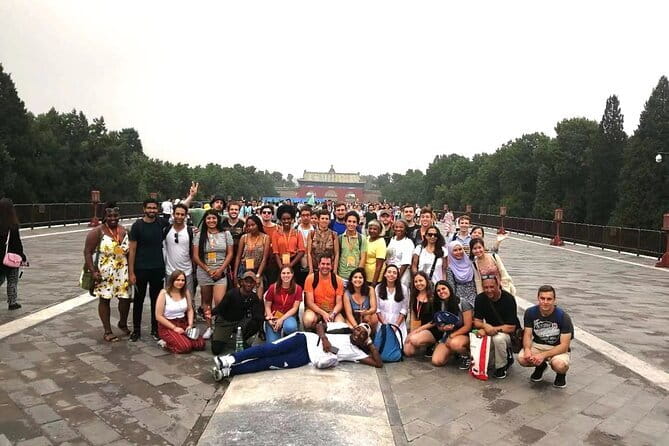
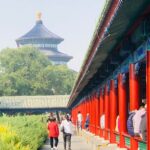
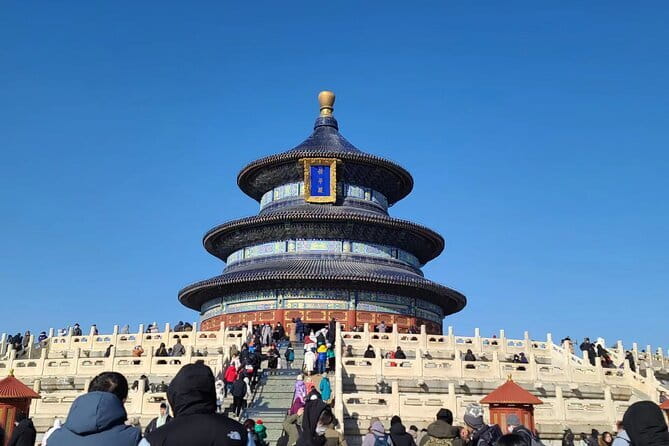
Temple of Heaven is listed as the largest extant ancient sacrificial building complex in China, and it is now Temple of Heaven Park. You get about 1.5 hours, and the guide framing is important here because the site is about how emperors connected belief to the physical world.
You will learn that it integrates Chinese philosophy, history, mathematics, mechanics, aesthetics, and ecology. That sounds like a lot, but the point is simple: the design is intentional. It is not just pretty architecture. It reflects how people understood order, nature, and the cosmos.
This temple complex is described as a treasure among Chinese sacrificial buildings, originally a place for Ming and Qing emperors to offer sacrifices. If you have ever wondered why Chinese imperial design can feel “coded,” this is where you start to get it.
One practical consideration: this is a park, not a quiet museum hall. Depending on the day, you might notice more movement around you than inside formal museum spaces. Still, it is a great match for this tour because it is a major imperial site that is different from the Forbidden City, both in theme and atmosphere.
Summer Palace (Yiheyuan): royal gardens with real scale
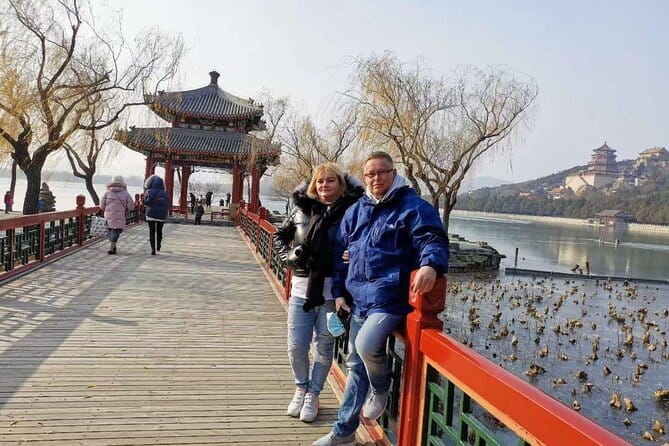
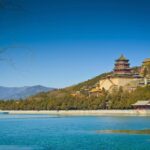
In the afternoon, you head to the Summer Palace, Yiheyuan. This place is described as one of the largest imperial gardens in northwest Beijing. It covers about 290 hectares and sits on the foundation of Kunming Lake and Longevity Hill.
I like that the tour gives you a sense of the design source. It is modeled on Hangzhou West Lake and draws on garden techniques from southern Yangtze regions. That helps you understand why it feels like a painted scene, not a strict box of palaces.
You get about 2 hours here, which is enough to see the highlights with a guide and not get lost in the expanse. The Summer Palace is called the Museum of Royal Gardens, and it is described as one of the most complete preserved royal palace and garden sites. In 1750, Emperor Qianlong reportedly spent 4.48 million taels of silver to build the Garden of Clear Yi, which gives you a sense of the investment behind the beauty.
What I would watch for is weather. If it is hot or rainy, you will appreciate the air-conditioned travel time, but your walking time inside the park will still be your own responsibility. Bring a light layer if you get chilly. Wear shoes you can trust on uneven paths.
Derun Jewelry at the National Olympic Sports Center: pearls as a learning stop
The final listed stop is Derun Jewelry, located at the National Olympic Sports Center area. This is about 40 minutes, and it is focused on jewelry and pearls.
Here is what you learn from the visit: pearls are described as an organic gem and have been valued since ancient times. The material explains that research suggests pearls exist for around 200 million years, and it breaks down freshwater pearls versus sea pearls. The text also says China is a major producer of freshwater pearls, with output accounting for 95 percent of the world’s output, and that this industry supports deep processing.
So is this a factory stop, or is it culture? It is both, but it is also more commercial than the imperial sites. If you love materials and want to understand how pearls connect to Chinese production, it can be interesting.
If you dislike shopping-oriented stops, treat this as a low-effort, informational breather at the end of a long day. You can observe and decide what, if anything, you want to do there.
The guide experience: why Katy’s storytelling matters
The best moments in this tour are not just the monuments. They are the stories that connect the monuments to lived meaning.
One guide, Katy, stands out for being kind and helpful, and also for solving a practical problem when tickets were needed at the last minute for major sights like the Summer Palace and the Forbidden City. That kind of flexibility is not flashy, but it protects your day. You do not lose hours because plans do not line up.
Katy also shared stories connected to the Temple of Heaven, including Lady Dragon stories. That is a smart way to handle Chinese site interpretation. Instead of memorizing names, you remember characters and legends, and then the buildings make more sense.
If you value real explanations in English and you want someone who can handle the messy parts of travel timing, this is a strong match.
Who this tour is best for, and who might want something else
This is ideal for you if you want a structured Beijing day that hits the main imperial sites without constant planning. It fits couples, families, and first-timers who want both history and visual payoff. It is also helpful if you care about comfort during transfers, since pickup, drop-off, bottled water, and an air-conditioned vehicle are included.
It also fits people who like guides. The professional English explanation is a major part of the value because these places can be overwhelming on your own.
It might be less ideal if you want museum-grade depth at each site. The Forbidden City and Summer Palace are both given around two hours. That is enough for a meaningful sweep, not enough for total immersion.
Also consider your interest in the extra stops. The silk museum and the pearl jewelry visit are included and can be educational, but they are not the main reason you came. If your ideal day is only temples and palaces, you may prefer a shorter route that skips those.
Should you book this Beijing imperial sites tour?
I would book this if your top priority is smart coverage with minimal stress. You get hotel pickup, a private group setup, included lunch and water, admission covered for the big three imperial sights, and a guide who can tell the story behind what you see.
Especially if you are visiting during busy periods, the ability to handle ticket timing, like the last-minute support highlighted in the experience, is a real advantage. And if you want Tiananmen Square plus three major imperial sites in one day, this itinerary is built to do it with a manageable flow.
I would think twice if you hate structured schedules or you want long, slow wandering with zero “we have to move on” pressure. This is a well-paced route, not an open-ended day. Still, for most people visiting Beijing for the first time, that is exactly what makes it work.
FAQ
What is the tour duration?
The tour runs about 8 to 9 hours.
Is hotel pickup and drop-off included?
Yes. Hotel pickup and drop-off are included.
Which attractions have admission included?
Admission is included for the Forbidden City (Palace Museum), Temple of Heaven, and the Summer Palace. Tiananmen Square is listed as free, and the silk museum and Derun Jewelry visits are also listed as free.
Is lunch included?
Yes. Lunch is included.
Does the tour use mobile tickets?
Yes. Mobile ticketing is included.
Is free cancellation available?
Yes, you can cancel for free up to 24 hours in advance of the experience start time for a full refund.
Guided Through the Forbidden City
Newly Listed Tours in Beijing
- Beijing Half Day Walking Tour-Tiananmen Square and Forbidden City★ 5.0 · 1 review
- 1-Day Beijing private English speaking guide with driver service★ 5.0 · 1 review
- Flexible Private Layover Beijing Night Sightseeing with English Speaking Driver★ 5.0 · 1 review
- Private Day Trip to Huaibei International Ski Resort and Mutianyu Great Wall★ 5.0 · 1 review
- 2-Day Customizable Beijing Highlight Tour with Airport Transfer Option★ 5.0 · 1 review
- 1-Day Beijing Private tour: Mutianyu Great Wall and Summer Palace★ 5.0 · 1 review
- Private Virtual Tour in Beijing★ 4.0 · 1 review
- 1-Way Private Transfer Service between Tianjin cruise Port and Beijing hotels★ 5.0 · 1 review
Forbidden City Guided Tours, compared.
Forbidden City Tour(Group/Private)-Tickets Included
Read our review →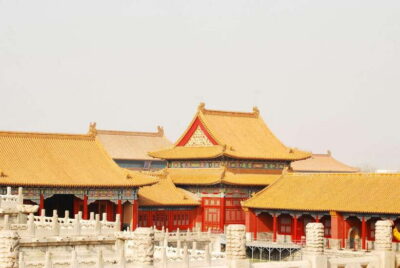
T-Square & Forbidden City Group or Private Tour
Read our review →
All-Inclusive Tour: Tiananmen Square, Forbidden City, Great Wall
Read our review →
4-Hour Small Group Tour to Forbidden City with Entry Tickets
Read our review →
Beijing Full Day Tours: Tiananmen Sq, Forbidden City, Great Wall
Read our review →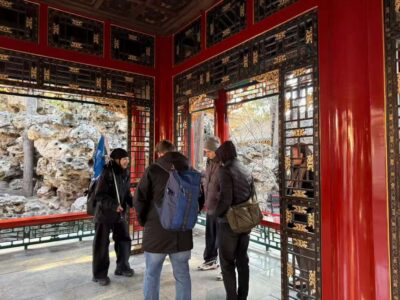
Tianmen Square, Forbidden City & Royal Museum Tours
Read our review →
Beijing Forbidden City Ticket Booking (Optional: guide service)
Read our review →
Forbidden City and Tian’anmen Square Waking Tour
Read our review →Browse the lists this tour appears in