
Reviewed · BEIJING
See 15 top amazing attractions at Beijing within 4 full days
Fifteen Beijing stops, four days, zero guesswork. This tour is built for travelers who want the big sights and the local texture, with an air-conditioned car and a guide moving you from place to place while tickets and key logistics are handled. You cover palace Beijing, imperial gardens, big-city history, and the quieter lanes around the lakes.
I really like two things here. First, the value is strong because entrance tickets are included for major sites like the Forbidden City, Temple of Heaven, Summer Palace, Beihai Park, and Lama Temple. Second, the Great Wall day gives you the fun parts without extra planning, with chairlift access and a toboggan slide at Mutianyu.
One possible drawback: the schedule is efficient, meaning packed days and a lot of walking. If you prefer slow museum time or big-picture wandering, you may feel a bit rushed.
In This Review
- Key things that make this Beijing tour work
- What you get for the price, and what that means for your time
- Tiananmen Square first: a fast start with big symbolism
- The Forbidden City: scale you cannot fake, plus a guide for the story
- Hutong rickshaw ride by Hou Hai: old lanes at real speed
- Prince Gong’s Mansion and He Shen: wealth, hidden clues, and odd details
- Mutianyu Great Wall: chairlift up, toboggan down, and less crowd pressure
- Water Cube viewpoint: quick Olympic architecture photos, no ticket included
- Temple of Heaven: worship architecture and a look at everyday retirement life
- Summer Palace: gardens, Cixi stories, opera, corridors, and a big lake
- National Arts and Crafts Museum: jadeite carvings and the “what you are looking at” factor
- Beihai Park: imperial garden classics plus the Nine Dragon Wall
- Lama Temple: Tibetan-style wood master carvings and a big Buddha
- Temple of Confucius and Guozijian: education history you can walk through
- Nanluoguxiang hutongs and Yu’er Hutong: Qi Baishi and the artist house route
- Time, comfort, and walking reality in four days
- Should you book this Beijing 4-day, 15-stop tour?
- FAQ
- What is the duration of the tour?
- What is the meeting start time?
- Does the tour include pickup?
- Is there a guide, and what languages are available?
- Are entrance tickets included?
- Is Water Cube included?
- Are lunches included?
- What about the Great Wall cable car and descent?
- Do I need a passport?
- Can I cancel and get a refund?
Key things that make this Beijing tour work
- Skip-help at key moments, so you are not stuck waiting as long as you might on your own
- Great Wall fun at Mutianyu, including chairlift and toboggan, not just a viewpoint stop
- Imperial Beijing coverage that connects Tiananmen, the Forbidden City, and major temple sites
- Real hutong flavor, with a rickshaw ride through historic alley lanes near Hou Hai
- Art and craft stop that pays off, especially the jadeite carving focus and museum context
- Lodged in logistics, with hotel pickup and an organized guide, such as Cathy being noted as punctual and organized
What you get for the price, and what that means for your time
At $788.67 per person for roughly four days, the big question is whether you are paying for convenience or for real access. In this case, it is both, but the convenience is doing real work for your trip.
The tour includes entrance tickets for most listed stops, plus round-trip cable car time at the Great Wall. That matters because in Beijing, paying separately and timing each ticket line can eat up hours, especially when you want to hit multiple sites in one day. This package also includes hotel pickup and an air-conditioned vehicle with a driver, which is a huge deal in a city where distances can surprise you.
You also get four lunch meals, and the tour description highlights a roast duck meal. So you are not hunting for food between sights while everyone’s patience runs out. Add in mineral water and a professional guide available in English, Spanish, or French, and the whole thing starts to feel like a “do it right” format.
The price becomes easier to accept if you would otherwise spend vacation days coordinating tickets, figuring out the subway, and negotiating entrance chaos. It is not a luxury tour by default. It is a well-paced sight itinerary with value built in.
A few more corners of Beijing worth exploring before you go.
Tiananmen Square first: a fast start with big symbolism
You begin in Tiananmen Square, Beijing’s enormous central hub. Expect the Tiananmen Gate view, the national flag, and a set of major monuments and buildings that frame how the city presents itself. The description calls out the Chairman Mao portrait on the gate, the National Museum building, the Congress Palace Hall, and the Monument to the People’s Heroes.
This stop is only about 40 minutes, which is exactly how it should be. Tiananmen Square is powerful, but it is also a space you can overthink if you give it half a day. With a guide, you get the context quickly, then you move on before the day turns into a photo-only blur.
What I like about starting here is that it sets the theme for the entire trip. You are not just touring palaces and temples. You are seeing how Beijing’s political story sits side-by-side with its older imperial layers.
The Forbidden City: scale you cannot fake, plus a guide for the story
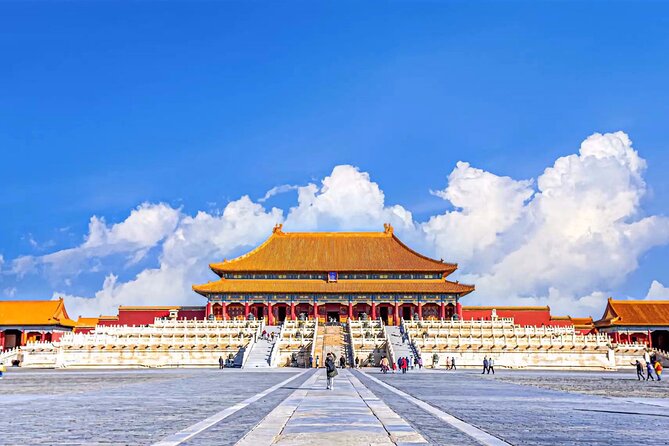
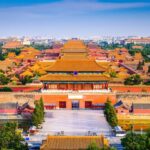
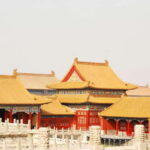
Next comes the Forbidden City, the UNESCO-listed Palace Museum. This is the kind of place where even “just walking through” feels like stepping into a massive timeline. The tour focuses on the royal palace as a 600-year-old complex, and you also get a guide-led look at rooms tied to 24 emperors, plus the stories around concubines.
The best part here is not trying to memorize everything. It is letting a guide connect the visible spaces to court life. When you know what you are looking at, the courtyards and halls stop being random architecture and start feeling like a functioning system.
The potential downside is the sheer scale. Three hours goes by quickly in a place this large, so you will not cover every corner in depth. If you crave slow, detailed exploration of every hall, you might want to return later on your own day. But for a first-time, high-impact Beijing visit, this is a smart use of time.
Hutong rickshaw ride by Hou Hai: old lanes at real speed
To balance the palace grandeur, you shift into the hutong world with a rickshaw tour. This part is about finding an authentic alley vibe, then taking a rickshaw ride through the Hou Hai lake area.
The time block is about 1.5 hours, and that rhythm fits well. It is long enough to feel the difference between broad streets and the tighter hutong pattern, and short enough that you are not stuck repeating the same streets.
This is also a good spot to slow down mentally. Palaces teach you about power. Hutongs teach you about daily life. Even if you only get glimpses of courtyards from the lanes, the spatial texture changes how you interpret the city.
Prince Gong’s Mansion and He Shen: wealth, hidden clues, and odd details
Prince Gong’s (Gong) Mansion is one of those Beijing stops that feels like it was designed for story lovers. You visit the home of He Shen, described here as the world’s richest man in the 18th century. The tour notes striking figures, including that He Shen reportedly had wealth equivalent to 15 times the Qing government, plus a famous detail about a bedroom pillar worth 2.7 billion yuan, and even a claim that a table could exchange for a Rolls Royce.
You will tour a half-history of Qing dynasty home and see elements like treasure-related architecture. The description highlights different pattern windows, where different designs suggest where valuables were hidden. The guide is also meant to explain how He Shen built the largest square courtyard of the time.
It helps that this is not just an exterior photo stop. It is an indoor-and-courtyard storytelling experience. The drawback is that some of the more dramatic numbers are part of the tour’s narrative style. If you want strict, academic-level precision, you may treat the figures as historical storytelling rather than exact accounting. Still, the mansion itself is real, and the architectural clues are worth your attention.
Travelers who read this also booked these.
- All-Inclusive Tour: Tiananmen Square, Forbidden City, Great Wall★ 5.0 · 2,873 reviews
- MuBus: Mutianyu Great Wall ENG/ESP/RUS Guided Bus Tour★ 5.0 · 2,361 reviews
- 4-Hour Small Group Tour to Forbidden City with Entry Tickets★ 5.0 · 1,863 reviews
- Beijing: Tiananmen Square Registration Service(Ticket)★ 4.5 · 1,704 reviews
Mutianyu Great Wall: chairlift up, toboggan down, and less crowd pressure
The Great Wall day is a highlight for a reason. You go to Mutianyu, described as a less crowded section with magnificent views. The tour also says you skip the line, then you get chairlift access to reach the top.
Then comes the fun part: a toboggan slide down. That is not a small detail. On the Great Wall, your legs do most of the work, and the descent is often the least enjoyable part. Here, you get a playful way to recover and still keep the day moving.
The tour includes about 6 hours for this stop, with history from the guide, including a specific note that in 1972 President Nixon’s first visit to China included a welcome at this location led by Chairman Mao. Whether you care about diplomatic history or not, it gives you something to attach to the view.
A key consideration: you still need comfortable shoes and you still need to be ready to walk on uneven wall surfaces. The chairlift helps, but it does not remove the reality of outdoor steps.
Water Cube viewpoint: quick Olympic architecture photos, no ticket included

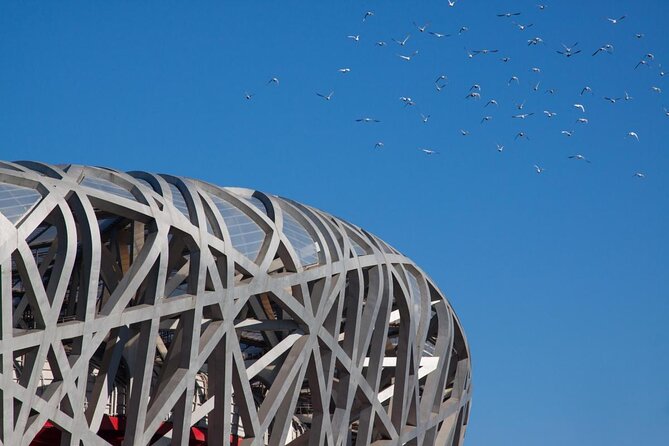
After the wall, you get an Olympic Stadium view, with Birds Nest and Water Cube mentioned as the main buildings from the 2008 games. The tour specifically calls out the Water Cube for photos, plus claims about earthquake resistance and the construction lasting life.
Important detail: the Water Cube admission is not included. So if you plan to go inside, you should budget time and extra cost. If you just want the iconic exterior shots, this stop works well as a decompression moment after Mutianyu.
Temple of Heaven: worship architecture and a look at everyday retirement life
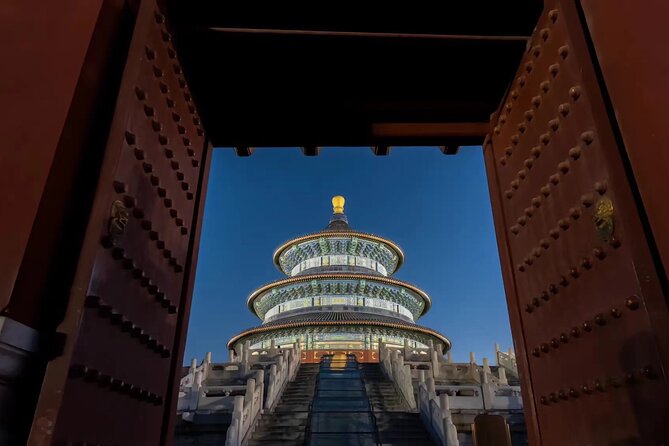
Temple of Heaven is scheduled for about 2 hours, and it is described as the largest worship structure in the world. You visit one of Beijing’s key ritual sites, and the tour frames it as a place to experience the local rhythm, including retired-life scenes.
Here is what I think works for most people: you get both the structure and the atmosphere. The building is impressive, but the real value is seeing how the site functions in daily life beyond ceremonies.
The drawback is that it can be busy depending on the time of day. Because your day is still organized around multiple stops, you may not linger as long as you would in a slower trip. For many visitors, that is a fair trade.
Summer Palace: gardens, Cixi stories, opera, corridors, and a big lake
Summer Palace is built into the afternoon, and the tour emphasizes the imperial garden and the layered timeline: built in 1750, burned in 1860, rebuilt in 1888. The focus becomes why Empress Dowager Cixi loved it so much.
You are guided through key features including her opera house, birthday celebration rooms, and the longest painted corridor, plus Kunming Lake views. It is a lot for two hours, but it is also the right mix of architecture plus narrative.
The best way to enjoy this stop is to pick two or three elements that catch your eye, then let the guide connect them. If you try to treat it like a checklist, you will feel rushed. If you focus on what you see, the story does the rest.
National Arts and Crafts Museum: jadeite carvings and the “what you are looking at” factor
Not every Beijing tour makes room for art and craft at the same level as palaces. This one does, at the National Arts and Crafts Museum.
You are set up for the jadeite carvings theme. The description calls out the museum’s focus on intangible cultural heritage, with jadeite works including four national jadeite carvings created and carved at a jade factory in Beijing. It notes that these works were organized with Premier Zhou Enlai involved at the time, and that the carving timeline ran from 1982 to completion in 1989.
The museum also includes wood carvings and ivory carvings. Even if you are not an art collector, this stop can surprise you because the guide-led framing helps you understand why the details are so prized. Two hours is enough time to see the standout pieces and learn the basics of how artisans think.
The possible drawback is that if you only came for the headline sightseeing, the museum might feel slower than the outdoor attractions. But for many people, it becomes the most interesting “quiet” moment of the trip.
Beihai Park: imperial garden classics plus the Nine Dragon Wall
Beihai Park, about 2 hours, is described as the earliest and most complete classical imperial garden spanning the Liao, Jin, Yuan, Ming, and Qing royal family involvement in state affairs. That historical framing is a big promise, and the stop delivers with specific sights.
You will see a Yuan relic iron screen, the nanmu palace with a whole wooden hall built from nanmu, and the Nine Dragon Wall. The description highlights that it is one of the three major Nine Dragon Walls in China, and the only double-side wall, carved with 635 large and small dragons on both sides.
This is one of those places where a guide really matters. The wall is visually striking, but it also connects to how imperial symbolism worked. And because it is a garden, you get a break from nonstop architecture.
Lama Temple: Tibetan-style wood master carvings and a big Buddha
Lama Temple is one of Beijing’s most visually distinctive religious sites in this itinerary. The tour notes it was built in 1694 by Emperor Kang Xi for his fourth son Yin Zhen before he became emperor. Later, in 1744, it became a Lama temple and gained a central role in national Tibetan affairs.
You will notice the yellow tile and red wall, and the tour says it matches the Forbidden City size. Inside, the highlights are presented as three wood master carving wonders: the five hundred Arhats mountains, a 26-meter-high sandalwood Buddha listed in the Guinness World Book in 1900, and nanmu Buddha niches.
This stop is about 2 hours. That is enough to see the main carvings and understand the layout, especially with a guide explaining the symbolism and the construction story.
Temple of Confucius and Guozijian: education history you can walk through
After Lama Temple, you cross the street to Confucius Temple, built in 1302 during the Yuan dynasty. Then you go to the Guozijian Museum, also known as the imperial college, described as the highest institution and administrative center for education from Yuan, Ming, and Qing dynasties.
This is a great change of pace. Temples often focus on worship. Confucius and Guozijian focus on learning systems, exams, and the bureaucracy of education. If you like understanding how societies trained future leaders, you will enjoy this.
The two separate sites combined take about 2 hours, so again you are not doing a slow scholarly tour. But you do get enough to feel the importance of the educational machine that shaped centuries of Chinese governance.
Nanluoguxiang hutongs and Yu’er Hutong: Qi Baishi and the artist house route
The final stretch brings you back into hutong wandering. Nanluoguxiang is described as a famous alley area with history dating back about 740 years, tied to Yuan dynasty central life. You also hear that during Ming and Qing eras, dignitaries built notable residences here, even if many of the larger palaces are not open to the public.
The tour frames the alley as shaped like a camel-backed man, and notes that Luo Gu is connected to a similar pronunciation of Luo Guo. That kind of detail matters because it helps you read the street layout as something intentional, not random.
Then you move to Yu’er Hutong, linked with Qi Baishi, described as one of the most outstanding Chinese painting masters in the 20th century. You visit Qi Baishi’s former residence. The tour points out his signature subjects, including vivid shrimps with different shapes at different ages, flowers and birds, and landscapes, and it credits his style as incomparable.
This is not the kind of ending where you leave with one big monument photo. It is the kind where you leave with a sense of Beijing as an art and life city, not just an imperial stage.
Time, comfort, and walking reality in four days
This tour moves you efficiently across Beijing. That is the point, and it is also the tradeoff.
You should expect long days that combine multiple major sites. Comfortable walking shoes are essential, and you should also plan for weather since the tour operates in all weather conditions. The air-conditioned car helps a lot with transfers, and hotel pickup reduces the stress of getting to meeting points.
The other comfort factor is that tickets are largely handled for you, including the cable car fee at the Great Wall. That kind of planning saves time and lowers stress, especially when you want to keep the schedule tight.
Should you book this Beijing 4-day, 15-stop tour?
I would recommend it if you fit one of these profiles:
- You are a first-time visitor and want the biggest Beijing names without wasting days planning routes.
- You like having context, especially for palace and craft stops, not just taking photos.
- You prefer an organized day where a guide helps with key moments like skipping lines when possible.
I would think twice if:
- You want deep, slow museum time where you can linger for hours at a single exhibit.
- You dislike fast pacing and do not enjoy stacking multiple major sites into one day.
If you do book, pack good walking shoes and keep your expectations realistic: this tour is built for breadth and smart sequencing, not for endless detours. Done right, it gives you a strong Beijing overview with some truly memorable variety, from Mutianyu’s toboggan run to jadeite carvings that you might not even know to seek out.
FAQ
What is the duration of the tour?
The tour lasts about 4 days.
What is the meeting start time?
Pickup and start are listed for 8:30 am.
Does the tour include pickup?
Yes, pickup is offered.
Is there a guide, and what languages are available?
The tour includes a professional English, Spanish, or French speaking guide.
Are entrance tickets included?
Yes, all sights entrance tickets are included, and the round trip cable car fee on the wall is included as well.
Is Water Cube included?
No. The Water Cube admission is noted as not included.
Are lunches included?
Yes. Lunch is included 4 times.
What about the Great Wall cable car and descent?
The tour includes cable car time to reach the top, and it also includes a toboggan slide down.
Do I need a passport?
A current valid passport is required on the day of travel, and passport details are required for getting Forbidden City entrance tickets in advance.
Can I cancel and get a refund?
Yes, it offers free cancellation, with a full refund if you cancel at least 24 hours before the experience’s start time.
Newly Listed Tours in Beijing
- Beijing Half Day Walking Tour-Tiananmen Square and Forbidden City★ 5.0 · 1 review
- 1-Day Beijing private English speaking guide with driver service★ 5.0 · 1 review
- Flexible Private Layover Beijing Night Sightseeing with English Speaking Driver★ 5.0 · 1 review
- Private Day Trip to Huaibei International Ski Resort and Mutianyu Great Wall★ 5.0 · 1 review
- 2-Day Customizable Beijing Highlight Tour with Airport Transfer Option★ 5.0 · 1 review
- 1-Day Beijing Private tour: Mutianyu Great Wall and Summer Palace★ 5.0 · 1 review
- Private Virtual Tour in Beijing★ 4.0 · 1 review
- 1-Way Private Transfer Service between Tianjin cruise Port and Beijing hotels★ 5.0 · 1 review