
Reviewed · LAMA TEMPLE VISITS
Beijing: Lama Temple and Hutong Alleyways Private Tour
Old temples, narrow lanes, big feelings. This 3-hour private-style walk pairs Beijing’s Tibetan Buddhist heart with the real-life hutong maze, so you get both spiritual awe and everyday atmosphere in one easy block. I especially liked the chance to see the 26-meter sandalwood Buddha and to spin the prayer wheels right there inside the temple complex.
I also love how the tour shifts after the temple, walking you into centuries-old hutong alleyways where courtyard life still matters more than modern streets. One thing to consider: hutong doorways can be low and passages tight, so you’ll want comfortable shoes and a little patience for small spaces.
In This Review
- Key things I’d circle in your plan
- Why Lama Temple and hutongs fit together so well
- Start at 雍和宫: a 3-hour plan that doesn’t waste time
- Lama Temple: the 26-meter sandalwood Buddha and prayer wheels
- What to look for during the guided portion
- Wudaoying Hu Tong: getting your bearings in the hutong maze
- Jianchang Hutong: low doorways and the rhythm of courtyard life
- 国子监街: ancient cypress trees and exam-era symbolism
- Ornate archways and what they represent
- Crafts and food you might spot along the way
- Group size, language options, and skipping the ticket line
- Price and value at about $11 per person
- What to bring, what to wear, and the small rules that matter
- Who should book this, and who might want something else
- Should you book this Beijing Lama Temple and Hutong private tour?
- FAQ
- How long is the tour?
- Where does the tour start?
- What will I see during the tour?
- Is the ticket line skipped?
- Are meals included?
- Does the price include transportation?
- What languages are available for the guide?
- What should I bring?
- What items are not allowed?
- Is it only a private tour?
Key things I’d circle in your plan
- 26-meter sandalwood Buddha: the tallest of its kind, and it’s even more impressive up close
- Prayer wheels and wishes: a simple, physical way to join the ritual without needing special preparation
- Hutong alley maze time: photo stops plus guided walking gives you the shape of the neighborhood fast
- Low doorways: you’ll likely duck and bow as you enter smaller home-like spaces
- Scholarly street vibes: cypress-lined views and ornate archways tied to old imperial exams
- Crafts and tiny food stops: you get chances to notice how seals, stamps, and noodles show up in daily life
Why Lama Temple and hutongs fit together so well
Beijing can feel like two different cities. One is grand and ceremonial. The other is intimate, human-scale, and built from narrow lanes where people still live their routines.
This tour is smart because it balances those worlds. You start with Lama Temple, where Tibetan Buddhist tradition shows up in color, incense smoke, and ritual movements. Then you walk into hutongs, where history isn’t behind glass. It’s in the proportions of doors, the layout of courtyards, and the way streets funnel you from one household space to another.
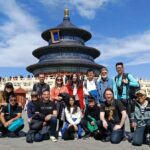
Incense smoke and a giant Buddha

Start at 雍和宫: a 3-hour plan that doesn’t waste time
Your tour starts at 雍和宫, which is convenient because you’re already in the area where the temple complex energy makes sense. Since the total time is about 3 hours, the guide keeps things moving with photo stops and short guided walks rather than long, tiring detours.
This is also a good format if you want a guided introduction without locking yourself into a full day. You get a focused taste of major sights, plus neighborhood context, without feeling like you’re constantly chasing the next entrance.
If you’re booking while your schedule is still flexible, the option for free cancellation up to 24 hours and reserve now, pay later can take some stress out of planning.
Lama Temple: the 26-meter sandalwood Buddha and prayer wheels
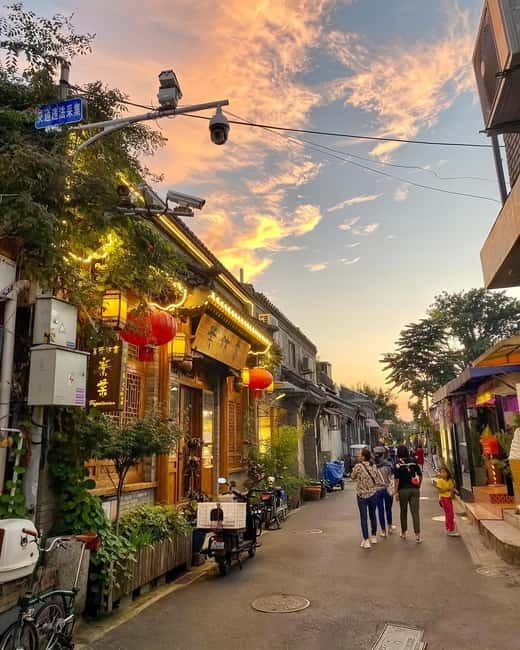
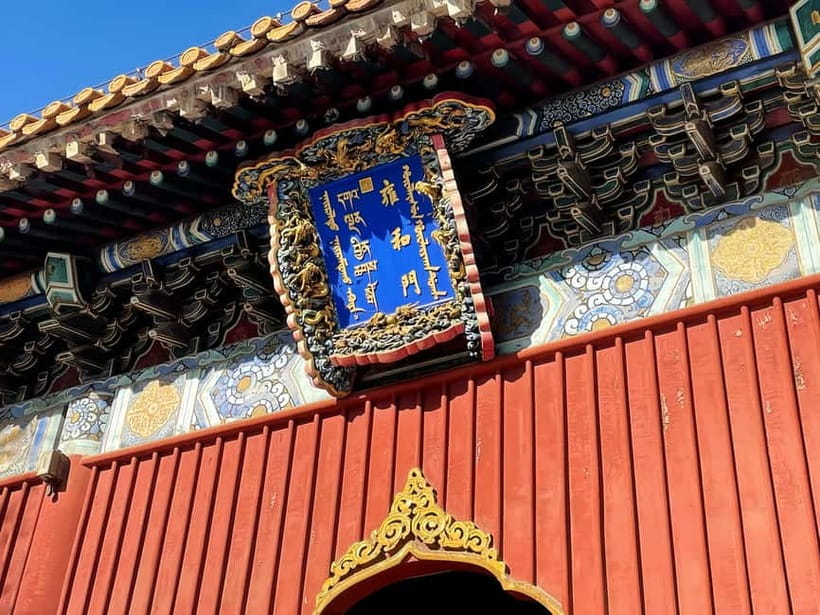
The heart of the tour is Lama Temple, and the main reason it matters is scale. You’ll be looking at a 26-meter sandalwood Buddha statue, described as the tallest of its kind. Even if you’ve seen big statues before, this one lands differently because it’s tied to a specific devotional space, not just a sightseeing photo moment.
You’ll spend about 1.5 hours here, with both a guided tour and a photo stop. The guide helps you notice what you might otherwise miss, like how different elements of Tibetan Buddhist practice show up in a Chinese setting.
What to look for during the guided portion
Prayer wheels are the big “do this, not just watch this” moment. You can spin ancient wheels and send wishes upward, while the chanting rhythm and the temple atmosphere make the whole act feel grounded rather than performative.
The temple also reflects a blend of Tibetan and Han Buddhist traditions, which is exactly what makes this place more than a single-style museum stop. You’re not only seeing an object, you’re seeing a living mix of beliefs and aesthetics in one space.
Practical note: the temple lighting can be dim, so if you care about photos, check your phone settings. Also, if you’re sensitive to strong incense smells, give yourself a moment to stand back, breathe, then move in again.
Wudaoying Hu Tong: getting your bearings in the hutong maze
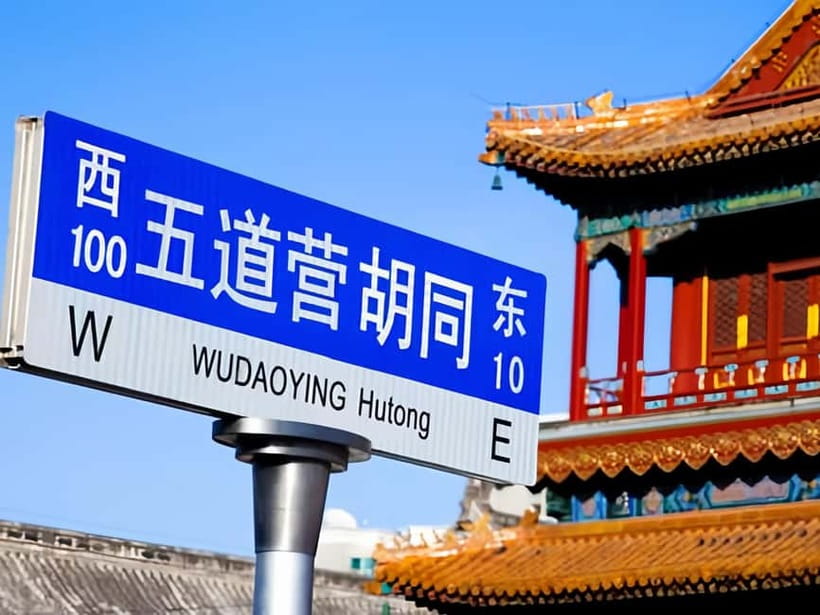
After Lama Temple, you head on foot for about 10 minutes and then arrive at Wudaoying Hu Tong for a 20-minute photo stop and guided walk. Hutong time is where this tour becomes more about understanding the neighborhood than ticking off a landmark.
Wudaoying is the kind of place where the first few turns can feel confusing, which is exactly why a guide helps. You’ll see how the lanes connect, how courtyards sit behind walls, and how everyday life continues despite modern Beijing outside the alley entrances.
Here’s what I’d expect you to notice: the alley isn’t just a “cute street.” It’s a working living space. Narrow passages, slightly awkward corners, and doorways designed around human-scale movement all shape how people interact with their homes.
Duck through the old alleyways
- Beijing Hutong Walking Food and Beer Tour at Hidden Restaurants★ 5.0 · 1,132 reviews
- Beijing Private Hutong Food Walking Tour★ 5.0 · 299 reviews
- The Hutong Experience by Bike★ 5.0 · 163 reviews
- Beijing: Hutong Culinary Walking Tour with 15+ Tastings★ 5.0 · 162 reviews
Jianchang Hutong: low doorways and the rhythm of courtyard life
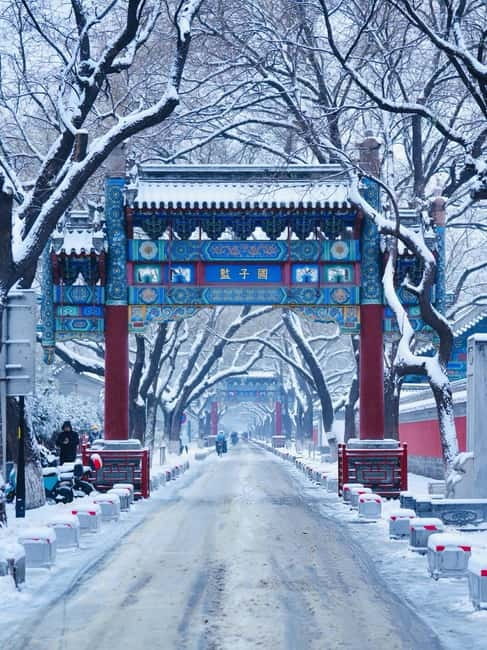
Next comes Jianchang Hutong, another 20-minute segment with both guided time and walking. This is where the tour’s details start to feel real instead of scenic.
One of the most important things you’ll learn to expect in hutongs is that doorways can be low and narrow. The design often encourages a respectful way of entering, and you may find yourself instinctively ducking. It’s not uncomfortable in the “danger” way. It’s just a reminder that these spaces were built for people moving at a slower, more traditional pace.
This stop is also about layout. You’ll get a clearer sense of how generations lived in courtyard homes, with families shaped by the protection of walls and the closeness of shared spaces.
If you’re worried about feeling lost, lean on the guide here. Hutongs reward attention, and you’ll get more out of the walk if you treat it like an orientation tour, not just a stroll.
国子监街: ancient cypress trees and exam-era symbolism
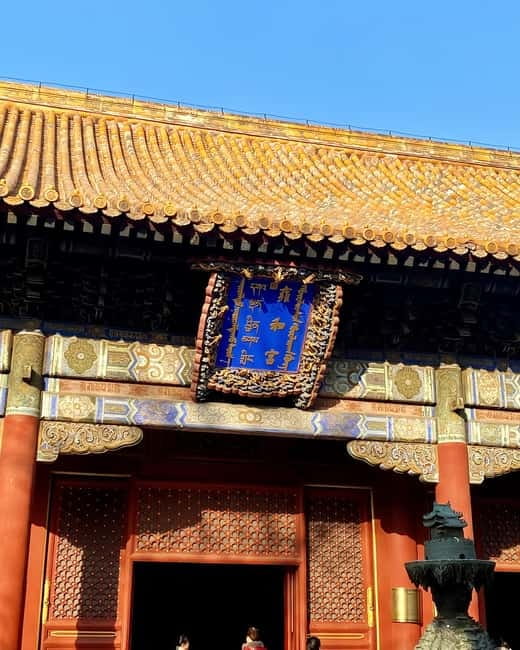
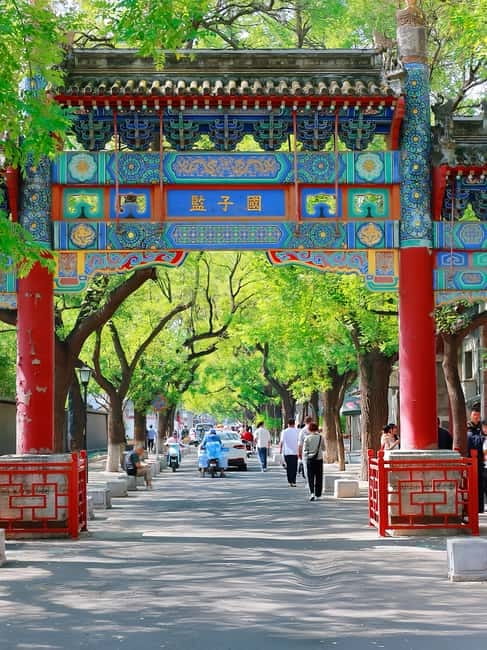
Then you’ll move to 国子监街, with about 30 minutes of photo stop, guided tour, and walking. This is where the tour shows another side of Beijing’s identity: scholarship and the old systems of exams and academic prestige.
You’ll pass by a scholarly street lined with ancient cypress trees, which adds a sense of time passing even when the surrounding city keeps changing. The guide can point out how trees and street design create a kind of “stay awhile” feeling, even though you’re only here for a short time.
Ornate archways and what they represent
You’ll also notice wooden archways decorated with dragons and phoenixes. In the context of this street, those symbols connect to academic achievement and imperial favor. It’s a reminder that Beijing’s grandeur is not only in palaces. It’s also encoded in everyday city planning and decorative choices.
This portion works especially well if you like cultural meaning tied to physical details. You’re not just looking at buildings. You’re learning what decorative elements were meant to signal.
Crafts and food you might spot along the way
Even though this tour is built around temples and hutongs, the best parts often happen in the spaces between stops. In a neighborhood like this, daily life has room for small trades.
You might see signs of artisans at work, including traditional crafts like stone seal carving. When people carve seals and stamps, the work is slow and precise, and the sound of tools can feel almost rhythmic. It’s the kind of detail that makes a guided walk more satisfying than a quick self-guided loop.
And yes, there’s food. The tour includes the chance to notice authentic Beijing cuisine in tiny family-run eateries tucked between older walls. You may get a view of flatbreads, and you’ll likely hear about noodles being hand-pulled into thin strands and then tossed into broth.
I’d treat this as “watch and orient,” not a full meal plan. If you’re hungry, you can plan to eat after the tour, but the experience should help you know what to look for when you’re choosing where to stop next.
Group size, language options, and skipping the ticket line
This is private or small groups available, which is a big quality boost for hutong walking. In tight lanes, the group size matters. Smaller groups keep you from constantly stopping and starting.
Language support is another strength. The live tour guide is available in English, French, Italian, and Spanish, so you’re not stuck with a basic audio approach. In a temple and alley setting, translation helps you understand what you’re looking at, not just where you’re going.
One practical advantage: you’ll be able to skip the ticket line. That matters because temple and busy neighborhood access can eat time. By starting with a smoother entry, you have more of your 3 hours actually spent inside the experiences, not waiting outside them.
Price and value at about $11 per person
At $11 per person for a 3-hour guided visit covering Lama Temple plus multiple hutong areas, the value feels strong. You’re paying for three things that are hard to replicate solo without a plan: guided interpretation, efficient routing, and access flow.
You don’t need to add much to make it worthwhile. Meals are not included, but you can grab something nearby after your walk. Transportation to and from the starting point is also not included, so budget a ride or metro connection to 雍和宫 based on where you’re staying.
What makes the price feel extra fair is the time investment you’re getting. This tour doesn’t just show you one site. It connects temple ritual and hutong living history in a way that helps the whole day make sense.
What to bring, what to wear, and the small rules that matter
This is an easy tour on paper, but the environment is the real checklist.
Bring a passport and a charged smartphone. Wear comfortable shoes. You’ll be walking and you’ll likely move through narrow sections where a stiff shoe or slippery sole becomes annoying fast.
Also expect low and narrow doorways in hutongs. You do not need special gear. Just keep your body language light and follow the guide when entering smaller spaces.
Not allowed items are also clear: weapons or sharp objects, alcohol and drugs, and explosive substances are prohibited. If you’re traveling normally, this won’t affect you.
Who should book this, and who might want something else
I think this tour is a great fit if you want a guided “first taste” of Beijing beyond the biggest headline sites. You’ll love it if you enjoy religious spaces with real ritual, and if you also like seeing how ordinary neighborhoods function.
It’s also a good match for couples and friends who want a calmer pace than group coach tours. Hutongs are best with someone who can explain what you’re seeing while you navigate.
You might consider a different option if you dislike walking or have mobility concerns that make tight passageways tough. The tour is short at about 3 hours, but hutongs are still hutongs: narrow, sometimes low, and full of turns.
Should you book this Beijing Lama Temple and Hutong private tour?
Yes, if you want a high-value, low-stress way to connect Lama Temple with the real texture of hutong alleyways in one morning or afternoon block. The combination of ritual highlights, guided interpretation, and a guided hutong route makes the experience feel “complete” without taking over your whole day.
I’d book it especially if you’re comfortable doing some walking and you like cultural meaning tied to physical places like prayer wheels, courtyard doorways, and exam-era street symbolism. If that sounds like your style, this is an easy recommendation.
FAQ
How long is the tour?
The tour lasts 3 hours.
Where does the tour start?
The starting location is 雍和宫.
What will I see during the tour?
You visit Lama Temple and explore Beijing’s hutong alleyways, including Wudaoying Hu Tong, Jianchang Hutong, and 国子监街.
Is the ticket line skipped?
Yes, the tour includes skip the ticket line.
Are meals included?
No, meals are not included.
Does the price include transportation?
No, transportation to and from the starting point is not included.
What languages are available for the guide?
The live tour guide is available in English, French, Italian, and Spanish.
What should I bring?
Bring your passport and a charged smartphone.
What items are not allowed?
Weapons or sharp objects, alcohol and drugs, and explosive substances are not allowed.
Is it only a private tour?
It’s available as private or small groups.
Newly Listed Tours in Beijing
- Beijing Half Day Walking Tour-Tiananmen Square and Forbidden City★ 5.0 · 1 review
- 1-Day Beijing private English speaking guide with driver service★ 5.0 · 1 review
- Flexible Private Layover Beijing Night Sightseeing with English Speaking Driver★ 5.0 · 1 review
- Private Day Trip to Huaibei International Ski Resort and Mutianyu Great Wall★ 5.0 · 1 review
- 2-Day Customizable Beijing Highlight Tour with Airport Transfer Option★ 5.0 · 1 review
- 1-Day Beijing Private tour: Mutianyu Great Wall and Summer Palace★ 5.0 · 1 review
- Private Virtual Tour in Beijing★ 4.0 · 1 review
- Private Day Tour Of Jinshanling Great Wall From Beijing★ 4.0 · 1 review
Lama Temple Visits, compared.
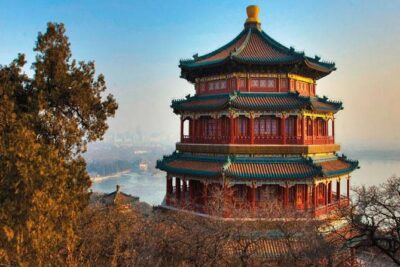
Temple Heaven, Lama Temple, Summer Palace & Peking Duck Bus Tour
Read our review →
Temple Heaven, Summer Palace, Lama Temple, Hutong Bus Tour
Read our review →
Temple of Heaven, Summer Palace, Lama Temple, Hutong Tours
Read our review →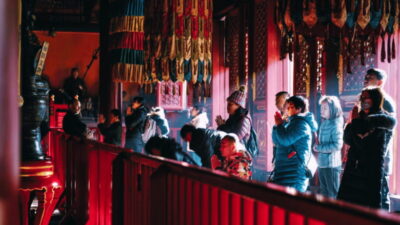

Beijing Historical Tour II including Summer Palace, Lama Temple & Panda Garden
Read our review →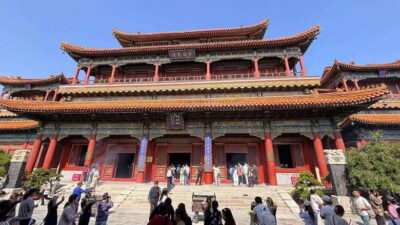
Panda House, Temple of Heaven, Lama Temple, Summer Palace & Lunch
Read our review →Browse the lists this tour appears in