
Reviewed · LAMA TEMPLE VISITS
Beijing Lama Temple Entrance Ticket with Optional Guided Service
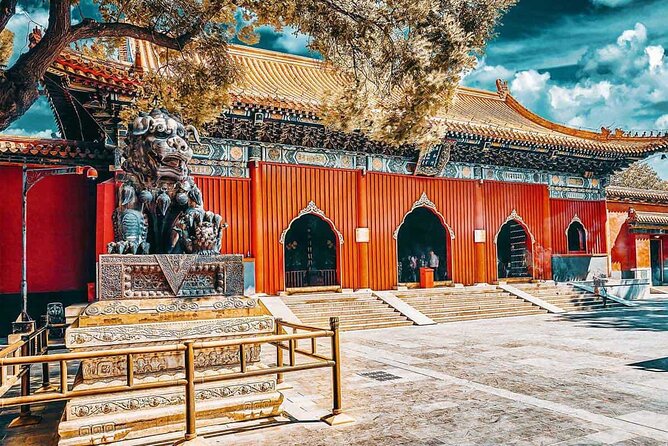
One of Beijing’s most unusual temples is also still a real place of prayer. The Lama Temple, also called Yonghegong, began as a royal palace and was transformed into a major Tibetan Buddhist temple, so you get both history and daily religious life in one walled complex.
I especially like the optional English guide, because the best visits turn into explanations you can actually use, like how the buildings function and why certain objects matter. I also like the pre-paid entrance ticket idea, since it can reduce time spent at ticket counters during busy periods.
My only real caution is ticket access. A chunk of the low ratings point to QR code problems (not received, not valid, or not downloadable), so plan to get your ticket file early and be ready to show it at the gate, or contact the provider if something goes wrong.
In This Review
- Key things to know before you go
- Lama Temple (Yonghegong) in context: what makes it more than a photo stop
- Price and what you are actually paying for, not just the $7 sticker
- Prepaid QR tickets: how to avoid the most common headache
- Optional guided service: what you get when someone explains the why
- Inside Yonghegong: a practical walkthrough of what to look for
- Step one: get your bearings at the entrance
- Step two: incense ritual moments you should not skip
- Step three: temples, halls, and the feeling of lived-in religion
- Step four: the big statue details that guides highlight
- Crowds, lines, and timing: how to make your day feel calm
- Getting there: use public transport, keep it simple
- Who this tour suits best (and who might skip the add-ons)
- Should you book this Lama Temple ticket with optional guide?
- FAQ
- What does the ticket price include?
- How long is the experience?
- Will I receive my ticket before I travel?
- Is this tour private?
- Is the guide available in English?
- Can I cancel and get a refund?
Key things to know before you go
- Yonghegong is both a temple and a learning center for Tibetan Buddhism, not just a museum visit
- English guiding is the value add when you want clear context for what you are seeing
- Incense rituals are part of the experience once you pass through the portals, if you follow what is offered on site
- Guides can point out details you might miss like important statues mentioned by name in feedback
- Crowds can be real, but several visits reported lines moving quickly, even during peak times
- Ticket delivery is time sensitive, since tickets are sent about 5 days before travel
Lama Temple (Yonghegong) in context: what makes it more than a photo stop
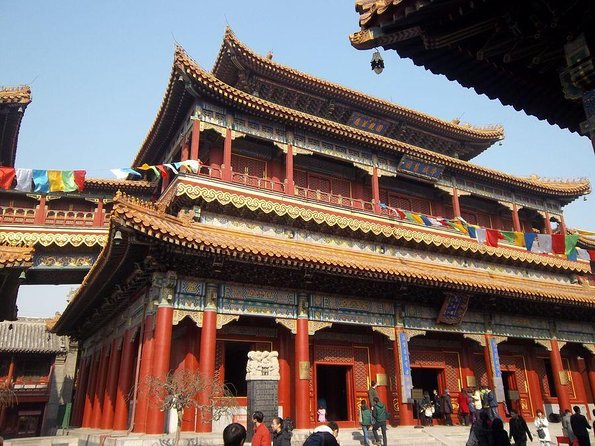
The Lama Temple is one of Beijing’s headline Tibetan Buddhist sites for a reason. It started as a royal palace and later became a major Tibetan Buddhist temple under the Qing Dynasty, linked to the Qianlong emperor. That change matters because the buildings feel intentional, not random. You are walking through spaces that were adapted to worship and teaching, not just set dressing.
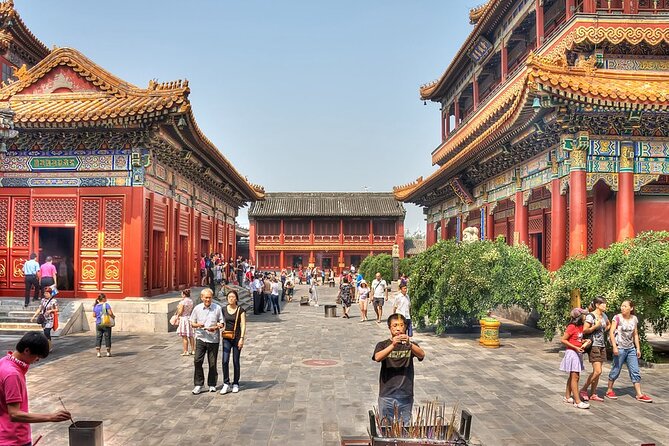
This is also a living temple. People pray here, so your visit has a different rhythm than museums. If you come expecting only quiet sightseeing, you might feel surprised by the steady flow of incense, ritual actions, and people doing their daily practice. That is part of the charm, as long as you stay respectful.
Incense smoke and a giant Buddha


Price and what you are actually paying for, not just the $7 sticker
This experience lists at $7.00 per person, and the entrance ticket is included. That means you are not paying extra just to get in, unless you choose the guided option.
Here is the practical way to think about value: you are paying for certainty and convenience. When everything works, you arrive with a pre-paid ticket and spend less time negotiating ticket lines. For many people, that is worth a small premium, especially when Beijing sites are busy.
One caution from feedback: at least one person noticed the on-site admission cost was 25 yuan and felt pre-booking was less worthwhile if there was no line. So before you decide, be honest with yourself. If you love self-guided wandering and you hate admin tasks, you might prefer buying on arrival. If you want smoother entry, the prepaid ticket usually earns its keep.
Prepaid QR tickets: how to avoid the most common headache
Most of the negative reviews in the set are not about the temple itself. They are about ticket access, especially QR code issues. The repeating theme is simple: if you arrive without a working QR, you may have to buy again inside, and that is when people feel they lost money.
So use this checklist mindset:
- Plan for the timing: tickets are sent 5 days before your visit. Don’t wait until the day before to check your email.
- Download early: if your ticket is delivered as a QR file, download it and save it in a way you can access offline.
- Be ready for phone limits: if an app view fails, you do not want to be stuck refreshing. Have a backup like a screenshot or a downloaded file.
- Know who to contact: the provider lists support and includes a phone number in the dispute responses. If the QR fails at the gate, you want that contact ready.
If your ticket does not work, you do not want to argue in the moment. You want a quick escalation path. That is the difference between a minor inconvenience and a full day of stress.
Optional guided service: what you get when someone explains the why
The guided option includes an English-speaking guide. Several names show up in the feedback, including Mina, Mike, Kevin, and Jack. The common thread in positive comments is not just English ability. It is how clearly they explain what the buildings are used for and what certain details mean in Tibetan Buddhist practice.
One review highlights a guide (Mina) who explained religious details and also pointed out subtleties in the temple’s treasuries, including a large sandalwood Buddha statue of Maitreya. Another guide (Mike) is praised for explaining Tibet Buddhism and the temple itself.
Why this matters for you: without context, you can end up doing what I call sightseeing-by-accident. You see beautiful statues, but you do not know what you are meant to notice. With a good guide, the same visit turns into a map for your eyes.
One small drawback appears in the feedback too: sometimes visits can feel short if the site closes earlier than you expected. If you choose the guided service, I’d plan to arrive early so the guide has room to finish the story properly.
Inside Yonghegong: a practical walkthrough of what to look for
Lama Temple visits usually unfold through a series of courtyards, halls, and smaller worship areas. You do not need a complex game plan, but you do benefit from knowing what to watch for.
Beijing tours travelers are booking next
- Beijing: Forbidden City Tour(Group/Private)-Tickets Included★ 4.8 · 7,974 reviews
- 4-Hour Small Group Tour to Forbidden City with Entry Tickets★ 5.0 · 1,863 reviews
- Beijing: Tiananmen Square Registration Service(Ticket)★ 4.5 · 1,704 reviews
- Beijing: The Temple of Heaven or Summer Palace Entry Ticket★ 4.6 · 1,286 reviews
Step one: get your bearings at the entrance
When you enter, keep your first priority simple: orient yourself. Even if you are not doing a strict route, you want to notice signage, portals, and where rituals are happening. That is where the day’s flow starts.
If you are using a prepaid ticket, the smooth part is getting past the gate and into the complex without stopping for paperwork.
Step two: incense ritual moments you should not skip
One of the most specific bits of helpful info in the feedback is the incense ritual. After you pass through the portals, people are offered incense sticks. The suggestion is straightforward: grab the incense sticks you are offered and follow along with the ritual actions when appropriate.
That turns the visit from visual-only into something you can participate in respectfully. It is also one of the easiest ways to understand that this is not a staged museum experience. It is daily devotion.
Step three: temples, halls, and the feeling of lived-in religion
Within the complex, you will move between different temple buildings. The positive feedback repeatedly calls the different temples beautiful, but beauty alone is not the point. The point is that the spaces are connected to religious function. With a guide, you should get more clarity on what each hall is for and what artifacts symbolize.
One detail that stands out from the feedback: the last stop in the sequence includes a very large Buddha figure, described as 18 meters high. If you see that from the right angle, it is hard to forget.
Step four: the big statue details that guides highlight
Even if you are self-guiding, you might notice the temple’s focus on key figures. When you have an English guide, they can add precision. One standout example is the mention of the big sandalwood Buddha Maitreya statue in the treasuries. You might otherwise just see it as another impressive object, but with context it becomes a specific religious focal point.
Crowds, lines, and timing: how to make your day feel calm
Yonghegong can be busy, and the temple is popular enough that you should expect crowds at least some of the time. The good news is that several visits report the queue moves quickly. One person even said they did not really face a long line.
Your best strategy is simple: arrive earlier in the day and treat the incense and prayer areas as part of your timing plan, not something to rush past. If you show up late, you might feel like you are walking through a slow-moving crowd, not a sacred site.
Also, you can reduce stress by pairing your visit. One review mentions the area is near the Confucius Temple and Chengxian Street. That is a good sign for you if you like stacking destinations without cramming. Just keep your expectations realistic. You are visiting a functioning temple, so the day will have its own tempo.
Getting there: use public transport, keep it simple
The experience is described as near public transportation. In practice, that means you should be able to plan your route using common transit lines rather than relying entirely on taxis.
For many first-time visitors, this matters because Yonghegong is the kind of site where parking and last-mile navigation can eat time. If you are staying central, you likely lose less time with transit and a short walk.
Who this tour suits best (and who might skip the add-ons)
This experience works well if you fit any of these profiles:
- You want pre-paid entry and minimal fuss at the gate.
- You care about learning what you are seeing, not just taking pictures.
- You prefer a private setup, meaning only your group participates, not mixing with random strangers.
It might be less ideal if you are one of these:
- You dislike any QR admin. Some low ratings are directly about QR issues.
- You only want a quick look and you know you can buy tickets on the spot easily.
- You are extremely time-sensitive and hate the idea of any early closing or short visit window if it happens.
Also, the experience says most travelers can participate, which is a helpful signal if you are deciding whether this is manageable as a standalone day stop.
Should you book this Lama Temple ticket with optional guide?
I’d book it if you want a smoother entry and you like having someone explain the temple beyond the basics. The best-rated part of the experience in the feedback is the guide contribution, with clear praise for English explanations and specific details like temple functions and key statues. If you choose the guided option, you are paying for understanding, not just admission.
I’d be cautious if you are prone to phone problems, late check-ins on email, or you ignore QR instructions. A few unhappy visitors lost time or money because the QR code did not work at the gate. If you go, do the unglamorous prep work: check your ticket email early, download the QR file, and keep a backup.
If you get the ticket working and you treat the temple as a living place, you should come away with more than a landmark photo. You should come away with a better sense of Tibetan Buddhist practice in China, right where it still happens every day.
FAQ
What does the ticket price include?
The entrance ticket is included. If you select the guided option, you also get an English-speaking tour guide.
How long is the experience?
The duration is listed as approximately 1 day.
Will I receive my ticket before I travel?
Yes. The tickets are sent 5 days before your travel date.
Is this tour private?
Yes. It’s described as a private tour/activity, meaning only your group will participate.
Is the guide available in English?
Yes. The listing specifies an English-speaking guide if you choose the related guided service option.
Can I cancel and get a refund?
Yes. You can cancel for free up to 24 hours in advance of the experience for a full refund.
Newly Listed Tours in Beijing
- Beijing Half Day Walking Tour-Tiananmen Square and Forbidden City★ 5.0 · 1 review
- 1-Day Beijing private English speaking guide with driver service★ 5.0 · 1 review
- Flexible Private Layover Beijing Night Sightseeing with English Speaking Driver★ 5.0 · 1 review
- Private Day Trip to Huaibei International Ski Resort and Mutianyu Great Wall★ 5.0 · 1 review
- 2-Day Customizable Beijing Highlight Tour with Airport Transfer Option★ 5.0 · 1 review
- 1-Day Beijing Private tour: Mutianyu Great Wall and Summer Palace★ 5.0 · 1 review
- Private Virtual Tour in Beijing★ 4.0 · 1 review
- 1-Way Private Transfer Service between Tianjin cruise Port and Beijing hotels★ 5.0 · 1 review
Lama Temple Visits, compared.

Temple Heaven, Lama Temple, Summer Palace & Peking Duck Bus Tour
Read our review →
Temple Heaven, Summer Palace, Lama Temple, Hutong Bus Tour
Read our review →
Temple of Heaven, Summer Palace, Lama Temple, Hutong Tours
Read our review →

Beijing Historical Tour II including Summer Palace, Lama Temple & Panda Garden
Read our review →

Panda House, Temple of Heaven, Lama Temple, Summer Palace & Lunch
Read our review →Browse the lists this tour appears in