
Reviewed · LAMA TEMPLE VISITS
Beijing lama Temple Or Confucius Temple Tickets Reservation
Two temples in one smooth plan.
This Beijing Lama Temple ticket reservation keeps things simple, especially when you want to see major sites without wasting time in line, and it sends you QR codes so entry is fast. I also like that you’re set up for an organized day, with the option to add a guided history layer if you want more context.
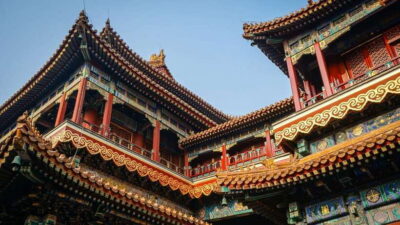
What I really like is the architecture and ideas you can spot right away. At Lama Temple, the layout revolves around three pagodas and five grand halls, and the main hall honors the Three Buddhas representing past, present, and future, which makes the place feel more like a living system than just a pretty courtyard. A possible drawback: the core ticket coverage is for Lama Temple, and an English-speaking guide is not included, so if you want strong storytelling, you’ll either need to do some reading or choose the optional guided upgrade.
In This Review
- Key highlights and what you can expect
- Why this Lama and Confucius pairing works in Beijing
- QR tickets and entry flow, the practical way
- Getting to Lama Temple: subway Line 5 exit F or a cab
- Lama Temple layout: what to look for once you’re inside
- The Three Buddhas main hall, and why it matters
- Confucius Temple on the central axis: gates, halls, and one key monument
- The building sequence from south to north
- The monument of the title of the scholar
- Price and value: $16 for the Lama Temple ticket and QR setup
- Optional guided history: when it helps most
- A temple-day game plan that keeps you from feeling lost
- Who this suits best, and who should skip it
- Should you book this reservation service for your Beijing temple day?
- FAQ
- What is included in the $16 per person price?
- Do I need a separate ticket for Confucius Temple?
- How do I receive my tickets?
- How do I get to Lama Temple using public transport?
- How do I enter once I arrive?
- What do I need to bring to visit?
- Is there free cancellation?
Key highlights and what you can expect
- QR codes sent to email, mobile, and WhatsApp so you scan at the gates instead of printing
- Lama Temple ticket included, with Confucius Temple listed as separate
- A route that pairs two major sites with back-to-back scanning at entrances
- Big visual payoff at Lama Temple with three pagodas, five grand halls, and a Three Buddhas main hall
- Confucius Temple on the central axis with three courtyards and key halls laid out in sequence
Why this Lama and Confucius pairing works in Beijing
Beijing rewards you for doing the temples with a plan. Lama Temple is visually dramatic, while Confucius Temple feels more orderly and academic, like a map of ideas made in stone and tile. Pair them and you get two different ways of understanding Chinese tradition in one day, without needing complex logistics.
This also fits real visitor timing. You’re looking at 2 to 11 hours, depending on how much time you take at each site and whether you add a guided option. If you’re the type who likes to wander slowly, the longer window helps. If you’re just trying to hit the important points, you can keep it tight.
One more value point: the experience is built around scanning at the entrance. That means less time fiddling with paperwork and more time inside the courtyards, gates, and halls where the details live.
Incense smoke and a giant Buddha


QR tickets and entry flow, the practical way
The key to this setup is the way tickets are delivered. At booking, you provide passport name, passport number, and date of birth, plus your email, mobile number, and WhatsApp number. The local supplier then sends a QR code directly to you on those channels.
On the day, you scan your QR code at the entrance to enter the scenic spot. This is especially helpful in busy areas because the gate process is quicker than trying to sort out anything on-site.
After you finish Lama Temple, you walk out and then continue with another QR scan at the entrance of Beijing Confucius for your second visit. Just note a potential mismatch to think through before you go: the included ticket is explicitly described as Lama Temple only, while the Confucius Temple ticket is listed as not included. The route is clearly designed for a two-site day, but what you personally have paid for matters.
Getting to Lama Temple: subway Line 5 exit F or a cab
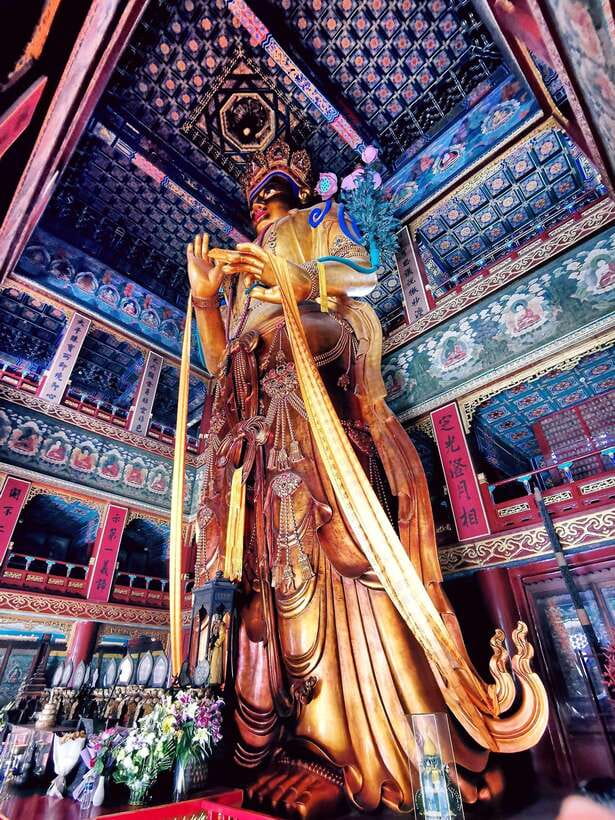
Getting there is straightforward. If you want public transit, take subway Line 5 and get off at the Lama Temple station, then use exit “F” and walk about 5 minutes to Lama Temple.
Prefer door-to-door? You can also take a cab directly to Lama Temple, then scan the QR code you received in advance at the entrance. Either way, the goal is the same: you want to arrive ready to scan, not scrambling.
One small tip for your comfort: wear shoes that handle uneven stone and temple courtyard paths. Even when a walk is short, temple campuses can involve a lot of turning, stair steps, and moving between halls.
Lama Temple layout: what to look for once you’re inside
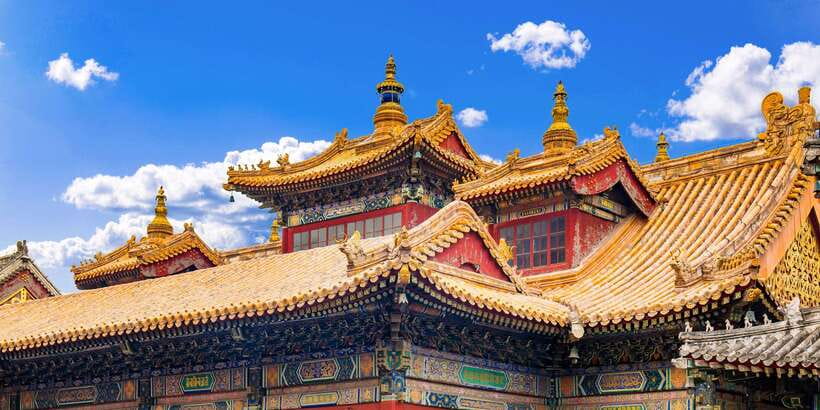
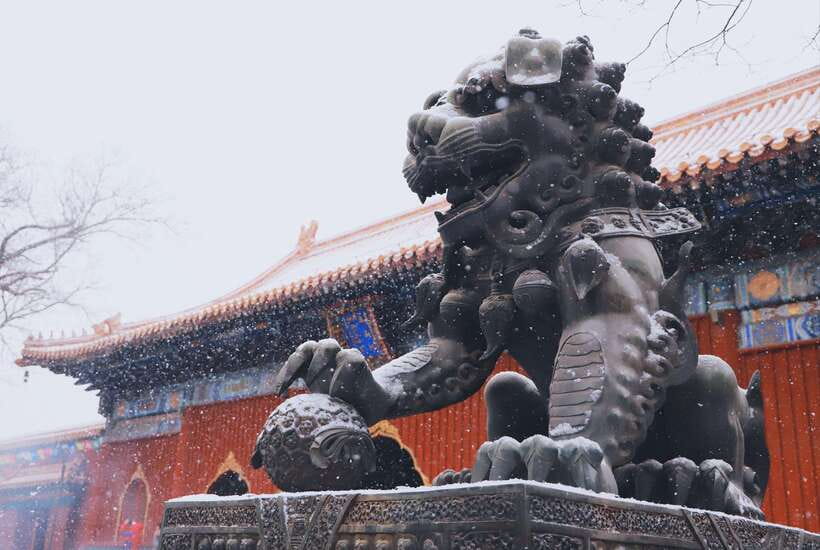
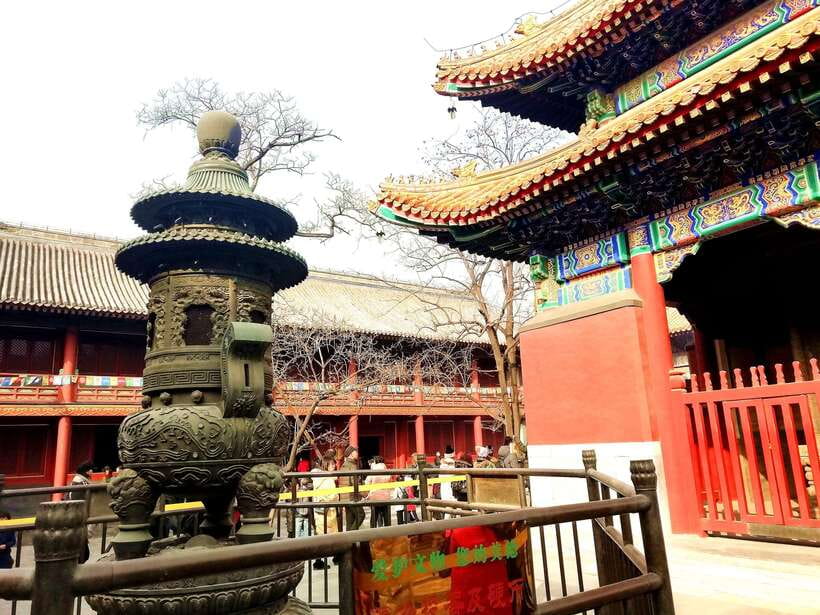
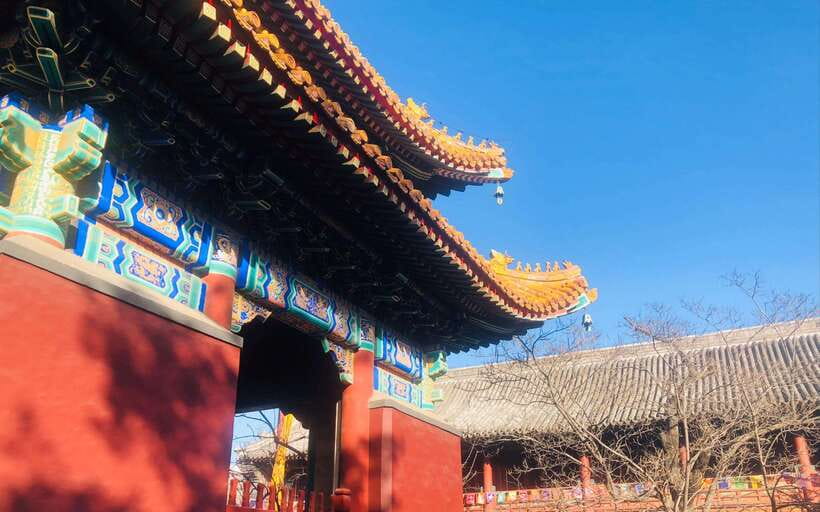
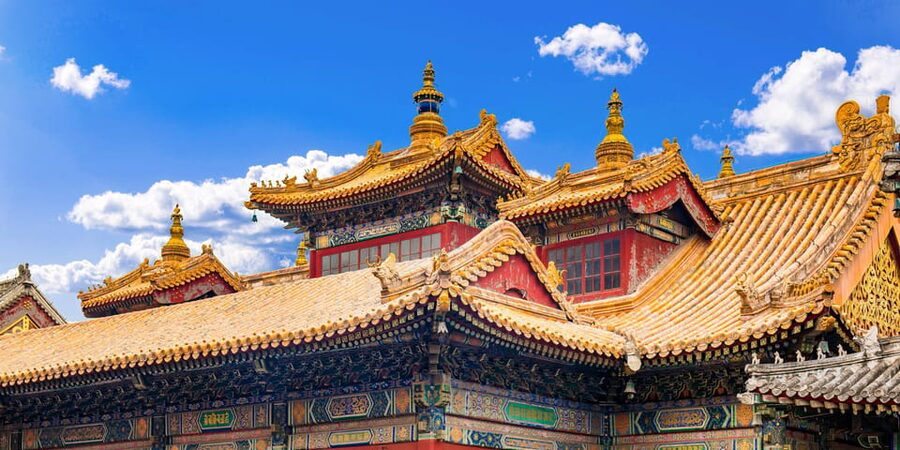
Lama Temple is the star here, and it’s worth treating it like more than a single photo stop. The site is described as having a complete architectural layout aligned with a system connected to the Brahma Gyalan. In plain terms, it isn’t random. The buildings are arranged so your movement makes sense as you go from gate to hall to pagoda views.
The big visual elements are easy to spot once you know what to watch for:
- Three exquisite pagodas
- Five grand halls
- A main hall with the statue of the Three Buddhas, symbolizing past, present, and future
The architecture style is also part of why this temple feels distinct. The design is said to display Han, Manchu, and Mongolian national architectural art styles. That matters because you’ll likely notice changes in proportions, ornament, and overall feel as you move through the complex, not just one uniform look.
The Three Buddhas main hall, and why it matters
The Three Buddhas are described as representing the timeless Buddha across past, present, and future. When you read that before you enter, you start seeing the space differently. Instead of asking, What building is this?, you start asking, What story is the complex telling?
This is also a good reminder to slow down for a moment inside the main hall area. Even if your day is rushed, this is the place where the temple’s symbolism is most direct.
Beijing tours travelers are booking next
- Beijing: Forbidden City Tour(Group/Private)-Tickets Included★ 4.8 · 7,974 reviews
- 4-Hour Small Group Tour to Forbidden City with Entry Tickets★ 5.0 · 1,863 reviews
- Beijing: Tiananmen Square Registration Service(Ticket)★ 4.5 · 1,704 reviews
- Beijing: The Temple of Heaven or Summer Palace Entry Ticket★ 4.6 · 1,286 reviews
Confucius Temple on the central axis: gates, halls, and one key monument
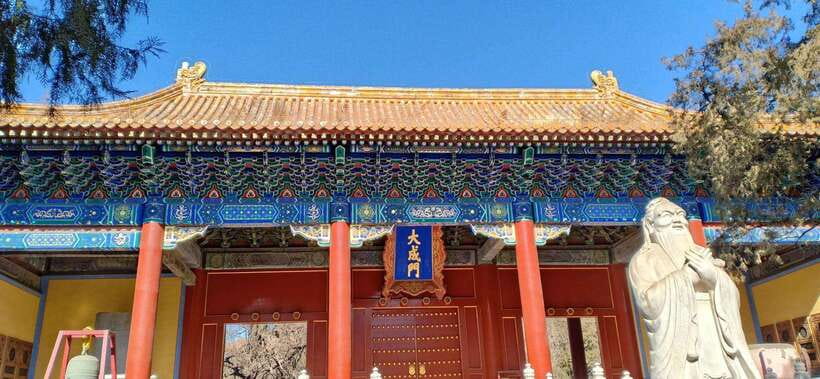
After Lama Temple, the flow is built for a second stop. You walk out and then scan another QR code at the entrance of Beijing Confucius.
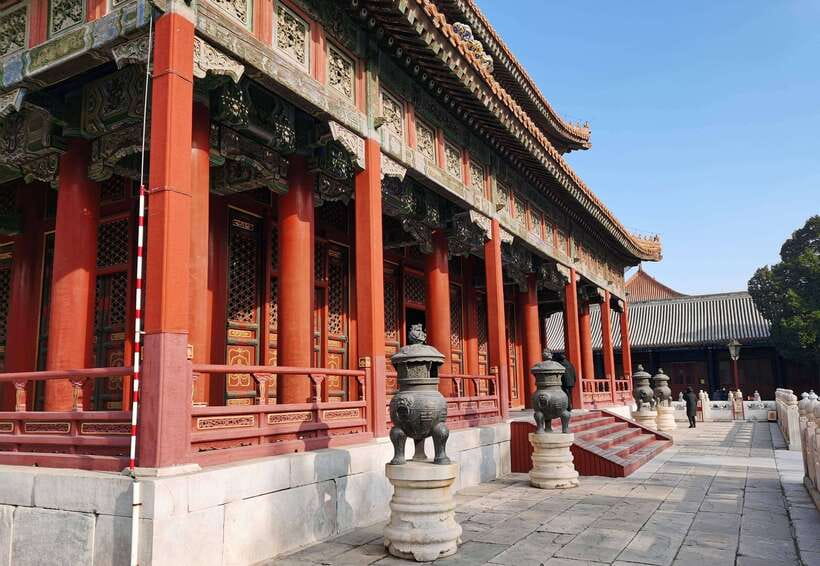
If Lama Temple feels like a religious system made of space, Confucius Temple feels like an educational one. The traditional layout is described as centered along the central axis, symmetrical on the left and right, and arranged in three courtyards. That symmetry is part of the experience, so try not to rush past the early gates.
The building sequence from south to north
The main buildings are laid out in order from south to north. When you know this sequence, the complex becomes easier to follow:
- Sifu Gate
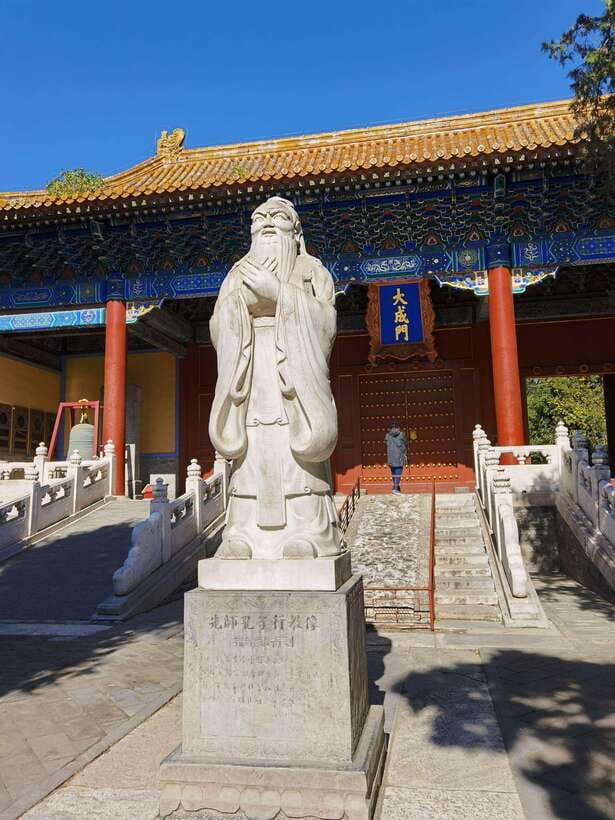
- Dacheng Gate
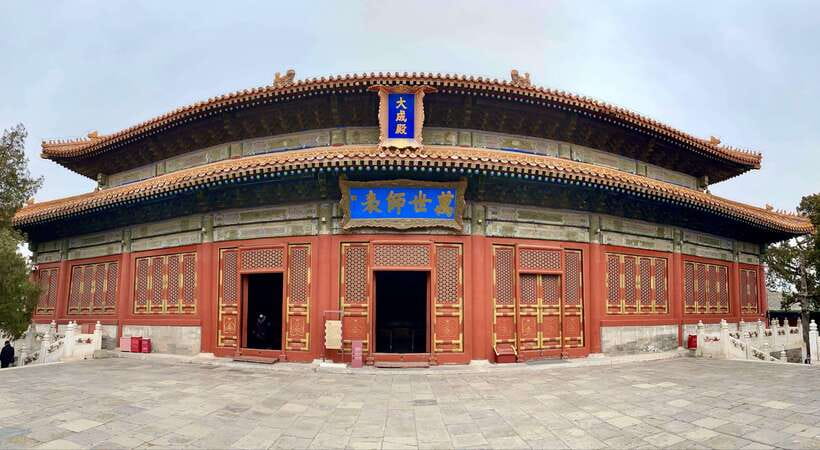
- Dacheng Hall
- Chongsheng Gate
- Chongsheng Shrine
Also pay attention to the materials and color cueing. The main buildings are covered with yellow glazed tiles, which is a classic visual marker of traditional Chinese imperial design language. It’s one of those details that makes the temple feel official and historical, not just old.
The monument of the title of the scholar
One of the most interesting described elements is the monument of the title of the scholar. It has historical and cultural value and provides precious documents for studying the imperial examination system in ancient China.
If you care about history tied to real bureaucracy, exams, and social mobility, this is the moment to focus. It turns Confucius Temple from a general cultural stop into a specific piece of how the old China system worked.
Price and value: $16 for the Lama Temple ticket and QR setup
At $16 per person, the headline cost is simple. The value comes from what’s included, which is mainly the Lama Temple ticket plus a booking service charge. That means you’re paying not just for entry, but also for the convenience of pre-arranged QR access.
What is not included is equally important for value:
- Confucius Temple ticket
- Lunch
- English speaking guide
- Private car transfers
- Hotel transfers
- Tipping (highly recommended)
- Souvenir photos (sold separately)
So the “is it worth it?” question depends on your style. If you’re comfortable navigating on your own and you want to save time at the gate, pre-booking can be a strong value. If you want a guided story with an English speaker, you may find the base price doesn’t cover that, so you’ll want the optional guided upgrade.
Also consider the time range. The total time can be anywhere from 2 to 11 hours, so your value goes up if you genuinely use that time to see more, take breaks, and avoid rushing.
Optional guided history: when it helps most
The experience notes include optional upgraded guided trips for amazing highlights of history. That’s the part I’d take seriously if you like to understand what you’re seeing rather than just looking at it.
Without an English speaking guide included, you might enjoy the architecture, symbols, and layout on a surface level. But if you want to connect things like the Brahma Gyalan alignment at Lama Temple or the imperial examination references at Confucius Temple into a clear narrative, a guide can save you a lot of guesswork.
A practical way to decide: if you’re the type who reads a short background before entering a major monument, you’ll be fine self-guided. If you prefer a spoken explanation, spend the extra for the guided upgrade.
A temple-day game plan that keeps you from feeling lost
This kind of reservation works best when you treat it like a checklist day. You’ve got two entrances, two QR scans, and a fixed route.
Here’s the approach I recommend:
- Start with Lama Temple and let yourself focus on layout and symbolism, especially the Three Buddhas main hall and the overall pagoda and hall rhythm.
- Keep your Confucius visit structured. Use the south-to-north building sequence as your mental map, so you don’t wander without a sense of progress.
- If you skip the guide, do light prep at home. Read a short overview of what Lama Temple and Confucius Temple represent. You’ll enjoy the details more, and you’ll waste less time trying to figure out what something is called.
Also, set expectations about language. Since English speaking guidance is listed as not included, you should assume you’ll rely on signage and your own curiosity. If your Chinese is limited, the optional guided history becomes even more useful.
Who this suits best, and who should skip it
This is a good fit if you like:
- Architecture with clear layouts and symbolic planning
- Culture and history, especially religious symbolism at Lama Temple and the exam system references at Confucius Temple
- A self-paced day where scanning QR codes keeps things efficient
It’s also a practical pick for travelers who want to avoid wasting time in lines by booking ahead. The experience explicitly encourages advance reservation to help avoid crowds.
Not suitable for:
- Pregnant women, as stated
- People traveling with pets, since pets are not allowed
Should you book this reservation service for your Beijing temple day?
Yes, I’d book it if your goal is a smooth, efficient visit to Lama Temple and you like the idea of pairing it with Confucius Temple. The $16 price makes sense when you factor in that you’re buying the Lama Temple entry and the QR convenience that helps you skip gate friction.
I would double-check one thing before you commit: make sure you understand whether your package includes only Lama Temple or also covers Confucius Temple. The routing is set up for both, but the included ticket description clearly says Confucius ticket is not included.
If you want a more meaningful story, choose the optional guided history upgrade or do a little reading beforehand. Without that, you can still enjoy the buildings, but you might spend more time wondering what you’re looking at instead of understanding why it was built that way.
FAQ
What is included in the $16 per person price?
The package includes Lama Temple tickets only plus a booking service charge. It does not include a Confucius Temple ticket.
Do I need a separate ticket for Confucius Temple?
Yes. The Confucius Temple ticket is listed as not included. The experience describes scanning a second QR code for a Confucius visit, but your specific Confucius entry depends on what you have purchased.
How do I receive my tickets?
After booking, you provide passport details and contact info. The local supplier sends you a QR code directly to your email, mobile number, and WhatsApp number.
How do I get to Lama Temple using public transport?
Take subway Line 5 and get off at Lama Temple station, then use exit F. Walk about 5 minutes to reach Lama Temple.
How do I enter once I arrive?
Scan the QR code sent to you in advance at the entrance of Lama Temple to enter. After Lama Temple, you scan another QR code at the entrance of Beijing Confucius for the next visit.
What do I need to bring to visit?
You need to bring your passport.
Is there free cancellation?
Yes. You can cancel up to 24 hours in advance for a full refund.
Newly Listed Tours in Beijing
- Beijing Half Day Walking Tour-Tiananmen Square and Forbidden City★ 5.0 · 1 review
- 1-Day Beijing private English speaking guide with driver service★ 5.0 · 1 review
- Flexible Private Layover Beijing Night Sightseeing with English Speaking Driver★ 5.0 · 1 review
- Private Day Trip to Huaibei International Ski Resort and Mutianyu Great Wall★ 5.0 · 1 review
- 2-Day Customizable Beijing Highlight Tour with Airport Transfer Option★ 5.0 · 1 review
- 1-Day Beijing Private tour: Mutianyu Great Wall and Summer Palace★ 5.0 · 1 review
- Private Virtual Tour in Beijing★ 4.0 · 1 review
- 1-Way Private Transfer Service between Tianjin cruise Port and Beijing hotels★ 5.0 · 1 review
Lama Temple Visits, compared.
Temple Heaven, Lama Temple, Summer Palace & Peking Duck Bus Tour
Read our review →
Temple Heaven, Summer Palace, Lama Temple, Hutong Bus Tour
Read our review →
Temple of Heaven, Summer Palace, Lama Temple, Hutong Tours
Read our review →

Beijing Historical Tour II including Summer Palace, Lama Temple & Panda Garden
Read our review →

Panda House, Temple of Heaven, Lama Temple, Summer Palace & Lunch
Read our review →Browse the lists this tour appears in