
Reviewed · LAMA TEMPLE VISITS
Beijing: Yonghe Lama Temple Tickets with guide (optional)
Beijing’s Lama Temple rewards slow walking. With a pre-booked ticket and optional English guide, you can spend your time on the temple itself instead of figuring out entry lines.
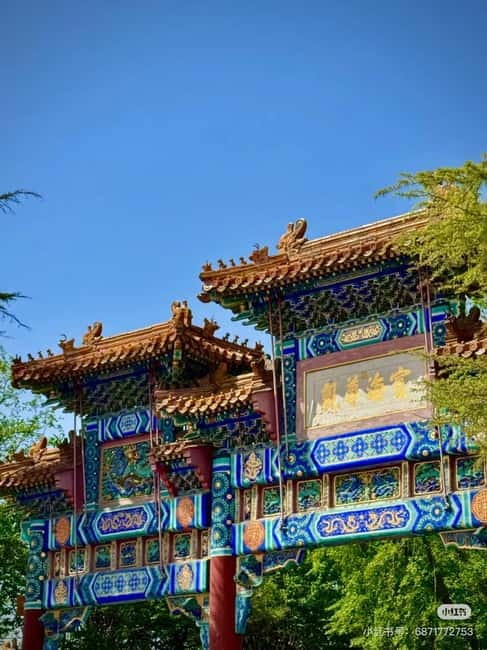
I love two things about this visit. I love how the complex is laid out for a clear journey, with three archways and five main halls plus more than 1,000 rooms to explore at your own pace. I also love that an English guide is available, because the blend of Tibetan Buddhism and traditional Chinese architecture is easier to read when someone points out what you are looking at.
One drawback to plan around: the site is not suitable for wheelchair users, and entry ends fairly early, with the note that stop entering happens at 16:00.
In This Review
- Key things I would not skip
- Finding Yonghegong Lama Temple, address and metro plan
- Tickets, price value, and what the guide is good for
- Opening hours you must respect, last admission and stop-entering
- The temple layout, how the walk works from south to north
- Zhaotai Gate, Bell Tower, and Drum Tower as your orientation points
- Passing through the Yonghe Gate and into the main court axis
- Hall of Great Buddha, Yongyou Hall, and the meaning of the main halls
- The Pavilion of Ten Thousand Blessings and finishing strong
- Why the Tibetan Buddhism and Chinese architectural blend feels unique here
- Practical rules and what to bring for a smooth entry
- How long you should plan for, and how to keep it enjoyable
- Who this ticket is best for, and who may want to rethink
- Should you book this Yonghegong Lama Temple ticket with optional guide?
- FAQ
- Where is Yonghegong Lama Temple and how do I get there by metro?
- What are the opening hours in summer and autumn?
- What are the opening hours in winter and spring?
- Does this ticket cover a one-day visit?
- Is an English guide included?
- What is included in the price?
- What do I need to bring, and what is not allowed?
- Is the temple suitable for wheelchair users?
Key things I would not skip
- Pre-booked entry so you can go straight into the temple grounds without ticket stress.
- Three archways and five main halls that give you an easy mental map as you walk south to north.
- More than 1,000 rooms across the huge complex, so you will want to choose what you linger on.
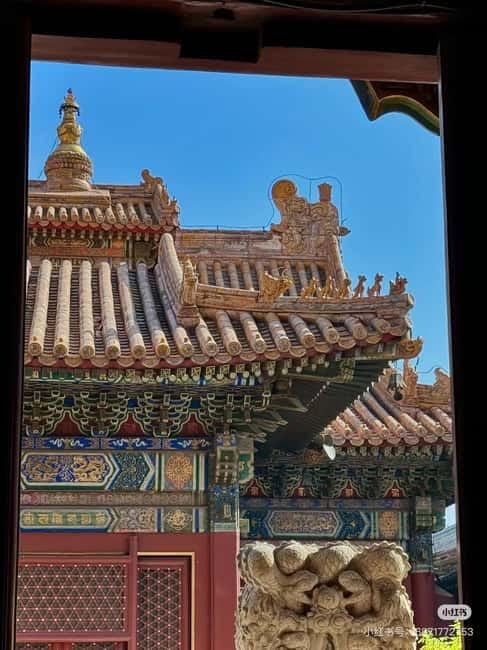
- Tibetan Buddhist influence on Qing-era Chinese design, including cultural elements tied to Han, Manchu, Mongolian, and Tibetan traditions.
- English live guide option if you want help turning the architecture into a real story.
Finding Yonghegong Lama Temple, address and metro plan
Yonghegong Lama Temple sits in the Dongcheng District area, at No. 12 Yonghegong Street in Beijing. If you like arriving on rails, you will use metro line 5 and get off at Yonghe Lama Temple station.
I like this location approach because it keeps you flexible. You are not locked into a long taxi ride right before a time-limited temple visit. And since the complex is large, getting there early matters more than squeezing in last-minute sightseeing.
Incense smoke and a giant Buddha
Tickets, price value, and what the guide is good for
This experience runs about $12 per person for a one-day ticket, with an information service fee included. On paper, that is simple pricing. In real life, the value comes from reducing friction. A pre-booked ticket means less time at the entrance and more time walking the halls you actually came for.
You can also choose the optional live tour guide in English. If you prefer to wander without structure, you can treat the guide as a bonus for context. If you want to understand why this temple looks the way it does, the guide helps you connect the visual details to Tibetan Buddhism and Qing-era Chinese temple traditions.
Opening hours you must respect, last admission and stop-entering
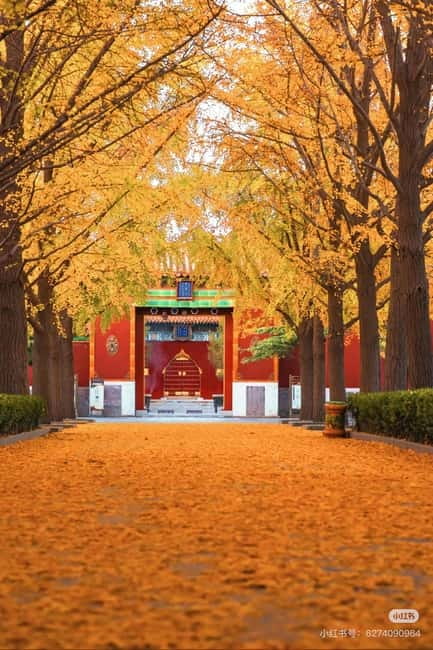
Yonghegong Lama Temple follows seasonal hours, so double-check before you go. In summer and autumn (April 1 to October 31), it is open 9:00 AM to 5:00 PM, and last admission is 4:30 PM. In winter and spring (November 1 to March 31), it is 9:00 AM to 4:30 PM, and last admission is 4:00 PM.
There is also a clear rule to plan around: stop entering is at 16:00. That means even if you arrive earlier in the afternoon, you should not assume you can still start a full walk late in the day.
The temple layout, how the walk works from south to north
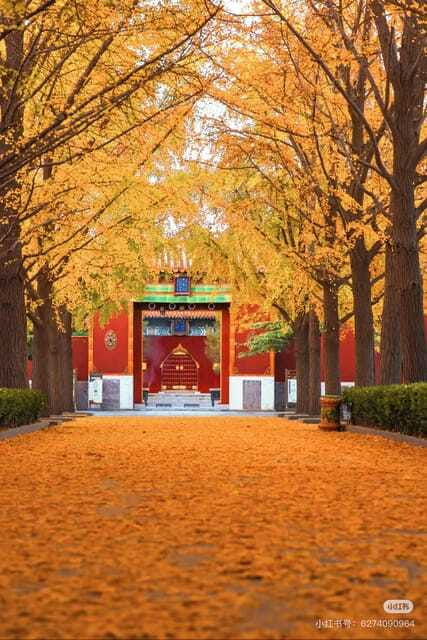
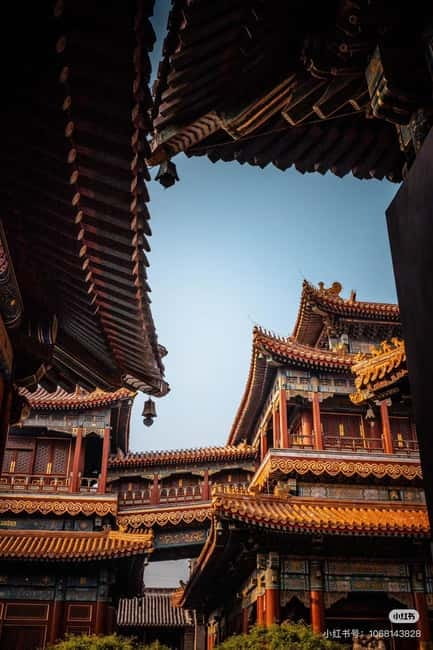
This complex is big enough that it can feel like you are inside a whole city block. The good news is the design makes your route logical. The courtyards gradually narrow from south to north, and the height of the halls increases in sequence, so the experience feels like it is building toward something.
You will likely start at the outer gates and move inward along that south-to-north line. With that in mind, try not to spend your whole time at the first dramatic hall. The payoff is in seeing how the architecture changes as you go deeper into the compound.
Zhaotai Gate, Bell Tower, and Drum Tower as your orientation points
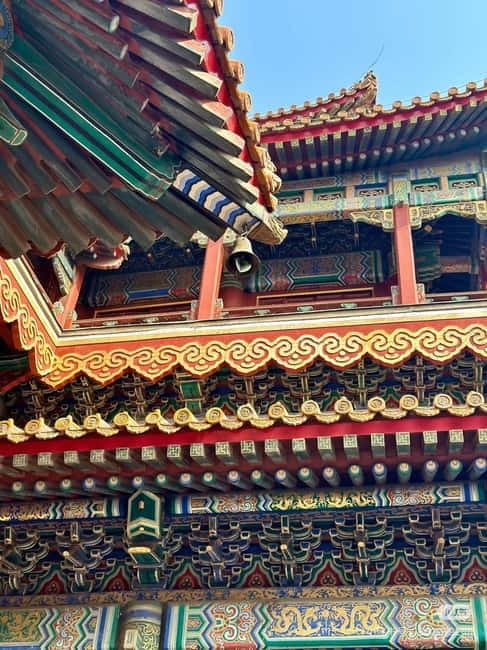
At Yonghegong, the entry area is not just a doorway. It is a visual orientation. You have major structures that help you anchor where you are, including the Zhaotai Gate, the Bell Tower, and the Drum Tower.
Think of these stops as your landmarks. The Bell and Drum towers are named features within the complex, so even if you do not know what every space historically served, you will still feel like the site has structure and rhythm.
If you have limited time, a smart approach is to glance, identify the tower location, and then move on. Do not get stuck trying to read everything at once. Save energy for the inner halls, where the architecture and religious symbolism are more concentrated.
Beijing tours travelers are booking next
- Beijing: Forbidden City Tour(Group/Private)-Tickets Included★ 4.8 · 7,974 reviews
- 4-Hour Small Group Tour to Forbidden City with Entry Tickets★ 5.0 · 1,863 reviews
- Beijing: Tiananmen Square Registration Service(Ticket)★ 4.5 · 1,704 reviews
- Beijing: The Temple of Heaven or Summer Palace Entry Ticket★ 4.6 · 1,286 reviews
Passing through the Yonghe Gate and into the main court axis
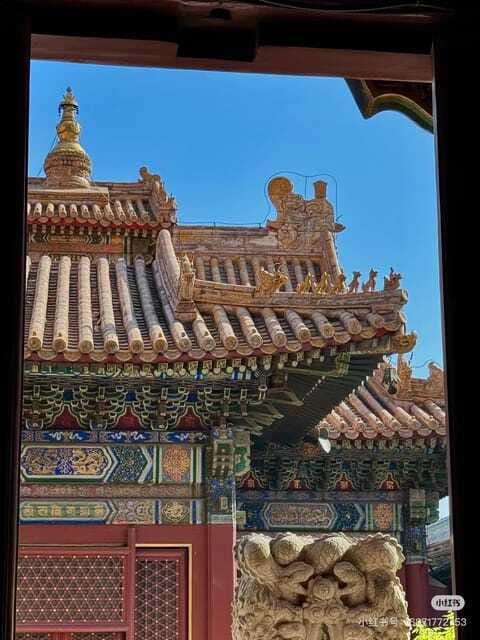
As you move deeper, you reach the Yonghe Gate. It is one of the key named elements in the compound, and it marks a shift from the outer courtyard feel into the central ceremonial zone.
This is where the experience starts to feel more “temple complex” and less like a collection of buildings. The gate and the courtyards around it are part of the overall layout, including that narrowing-in effect as you travel from south to north.
If you have an English guide, this is a great moment to ask what the gate does in the sequence. Even without a deep lecture, just understanding the order helps you appreciate why each next hall feels more significant.
Hall of Great Buddha, Yongyou Hall, and the meaning of the main halls
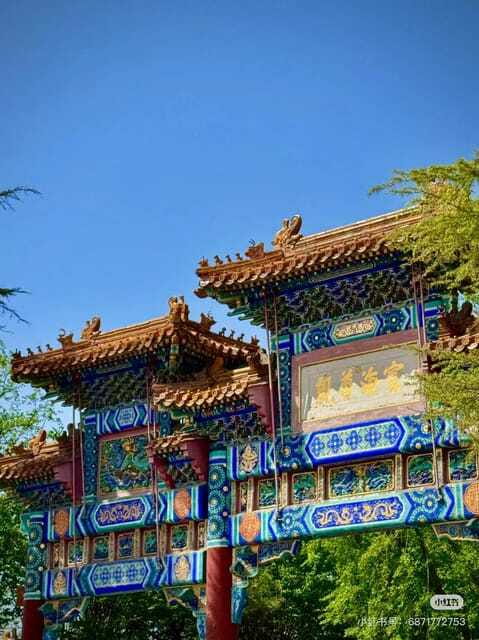
The complex lists the key structures you should expect to see, including the Grand Hall (Hall of Great Buddha) and then additional main spaces like Yongyou Hall and the Hall of the Wheel of the Dharma.
Here is how I would frame these stops so you get more out of them. The names alone give you a clue that you are moving through spaces tied to religious focus, not just sightseeing photo backdrops. You are looking at a site built for Buddhist practice, and the architectural emphasis supports that purpose.
I would pace your time in this section like this. Spend enough minutes to notice the scale and layout, then spend a few extra minutes comparing the hall feel from one space to the next. If you only rush, you miss the changes that make the complex interesting.
The Pavilion of Ten Thousand Blessings and finishing strong
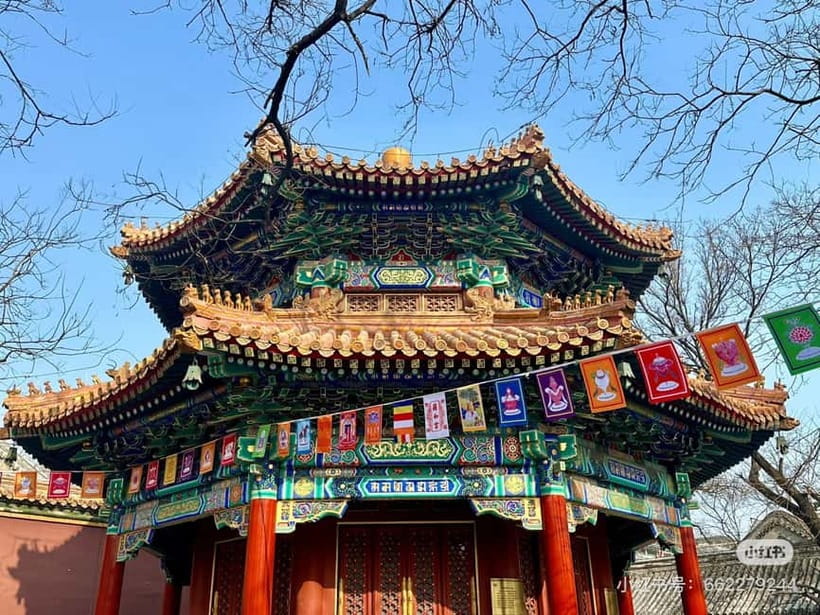
Near the end of your walk, you will encounter the Pavilion of Ten Thousand Blessings. It is one of the named highlights, and it works well as a “finish line” stop.
By the time you reach this area, you have already seen the gates and towers plus the main halls. That makes it easier to notice how the complex keeps escalating in height and visual importance as you move northward.
If you want a satisfying close to the visit, linger here a bit longer than you think you need. By then you understand the layout better, so your last stop feels less random and more like the final chapter.
Why the Tibetan Buddhism and Chinese architectural blend feels unique here
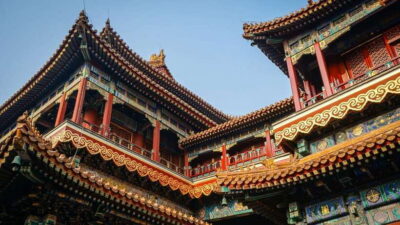
One of the reasons Yonghegong works as an experience is that it is not purely one style. The temple architecture is described as a blend of Tibetan Buddhism with traditional Chinese architectural features.
And it is not just a vague mix. The background points to cultural elements linked with Han, Manchu, Mongolian, and Tibetan ethnic groups, all expressed through the Qing-era temple design language. You can feel this in the overall way the compound is composed, not just in decorative details.
I like focusing on this while you walk. Instead of thinking of the temple as a static monument, treat it as a translation from one tradition into another architectural system. The courtyards, gate sequence, and main hall progression all support that idea.
Practical rules and what to bring for a smooth entry
This is a place where basic rules matter. Bring your passport, since that is specifically listed as what you need. Also note what is not allowed: alcohol and drugs are not permitted, and making fire is not allowed.
To keep your visit stress-free, arrive prepared for basic on-site checks and keep your bags simple. You are going to spend time moving through courtyards and halls, so you do not want entry procedures to eat your morning.
How long you should plan for, and how to keep it enjoyable
The experience is listed as 1 day, and the temple is open for a set window depending on the season. Since entry ends in the afternoon, I suggest you treat your temple time like a priority block rather than a quick stop after something else.
The complex is massive, with over 1,000 rooms and multiple key halls and gateways. If you try to see everything equally, you will either rush or get tired. Instead, pick a route: gates and towers for orientation, main halls for focus, then end with the Pavilion of Ten Thousand Blessings.
Who this ticket is best for, and who may want to rethink
This is a good fit if you want a guided or semi-guided way to see one of Beijing’s most specific temple complexes, without the uncertainty of purchasing a ticket on the spot. The English guide option is especially useful if you like understanding context while you walk.
It is not suitable for wheelchair users, so anyone who relies on wheelchair access should look for an alternative plan. Also, if you hate time constraints, you should plan carefully around last admission and the stop-entering rule at 16:00.
Should you book this Yonghegong Lama Temple ticket with optional guide?
I think you should book it if you value smooth entry and a clear path through a big, structured site. For a $12 ticket that includes the temple entry plus an information service fee, the “value” is mainly time saved and confidence gained.
Skip it only if you are trying to do the temple as a last-minute afterthought late in the day. With the stop entering at 16:00 rule and seasonal closing times, arriving late can cut your visit short fast. If you can start earlier, this is a strong way to see the Yonghegong Lama Temple without extra headaches.
FAQ
Where is Yonghegong Lama Temple and how do I get there by metro?
It is at No. 12 Yonghegong Street, Dongcheng District, Beijing. You can take metro line 5 and get off at Yonghe Lama Temple station.
What are the opening hours in summer and autumn?
From April 1 to October 31, it is open 9:00 AM to 5:00 PM, with last admission at 4:30 PM. Entry ends and the grounds are cleared by 5:00 PM.
What are the opening hours in winter and spring?
From November 1 to March 31, it is open 9:00 AM to 4:30 PM, with last admission at 4:00 PM. Entry ends and the grounds are cleared by 4:30 PM.
Does this ticket cover a one-day visit?
Yes. The ticket is valid for 1 day, and you check availability to see starting times.
Is an English guide included?
A live tour guide in English is available. The title notes the guide is optional, so you can choose the guided option.
What is included in the price?
The price includes Yonghegong Lama Temple tickets and an information service fee.
What do I need to bring, and what is not allowed?
You need to bring your passport. Alcohol and drugs are not allowed, and making fire is not allowed.
Is the temple suitable for wheelchair users?
No. It is not suitable for wheelchair users.
If you want, tell me your travel dates and whether you prefer a guided pace or a more independent stroll, and I will suggest a smart time window based on the seasonal hours.
Newly Listed Tours in Beijing
- Beijing Half Day Walking Tour-Tiananmen Square and Forbidden City★ 5.0 · 1 review
- 1-Day Beijing private English speaking guide with driver service★ 5.0 · 1 review
- Flexible Private Layover Beijing Night Sightseeing with English Speaking Driver★ 5.0 · 1 review
- Private Day Trip to Huaibei International Ski Resort and Mutianyu Great Wall★ 5.0 · 1 review
- 2-Day Customizable Beijing Highlight Tour with Airport Transfer Option★ 5.0 · 1 review
- 1-Day Beijing Private tour: Mutianyu Great Wall and Summer Palace★ 5.0 · 1 review
- Private Virtual Tour in Beijing★ 4.0 · 1 review
- Private Day Tour Of Jinshanling Great Wall From Beijing★ 4.0 · 1 review
Lama Temple Visits, compared.
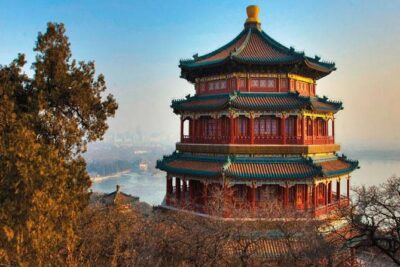
Temple Heaven, Lama Temple, Summer Palace & Peking Duck Bus Tour
Read our review →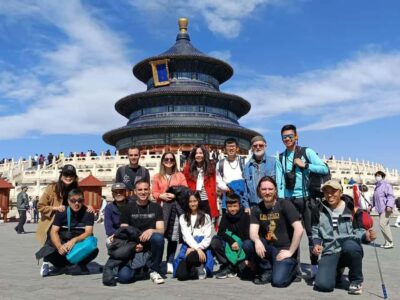
Temple Heaven, Summer Palace, Lama Temple, Hutong Bus Tour
Read our review →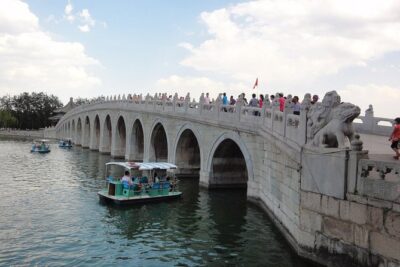
Temple of Heaven, Summer Palace, Lama Temple, Hutong Tours
Read our review →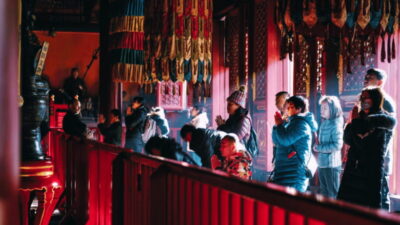

Beijing Historical Tour II including Summer Palace, Lama Temple & Panda Garden
Read our review →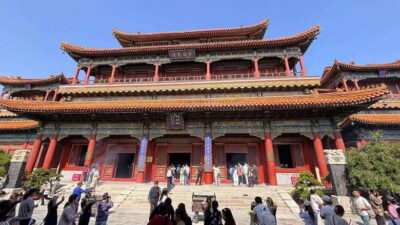
Panda House, Temple of Heaven, Lama Temple, Summer Palace & Lunch
Read our review →Browse the lists this tour appears in