
Reviewed · CHINESE FOOD TOURS
China’s Favourite Street Food Cooking Workshop
Street jian bing can be learned. This private Beijing workshop turns a famous street snack into a do-it-yourself skill, with your instructor guiding you through jian bing from scratch. You also get to shape the final taste with different flavors and fillings, so it feels personal, not like a canned food demo.
What I like most is the hands-on part. You make the dough, cook it on the pan, and you can keep going until you feel the technique click. The second big win is the filling variety, from traditional savory options to fun sweet combos like chocolate and banana, so you can build your own version instead of just eating one.
One thing to consider is that at $80 for about 90 minutes, it is best if you genuinely want to cook. If you only want a quick bite or a spectator-style activity, this may feel pricier than pure street-food wandering.
In This Review
- Key Highlights You Will Care About
- Your 90 Minutes of Jian Bing Practice in Beijing
- Why Jian Bing Belongs on Your Beijing Food List
- From Batter to Pan: What Happens During the Cooking Class
- Fillings and Flavors: Savory Classics to Sweet Experiments
- The Instructor, Dom, and the Beijing Story Behind the Snack
- Meeting at Shi Que Hu Tong: A Hutong Start That Fits the Whole Day
- Private Means Personal Attention (and Faster Learning)
- Price and Value: Is $80 Worth It?
- Who This Jian Bing Workshop Is Best For
- What to Bring and How to Plan Your Day
- Should You Book This Jian Bing Workshop?
- FAQ
- How long is the China’s Favourite Street Food Cooking Workshop?
- What will I learn to make?
- Is the workshop private?
- What flavors and fillings can I expect?
- Where do I meet for the workshop?
- Does the workshop end at the same place?
- How much does it cost?
- When will I get confirmation after booking?
- Is the class near public transportation?
- What is the cancellation policy?
- Are service animals allowed?
Key Highlights You Will Care About
- Private experience for just your group, so you get real attention instead of watching from the sidelines
- Hands-on jian bing practice, including making the dough and cooking it on the pan
- Fillings you can mix and match, including sweet options like chocolate and banana
- Instructor Dom adds stories and technique, including where this Beijing favorite comes from
- Hutong-area meeting point in Shi Que Hu Tong, then you head back there when you are done
- Mobile ticket and a location that is near public transportation
Your 90 Minutes of Jian Bing Practice in Beijing
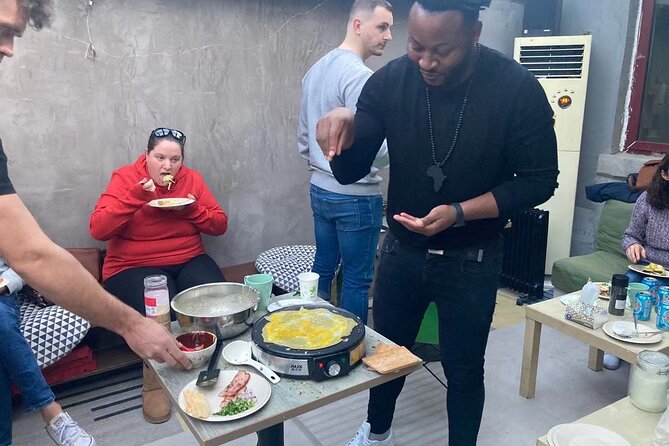
This is a short, focused class designed for exactly one goal: you leave knowing how to make jian bing. It is not about standing in a line and hoping your next bite is the right one. Instead, the time is built around doing the work, with an instructor showing you what to do and then helping you when your hands need a nudge.
The format also matters. It is a private experience, meaning it is only you and your party. That changes the vibe fast. You can ask questions as they come up, you can move at your pace, and you are more likely to actually cook instead of waiting your turn.
The session is about 1 hour 30 minutes, and it starts at 10 Shi Que Hu Tong, Dong Cheng Qu, Beijing. When you finish, you end back at the meeting point, which is handy if you planned the rest of your day around that location.
Eat your way across the capital
Why Jian Bing Belongs on Your Beijing Food List
Jian bing is one of those foods that feels everywhere in Beijing, but it still surprises people when they understand how it is made. The class starts with the story behind the snack and where Beijing’s favorite street food comes from, so you get context while you are learning the craft.
That context is not just trivia. It helps you understand why the batter looks the way it does, why the cooking method matters, and why the final “fold” or assembly is part of the magic. You end up eating with more intention, not just more hunger.
Also, this is a great way to experience a Beijing staple without doing a full food tour marathon. You get technique plus tasting, and you walk away with a skill you can repeat later at home.
From Batter to Pan: What Happens During the Cooking Class
Here is the core flow of the workshop, and it is what makes it feel worth your time.
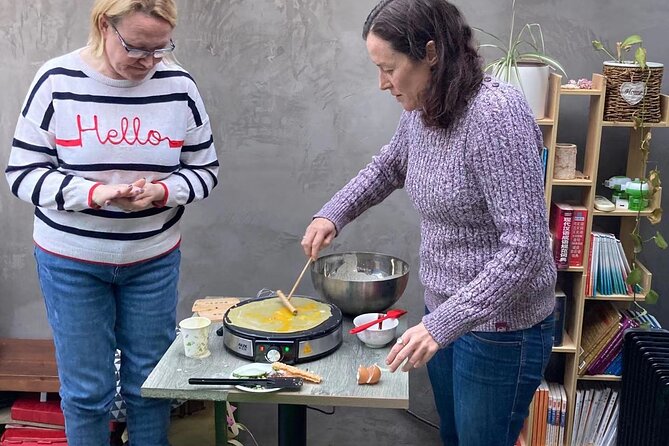
First, you get an explanation of what you are making and why the steps matter. Then you move into the “from scratch” part, with guidance on making the batter and getting it to the right consistency. The goal is for you to do it yourself, not to watch someone else do it perfectly while you clap your hands in admiration.
Next comes the cooking on the pan. This is where jian bing turns from something you recognize into something you can control. The instructor helps you with the technique so you can get the batter cooked properly and shaped the way it should be. And because it is a workshop, not a lecture, you get to make multiple jian bing creations during the session rather than just one sample.
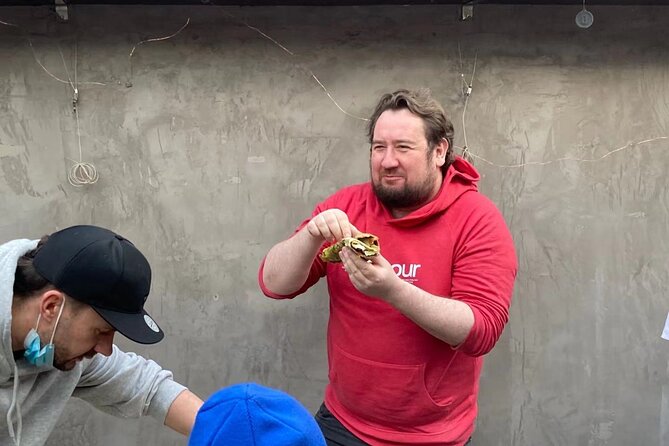
Finally, you assemble your results and experiment with flavors. That last step is where the class turns into something you can customize, and it keeps the energy up while you learn.
A big plus from the experience is how supportive the teaching feels. One review described Dom teaching in a simple way, using stories to keep it entertaining, then being right there to help when needed. That blend matters. When food making feels doable, people stay engaged instead of getting frustrated.
Fillings and Flavors: Savory Classics to Sweet Experiments
This class gives you choices, and that is the difference between “learn one thing” and “learn how to make it your way.”
You will have an assortment of fillings to try. The options include more traditional savory pairings, which match what you likely expect from Beijing street jian bing. But the best part is the experimentation. You can also go sweet, with options like chocolate and banana showing up for some sessions.
That freedom lets you taste the contrast between savory and sweet versions while you learn the base technique. You are not changing the whole method every time, so you can focus on what actually affects flavor, texture, and balance.
If you are picky, you can choose fillings that fit your comfort level. If you like trying new things, you can do a “two jian bing strategy,” savory first, then sweet, so you end the class with a satisfying win.
The Instructor, Dom, and the Beijing Story Behind the Snack
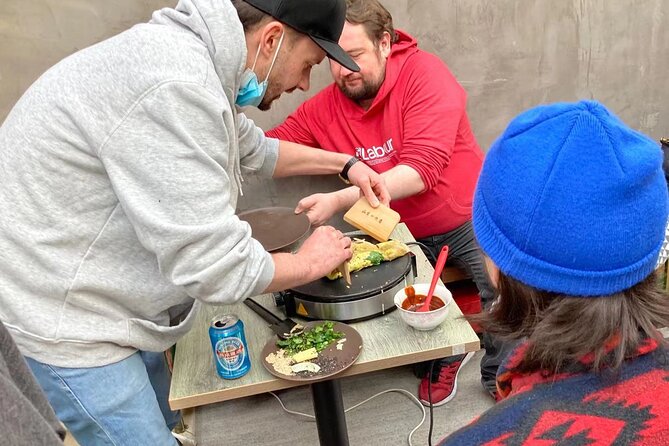
In at least one session, the instructor is named Dom, and he is a big reason people come away smiling. The teaching style described is practical and light, with history and origin stories wrapped around the technique.
That approach works for real life. You are not just learning steps, you are learning the “why” behind them. So even if your first attempt is a bit messy, you understand what went off and how to fix it next time.
The class also feels patient. One review highlighted that Dom was there to help as needed during the cooking process. In a hands-on activity, that kind of support is everything. You want coaching, not just a recipe.
Beijing tours travelers are booking next
- Online Cooking Class Beijing Dumplings and Cuisine by Sunflowerli Renowned Chef★ 5.0 · 65 reviews
- Private Hutong Culture Tour with Dumpling Cooking Class plus Cricket Fighting Game★ 5.0 · 5 reviews
- Beijing: Vegan Home Cooking & Local Market Tour with Sanxia★ 4.8 · 4 reviews
- Beijing: Private Dumpling Cooking Class in Local Family★ 5.0 · 3 reviews
Meeting at Shi Que Hu Tong: A Hutong Start That Fits the Whole Day
Your meetup is at 10 Shi Que Hu Tong, Dong Cheng Qu, Beijing. That is a useful detail because it anchors the workshop in the Hutong area, where Beijing feels old-school and walkable compared to the big highway-energy parts of town.
The good news for logistics is that it is near public transportation, so you are not locked into a long taxi ride. And since it is mobile ticket based, you can keep things simple on arrival.
You also do not have to worry about the ending. The workshop finishes back at the meeting point, so you can smoothly roll into whatever you planned next without hunting for a new location.
Private Means Personal Attention (and Faster Learning)
Let’s talk about what “private” changes in a cooking class.
In a group class, you can feel like you are always waiting your turn. In a private setting, you can move through steps without long pauses. The instructor can watch your pan work, notice what looks off, and help before you lock in a mistake.
You also get a more comfortable pace. If you want to try an extra filling combination, you can. If you are learning slower, you can ask for clarification while the pan is still hot. That is how you actually improve, even if you only plan to cook for an hour or so.
For families, this format often helps too. One review described the activity as child-friendly, with a full belly at the end and the know-how to make the snack at home. When kids get to participate instead of just eat, the experience tends to land better for everyone.
Price and Value: Is $80 Worth It?
$80 sounds like a lot until you picture what you are paying for: a private class, hands-on instruction, and enough time to make more than one jian bing. At $80, the value is not in the snack alone. It is in the coaching and the cooking practice.
If you compare it to the cost of eating street snacks all afternoon, this workshop gives you something that street food can’t. You get technique. You get customization. And you leave with an experience that you can repeat.
There is also the potential for take-home extras. One review specifically noted that ingredients were provided to take home. If that is offered in your session, it pushes the value even further, because you can recreate what you learned without guessing.
The only real downside is that it is not ideal for pure “walk and eat” travelers. This is for people who want to do something with their hands and learn a real Beijing food skill.
Who This Jian Bing Workshop Is Best For
This class fits best if you fall into one of these buckets:
Food lovers who want more than a bite
You will enjoy it if you like learning how street food actually works.
People traveling with kids
Reviews mentioned happy families and kids who had fun while learning. The activity is a break from strict museum time and it ends with food.
Couples and small groups
Private means you can focus on your own preferences, especially if you want a mix of fillings like savory first, then sweet.
Even Beijing veterans
One review noted that it was fun for people who have been living in Beijing for years too. If you think you already know jian bing, you may still like seeing the technique and trying new filling combinations.
What to Bring and How to Plan Your Day
You do not need special gear for a class like this, but a few practical choices help you enjoy it.
Wear comfortable clothes, since you will be standing and working with cooking tools. If you have long hair, tie it back. Bring water, especially if your day includes lots of walking. And arrive a few minutes early so you do not feel rushed when the session starts.
If you are pairing this with a Hutong outing, plan your schedule so you are not right in the middle of a long transfer. The meeting point is specific, and since you end back there, it is easy to keep the rest of your day organized.
Should You Book This Jian Bing Workshop?
Book it if you want to learn a real Beijing street food technique in a short time, with hands-on help and a private pace. If you love customizing flavors, the filling variety is a strong reason to go, especially if you like the idea of both savory options and playful sweet combinations like chocolate and banana.
Skip it if you mainly want to snack and wander. At $80 for about 90 minutes, this is a cooking experience first, not a budget food crawl. But if you want to walk away able to make jian bing yourself, this is one of the most practical souvenirs you can take home.
FAQ
How long is the China’s Favourite Street Food Cooking Workshop?
The workshop runs for about 1 hour 30 minutes.
What will I learn to make?
You will learn how to make jian bing from scratch, with guidance from an instructor.
Is the workshop private?
Yes. It is a private experience, and only your group participates.
What flavors and fillings can I expect?
You can try different flavors and fillings, including both traditional savory options and sweet options like chocolate and banana.
Where do I meet for the workshop?
The start location is 10 Shi Que Hu Tong, Dong Cheng Qu, Beijing, 100010.
Does the workshop end at the same place?
Yes. The activity ends back at the meeting point.
How much does it cost?
The price is $80.
When will I get confirmation after booking?
Confirmation is received within 48 hours of booking, subject to availability.
Is the class near public transportation?
Yes, it is listed as being near public transportation.
What is the cancellation policy?
You can cancel for a full refund up to 24 hours in advance of the experience start time. If you cancel less than 24 hours before, the amount paid is not refunded.
Are service animals allowed?
Yes, service animals are allowed.
Learn a Craft in Beijing
Where Locals Eat and Drink

Newly Listed Tours in Beijing
- Beijing Half Day Walking Tour-Tiananmen Square and Forbidden City★ 5.0 · 1 review
- 1-Day Beijing private English speaking guide with driver service★ 5.0 · 1 review
- Flexible Private Layover Beijing Night Sightseeing with English Speaking Driver★ 5.0 · 1 review
- Private Day Trip to Huaibei International Ski Resort and Mutianyu Great Wall★ 5.0 · 1 review
- 2-Day Customizable Beijing Highlight Tour with Airport Transfer Option★ 5.0 · 1 review
- 1-Day Beijing Private tour: Mutianyu Great Wall and Summer Palace★ 5.0 · 1 review
- Private Virtual Tour in Beijing★ 4.0 · 1 review
- 1-Way Private Transfer Service between Tianjin cruise Port and Beijing hotels★ 5.0 · 1 review
Chinese Food Tours, compared.
Hidden Gems Guided Food Tour with Beer and Tastings
Read our review →

Half-Day Private Beijing Hutong Walking Tour with Dim Sum
Read our review →
Browse the lists this tour appears in